


 Alphabet Q2 Earnings Beat Estimates as AI Spending, Google Cloud Growth Fuel Outlook
  US Investigates Moonshot Over Alleged Use of Advanced AI Chips and IP Theft
  Intel, AMD Seek Long-Term China Server CPU Deals as AI Demand Drives Supply Crunch
  Nike Shifts China Online Sales Strategy to Boost Brand and Fight Local Rivals
  Wistron Opens $700M Texas AI Factory to Build Nvidia Superchips in U.S.
  Cathay Pacific Sees H1 Profit Surge on Strong Travel Demand
  Samsung Eyes Up to $1.14 Billion Investment in AI Startup Mistral
  Amkor Stock Surges 17% After $1.5 Billion Nvidia AI Packaging Partnership
  ASML Trillion-Dollar Valuation: Can Europe’s AI Chip Giant Reach the Historic Milestone?
  IBM Q2 Earnings Miss Estimates as Software Growth Offsets Infrastructure Weakness
  GE Vernova Q2 Revenue Tops Estimates as Earnings Miss, Shares Slide Despite Higher 2026 Outlook
  Scandinavian Tobacco Group Sells BREAK and Moro Brands to Japan Tobacco for €176 Million
  Foxconn Wins First SpaceX AI Server Contract Worth Estimated $52 Billion
  Wistron Opens $700M Texas AI Factory to Build Nvidia GB300 Superchips
  Australia ASIC Tightens Auditor Oversight After KPMG Leak Scandal
  Super Micro Computer Stock Jumps 20% After Record AI Orders and Margin Surge
  Trump Administration Monitors OpenAI Incident as Lawmakers Push AI Kill Switch Bill


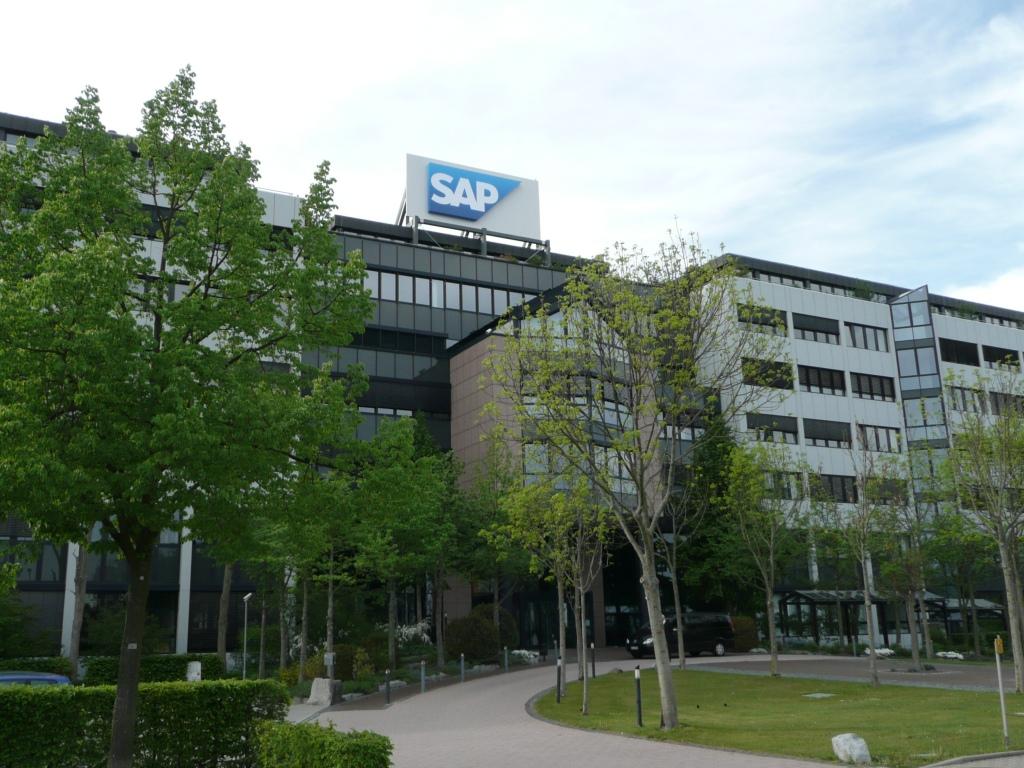
SAP exceeded Wall Street expectations for the second quarter, fueled by strong cloud backlog growth and rising demand for its business-focused artificial intelligence solutions. The German software company also slightly increased its full-year adjusted operating profit outlook following two recent acquisitions, sending its U.S.-listed shares up 3.3% in after-hours trading.
The Walldorf-based enterprise software giant reported second-quarter revenue of 9.88 billion euros ($11.24 billion), topping analysts’ estimate of 9.85 billion euros. Non-IFRS earnings per basic share came in at 1.59 euros, while non-IFRS operating profit, measured in constant currency, climbed 9% year over year to 2.81 billion euros ($3.20 billion).
SAP’s cloud business continued to expand, with its current cloud backlog reaching 22.90 billion euros ($26.05 billion) at the end of the quarter, representing a 26% increase in constant currency from a year earlier.
Chief Executive Christian Klein credited the company’s performance to its Autonomous Enterprise strategy and growing customer adoption of its Autonomous Suite and Business AI Platform. He said businesses are increasingly choosing SAP’s AI tools to deliver accurate, compliant results using enterprise data and core business processes.
SAP’s earnings arrive as software companies face growing pressure from rapid advances in artificial intelligence. Investors have questioned whether generative AI and autonomous AI agents could replace many traditional software functions, including coding, workflow automation, and data analysis. In response, SAP has expanded its AI offerings, including its Joule assistant and Business AI platform, to strengthen its competitive position.
The broader software sector has struggled this year, with the iShares Expanded Tech-Software Sector ETF down 17.5% year-to-date, while the Philadelphia Semiconductor Index has surged 74.3% as investors favor AI chipmakers. SAP’s U.S.-listed shares have fallen nearly 40% so far this year despite the company’s improving fundamentals.
Looking ahead, SAP raised its full-year non-IFRS operating profit forecast in constant currency to 11.9 billion euros to 12.3 billion euros, up from the previous range of 11.8 billion euros to 12.2 billion euros. The updated guidance reflects the impact of recent acquisitions, including data platform provider Dremio and AI startup Prior Labs, which develops Tabular Foundation Models designed to enhance enterprise AI capabilities.







