


 SpaceX Q2 Earnings on Aug. 4 Set Stage for Historic Insider Share Unlock
  Samsung Eyes Up to $1.14 Billion Investment in AI Startup Mistral
  OpenAI Australia Data Center Switches Cooling Strategy After Recycled Water Plan Fails
  ASML Trillion-Dollar Valuation: Can Europe’s AI Chip Giant Reach the Historic Milestone?
  Cathay Pacific Sees H1 Profit Surge on Strong Travel Demand
  Alaska Air Q3 Outlook Misses Estimates as Higher Fuel Costs Weigh on Profit Forecast
  SpaceX Targets Thursday Launch for Starship's 13th Test Flight After Last-Minute Delay
  GE Vernova Q2 Revenue Tops Estimates as Earnings Miss, Shares Slide Despite Higher 2026 Outlook
  Macquarie Names Greg Ward as CEO, Signaling Stability and Strategic Continuity
  IBM Q2 Earnings Miss Estimates as Software Growth Offsets Infrastructure Weakness
  Elon Musk Fuels SpaceX-Tesla Merger Speculation After Earnings Call
  Amkor Stock Surges 17% After $1.5 Billion Nvidia AI Packaging Partnership
  Foxconn Wins First SpaceX AI Server Contract Worth Estimated $52 Billion
  Scandinavian Tobacco Group Sells BREAK and Moro Brands to Japan Tobacco for €176 Million
  Intel, AMD Seek Long-Term China Server CPU Deals as AI Demand Drives Supply Crunch
  US Investigates Moonshot Over Alleged Use of Advanced AI Chips and IP Theft
  Super Micro Computer Stock Jumps 20% After Record AI Orders and Margin Surge


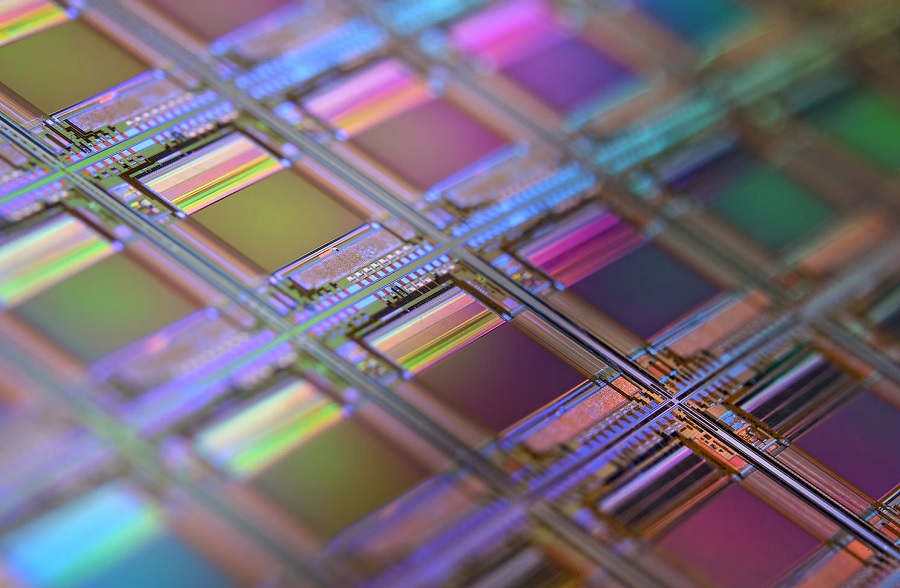
The Taiwan Semiconductor Manufacturing Company, Apple’s primary chip supplier, will reportedly start mass-producing 3nm chips this week. The chipmaking technology, also called N3, is expected to be used in the slate of new processors included in Apple devices launching next year.
DigiTimes reported that TSMC would conduct an event on Thursday, Dec. 29, in Fab 18 at the Southern Taiwan Science Park to commemorate the beginning of mass production of 3nm chips. The manufacturer is also expected to announce details on the expansion of its 3nm process production at the facility.
Apple fans might want to pay attention to this development, as previous reports have claimed that the iPhone maker plans on moving toward using TSMC’s 3nm process for chips that will power devices launching in 2023. Nikkei Asia said the tech giant is aiming to use the updated N3E node for the A17 Bionic chip and the next generation of Apple silicon, likely to be called M3. So the iPhone 15 series could be one of the first smartphone lines to include a 3nm SoC.
TSMC has said that its 3nm chipmaking tech will provide up to 70% logic density gain. Chips produced using the N3 node are also said to deliver up to 15% faster processing and will reduce power consumption by up to 30% compared to 5nm chips. The foundry has been aiming to start high-volume production using its 3nm process in the second half of 2022, so the report suggests TSMC is just in time to fulfill that target.
Meanwhile, there have been conflicting reports on whether Apple would use TSMC’s 3nm process for M2 Pro and M2 Max. Both chips are expected to ship with the next 14-inch and 16-inch MacBook Pros in early 2023.
Taiwan-based publication Commercial Times suggested in August that both chips will be manufactured using the 3nm node. But analyst Ming-Chi Kuo later said the new 14-inch and 16-inch MacBook Pros would enter mass production in late 2022. “Given TSMC's guidance that the 3nm will contribute revenue starting in 1H23, processors of 14" and 16" MacBook Pro models may still adopt the 5nm advanced node,” Kuo added.
Photo by Laura Ockel on Unsplash







