


 Nike Tariff Refund Lawsuit Sparks Consumer Backlash Over Price Increases
  Trump Administration Files Fraud Charges Against Southern Poverty Law Center Over Informant Payments
  Asian Stocks Steady as Iran War Concerns Persist Ahead of Trump-Xi Summit
  Coles “Down Down” Ruling Sparks Fresh Scrutiny of Australian Supermarket Pricing
  Havana Protests Erupt as Cuba Faces Severe Blackouts and Fuel Crisis
  Taiwan Court Fines Tokyo Electron Unit $4.78M in Major TSMC Trade Secrets Case
  Gold Prices Steady Ahead of Trump-Xi Meeting as Inflation and Oil Concerns Persist
  Japan Considers Extra Budget Aid Amid Rising Fuel and Utility Costs
  New Zealand Budget 2026 Focuses on Fiscal Discipline and Infrastructure Investment
  OECD Sees Bank of Japan Raising Interest Rates to 2% by 2027
  Judge Rules Use of Military Lawyers in Civilian Prosecutions Is Lawful
  Asian Currencies Slide as Indian Rupee Hits Record Low Amid Iran Tensions
  Federal Appeals Court Allows Texas SB4 Immigration Law Enforcement to Proceed
  Wall Street Futures Rise Ahead of Trump-Xi Summit as Tech Stocks Lead Market Rally
  Rubio Discusses Iran Crisis and Strait of Hormuz Disruptions With UK and Australia
  Florida Launches Criminal Probe Into OpenAI Over FSU Shooting Incident


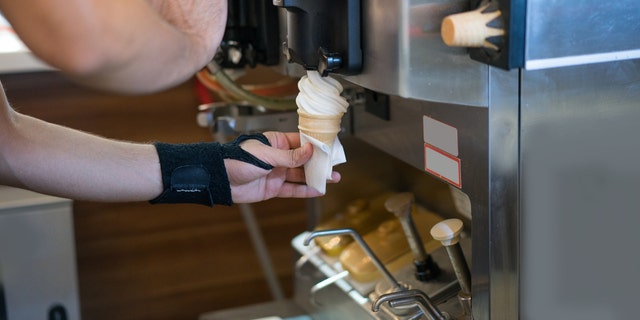
A couple that invented a gadget dubbed Kytch that helped fix McDonald’s chronically broken-down ice cream machines are suing the fast-food giant for $900 million for false advertising and tortious interference.
Kytch is a device about the size of a mobile phone that is planted inside the machines that make milkshakes, ice cream cones, and the McFlurry that are sold at McDonald’s locations.
McDonald’s buys its machines from Taylor, the manufacturer, at $18,000 apiece.
Jeremy O’Sullivan and his partner, Melissa Nelson, the creators of Kytch, tried to fix the problem by attaching the device to the machines. Kytch intercepts the machine’s internal communications and sends them via WiFi to a smartphone or web interface, where owners can troubleshoot the problem.
Kytch started to become increasingly popular among McDonald’s franchise owners — until McDonald’s told its franchisees not to use Kytch devices in November 2020.
McDonald’s intervened and warned that the hacking device violated the warranties of the ice cream machines while also posing a risk of “serious human injury.”
Kytch sued Taylor last year after Taylor allegedly obtained one of Kytch’s devices and reverse-engineered it to create its internet-connected monitoring product.
In its complaint in California Superior Court in Alameda County, K|tch described the case as being about corporate espionage and the extreme steps one manufacturer has taken to conceal and protect a multimillion-dollar repair racket.
Taylor denied having a copy of Kytch's device or wanting to steal the startup's intellectual property.
The co-founders of Kytch now claim that they sued Taylor to create a path for future legal action against McDonald's since the data that would be revealed during litigation may help their case.
Documents handed over by Taylor show that it was McDonald's that took the lead in attempting to prevent franchisees from utilizing the device, according to the Kytch developers.
According to Nelson, McDonald’s tarnished their name, scared their customers, and ruined their business. They were anti-competitive.
He added that McDonald’s had every reason to know that Kytch was safe and didn’t have any issues.
The FTC has launched an inquiry into McDonald's malfunctioning ice cream machines last fall after becoming the target of jokes on late-night television and social media.
In the US, treats made by the Taylor machines account for about 60% of the chain's dessert sales.
McDonald’s said Kytch’s claims are meritless.







