


 Explosion and Fire Erupt at Valero Oil Refinery in Port Arthur, Texas
  RFK Jr. Overhauls Federal Autism Panel, Sparking Medical Community Backlash
  Innovent Biologics Shares Rally on New Eli Lilly Oncology and Immunology Deal
  Astronomers have discovered another puzzling interstellar object − this third one is big, bright and fast
  Senate Sets December 8 Vote on Trump’s NASA Nominee Jared Isaacman
  Eli Lilly’s Inluriyo Gains FDA Approval for Advanced Breast Cancer Treatment
  Air Canada Express Crash at LaGuardia: Controller Distracted by Prior Emergency
  Nanya Technology Shares Surge 10% After $2.5 Billion Private Placement from Sandisk and Cisco
  Merck Raises Growth Outlook, Targets $70 Billion Revenue From New Drugs by Mid-2030s
  Federal Appeals Court Blocks Trump-Era Hospital Drug Rebate Plan
  FDA Rejects Review of Moderna’s Flu Vaccine Application, Shares Slide
  Lost in space: MethaneSat failed just as NZ was to take over mission control – here’s what we need to know now
  Neuren Pharmaceuticals Surges on U.S. Patent Win for Rare Disorder Drug


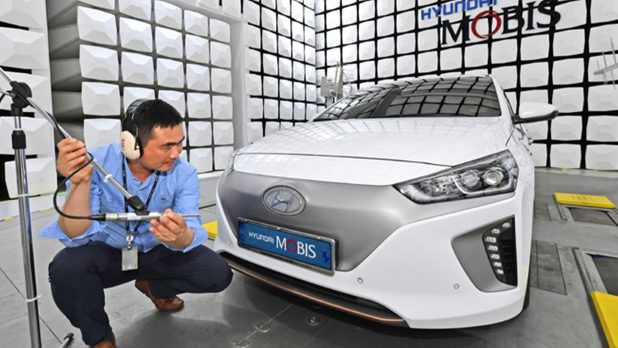
Hyundai Mobis Co. has come up with an in-house brainwave-based driver monitoring system that can reduce the risk of drowsy driving by up to one-third.
The system, dubbed M.Brain, is a wearable earpiece that continuously detects and analyzes drivers' brain activity.
The company has examined the actual effect of the technology through a pilot study on public buses in Gyeonggi Province over the past year in partnership with the Gyeonggi Research Institute.
According to the findings, drivers who used M.Brain saw their risk of careless driving during after-meal hours, when drowsy driving is most common, drop by up to 30 percent.
M.Brain helped minimize the danger of careless driving by roughly 20% on highways where drowsy driving can lead to multi-car accidents.
When sloppy driving was detected in real-time, the device helped drivers recover attention within 2.3 seconds by blasting an alarm over the speakers and vibrating the seat.
This is nearly three times faster than the 6.7 seconds it took non-M.Brain drivers to regain attention.







