


 SpaceX Stock Slump Wipes Out Nearly $700 Billion From Elon Musk’s Paper Wealth
  Intel, AMD Seek Long-Term China Server CPU Deals as AI Demand Drives Supply Crunch
  Wistron Opens $700M Texas AI Factory to Build Nvidia Superchips in U.S.
  OpenAI Australia Data Center Switches Cooling Strategy After Recycled Water Plan Fails
  GE Vernova Q2 Revenue Tops Estimates as Earnings Miss, Shares Slide Despite Higher 2026 Outlook
  Shein Reports $99 Million Loss Ahead of Hong Kong IPO as U.S. Tariffs Hit Sales
  Domino’s Weighs Appeal After Australian Court Rules Workers Were Misled on Pay
  Oracle Stock Rises After Winning Up to $6.99 Billion U.S. Defense Software Contract
  Scandinavian Tobacco Group Sells BREAK and Moro Brands to Japan Tobacco for €176 Million
  SAP Beats Q2 Revenue Estimates as Cloud Backlog and Business AI Demand Drive Growth.
  Alaska Air Q3 Outlook Misses Estimates as Higher Fuel Costs Weigh on Profit Forecast
  Nvidia Eyes $250B Guarantee for OpenAI’s Massive Ohio AI Data Center Project
  Uber Stock Falls as Waymo Plans to End Robotaxi Partnership by 2028
  CXMT IPO Debut in Shanghai Puts $85.5 Billion Chipmaker in Spotlight
  Coca-Cola Raises Diet Coke Prices in India as Iran Conflict Disrupts Can Supply
  Elon Musk Fuels SpaceX-Tesla Merger Speculation After Earnings Call





The stark difference between an aged care “home” and a real home has been laid bare by the COVID pandemic.
Residential aged care buildings are often institutionally designed, even if they have the appearance of a hotel. Think long corridors, vast dining rooms, nursing stations and bland corporate furnishings.
These design choices support a model of care underpinned by cost efficiencies rather than real people’s rhythms of daily life.
So, how can we make aged care facilities feel more like home, while keeping them pandemic-safe?
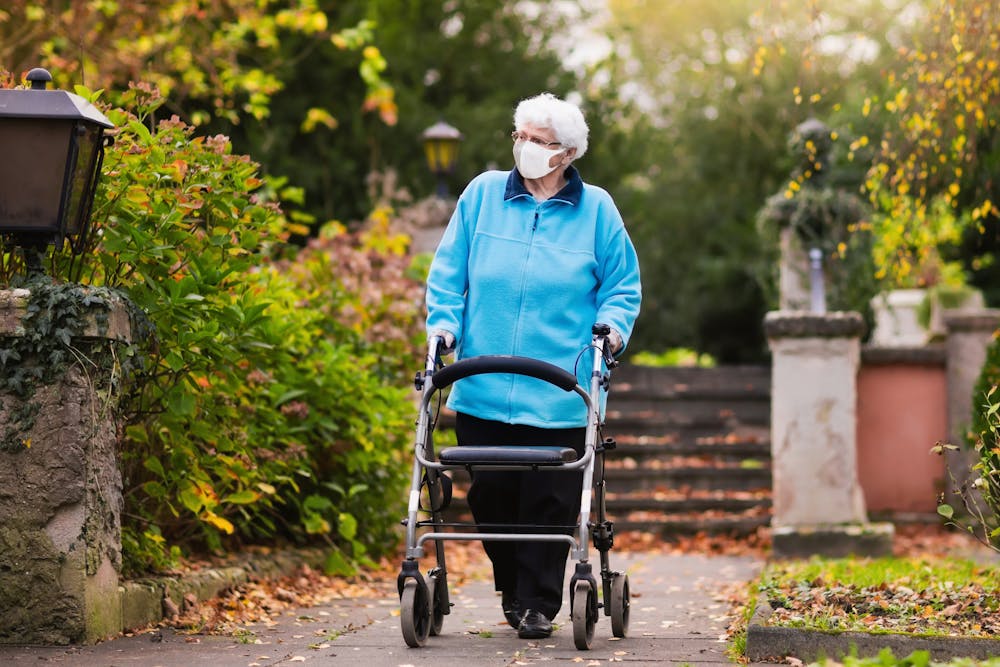
How can we make aged care facilities feel more like home, while keeping them pandemic-safe? Shutterstock
More like a ‘container’ than a home
Residential aged care facilities are deeply restrictive environments; some have compared them to prisons.
During the pandemic, things were made worse as residents were denied the right to leave their rooms or have visitors. For many residents, it must feel like prevention is worse than the disease, as physical and psychological health declines markedly in imposed isolation.
Hotel-like residential aged care rooms are no place for long periods without the company of others. Some residential aged care centres may look like luxury resorts, but residents are still incarcerated.
Often residential aged care centres are more like a “container” than a home; a container that dispenses shelter, food and medical care.
So, what might we do differently in the post-pandemic era?
To try to answer this question, we held a collaborative design workshop involving architects and stakeholders, including managers from the residential aged care sector. We sought to visualise design ideas using three existing not-for-profit residential aged care sites as testing grounds.
We asked the group to ponder: what makes a home “home-like”? And how does that differ from the environment at an aged care centre?

We held a collaborative design workshop involving architects and stakeholders, including managers from the residential aged care sector. Anjanette Webb/Longevity By Design, Author provided
Three key ideas emerged, all of which could help a facility feel more like a home while also reducing the impact of future pandemics.
1. Make aged care facilities indistinguishable from their surrounding neighbourhoods
Residential aged care facilities are often walled and gated enclaves set apart from the surrounding community. Residents are secluded in wards and aren’t part of the natural ebb and flow of the community.
A home, on the other hand, is usually directly connected to the outside world.
Embedding indistinguishable residential aged care households in the heart of an active community would add to the broader social and physical fabric and build support networks.
In practice, this could mean opting for smaller buildings that look similar to surrounding buildings, rather than large and imposing structures.
It could mean offering a wide range of housing choices, from houses to apartments, and softening wall and gate barriers so residents easily connect with everyday community life.

Embedding indistinguishable residential aged care households in the heart of an active community would help build support networks. Shutterstock
2. Ageless communities and support networks without moving house
Our group took inspiration from the urban design concept known as the “five-minute community”, where everything is a short walk away.
We imagined designs that allow for self-sufficient small households of up to eight residents, with different generations also located in the same street. “Ageless” communities like this allow for different generations to interact (either incidentally or deliberately).
Residents could easily adjust the level of support needed (up and down) over time, while staying at home. Intensive rehabilitation could be delivered in the home or nearby. For example, people who have had a fall could access rehabilitation and restorative services in the local area.
We also looked for ways to take advantage of existing spaces in the community rather than constructing new aged care facilities that are set apart.
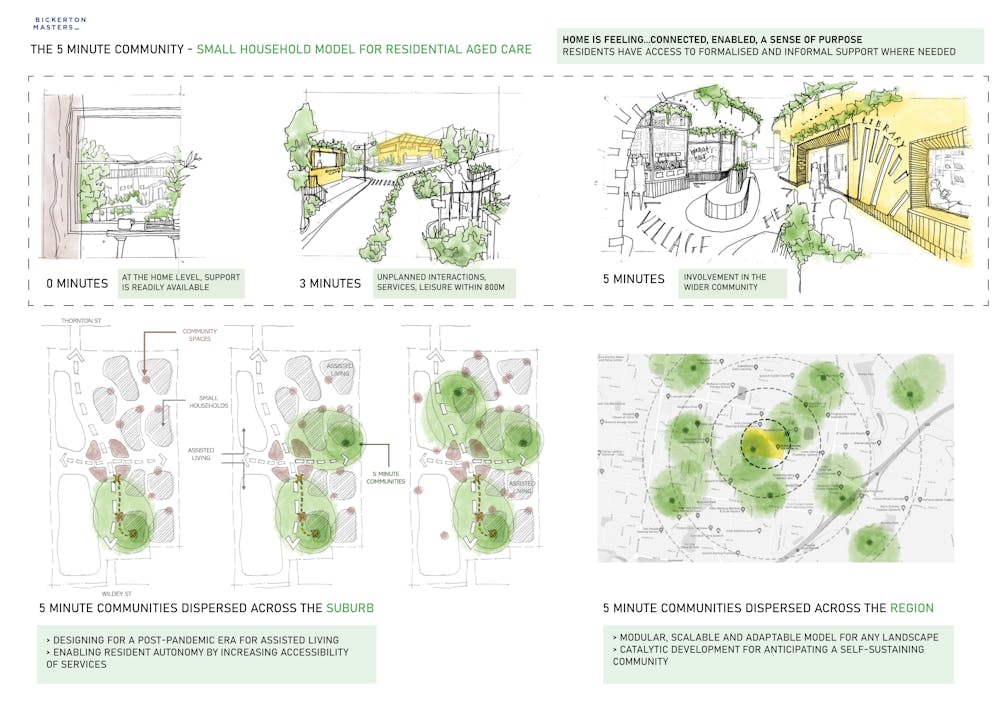
The five-minute community and small household model for residential aged care. Bickerton Masters
3. Designed-in respiratory infection prevention measures
Big isn’t always better.
Small home models deliver an antidote to isolation and the spread of airborne respiratory infection.
Smaller stand-alone buildings are less reliant on centralised air-circulation systems and can deliver strategies to reduce infection transmission by ensuring all rooms have access to fresh air and natural ventilation.
Smaller households can quarantine without the need to lock down a large facility.
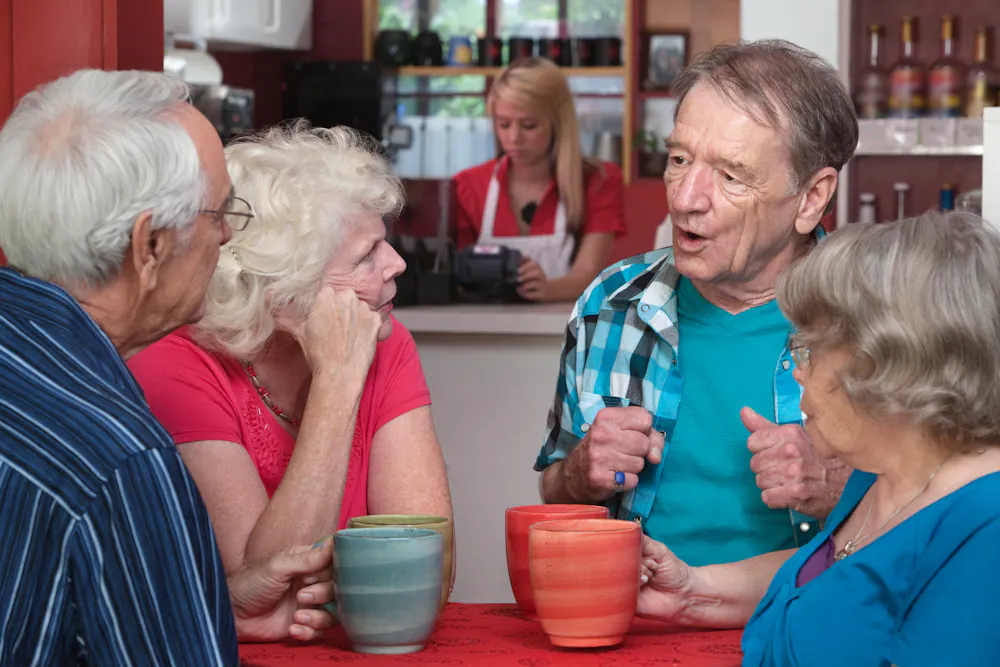
Small home models deliver an antidote to isolation and the spread of airborne respiratory infection. Shutterstock
Community participation and engagement built into the design
Entrenched approaches to residential aged care design assumes residents can do little independently. An unquestioning focus on inabilities further disempowers: “care” is done “to” or “for” a resident in a “facility”.
For example, residential aged care meals are generally pre-prepared and eaten in a large-scale room with many others (including strangers).
At home, by contrast, people decide what, when and where to eat. The small home approach in five-minute communities would allow, for instance, people of different generations to cook together or for a younger person to cook for an older person while also learning new skills.
Designs that acknowledge older people have knowledge and skills to contribute allow for such interactions to occur.
When workshop participants challenged their own expectations, they envisioned design concepts emphasising living, not just existing, until end of life.
The residential aged care crisis is escalating, and structural and cultural change is desperately needed.
It’s time to rethink these physical environments with peoples’ fundamental human needs at the heart of design.







