

 Menu
Menu

 Search

- News

- Economy

- Central Banks
- Investing
- Research
- Roundups
- Digital Currency
- Insights
- Technical Analysis
- Technology
- Business
- Law
- Health
- Nature
- Fintech
- Science
- Topic
- Opinions
- ©Econometrics LLC . All Rights Reserved.

Vera Keller
Associate Professor of History, University of Oregon
A historian of science and an early modern Europeanist, Keller is interested in the co-production of science and politics. Her first book, Knowledge and the Public Interest, 1575-1725 (Cambridge, 2015) explores how scientific ideas such as matter theory helped naturalize and reframe political ideas such as interest, while political concepts helped structure new scientific formations, such as the “advancement of learning.” She is currently completing her second book, which returns to the subject of her dissertation, the inventor, alchemist, and philosopher Cornelis Drebbel (1572-1633). Her third book project, Cultures of Citation, will offer a comparative study of professional standards for citation and credit in emerging bibliography and museology in England and Northern Europe in the late seventeenth century.
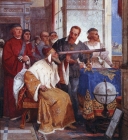
Before Nobels: Gifts to and from rich patrons were early science's currency
Oct 05, 2016 11:35 am UTC| Insights & Views Science
While the Nobel Prizes are 115 years old, rewards for scientific achievement have been around much longer. As early as the 17th century, at the very origins of modern experimental science, promoters of science realized the...

Morgan Stanley: Fed Rate Cuts Still on Track Despite Oil-Driven Inflation
China's Energy Resilience Shields Economy From Global Oil Shock, Goldman Sachs Says

UAE's Largest Natural Gas Facility Suspended After Attack-Triggered Fire

Trump's FY2027 Budget: Major Defense Boost and Domestic Spending Cuts

U.S. Warplane Shot Down by Iran Amid Escalating Middle East Conflict

Trump Eyes Cabinet Shake-Up Amid Iran War Political Fallout
Iran Tightens Grip on Strait of Hormuz as Israel Prepares Strikes and Oil Markets Spiral

U.S. and Israel Escalate Pressure on Iran Over Strait of Hormuz as War Enters Sixth Week

Israel Poised to Strike Iranian Energy Sites, Awaiting U.S. Approval

U.S. Envoys Witkoff and Kushner Expected to Visit Kyiv in April Amid Stalled Peace Talks

NASA's Artemis II Mission: First Crewed Lunar Journey Since Apollo

NASA's Artemis II Crew Arrives in Florida for Historic Moon Mission
SpaceX Pivots Toward Moon City as Musk Reframes Long-Term Space Vision

SpaceX Prioritizes Moon Mission Before Mars as Starship Development Accelerates

Elon Musk Ties SpaceX IPO Access to Mandatory Grok AI Subscriptions
MATCH Act Targets ASML and Chinese Chipmakers in New U.S. Export Crackdown

Microsoft's $10 Billion Japan Investment: AI Infrastructure and Data Sovereignty Push

Australia's Social Media Ban for Under-16s Sparks Global Movement

SpaceX Eyes Historic IPO at $1.75 Trillion Valuation


- Market Data




