

 Menu
Menu

 Search

- News

- Economy

- Central Banks
- Investing
- Research
- Roundups
- Digital Currency
- Insights
- Technical Analysis
- Technology
- Business
- Law
- Health
- Nature
- Fintech
- Science
- Topic
- Opinions
- ©Econometrics LLC . All Rights Reserved.

Usman W. Chohan
Doctoral Candidate, Policy Reform and Economics, UNSW Australia
Usman W. Chohan is an international economist-academic[1] who contributes extensively to the Conversation with the aim of bringing a policy reform expertise on pressing issues of social and economic consequence to a wider audience. He has been included in the "50 Standout Articles from Australia's Top Thinkers" of the Conversation (2016). Usman has written more than 25 Op-Eds in both English and French for four separate arms of the Conversation: Australia, France, Africa, and the United States. In terms of readership, he is among the Top 50 most read academics and Top 10 economists from UNSW on the Conversation. Usman is also featured and quoted in the Conversation's 2016 Annual Stakeholder Report for the policy impact of his work.
---------------------------------------------------------------------------------------------
“The truth is always an abyss. One must dare to dive — like a swimming pool — from the quivering springboard of trivial everyday experience and sink into the depths, in order to later rise again — laughing and fighting for breath — to the now doubly illuminated surface of things.” — Kafka.
---------------------------------------------------------------------------------------------
BIOGRAPHY
Usman W. Chohan (b. Manhattan, New York) is the President and Founder of the International Association of Hyperpolyglots [2], and is fluent in seven Indo-European languages (English, Spanish, French, Portuguese, Hindi, Urdu and Punjabi), while also conversant in a Sino-Tibetan language (Mandarin) and a Construct Auxiliary language (Esperanto) [2][3][4]. He studies an Altaic language (Japanese), a Finno-Ugric language (Finnish), and an Afro-Asiatic language (Arabic) when he finds the occasion.
Usman has previously been a Consultant with the World Bank (Social Accountability, WBI), working on issues of fiscal governance reform, and specifically, the implementation of Independent Legislative Fiscal Institutions (IFIs) to help bring impartial and nonpartisan financial expertise into global governance systems [5].
He is a leading authority in research within a specialized subfield of legislative studies known as "Parliamentary Fiscal Scrutiny", and his ideas have been used to challenge and contextualize the laws underpinning legislative budget institutions in even the strongest democracies [6], such as in Canada, where his work was used to inform the landmark parliamentary debate on amending the Parliamentary Budget Office Act (C-476, 2013).
Prior to this he was the Special Situations Analyst in the Global Equities Team at Natcan Investment Management, the investment arm of the National Bank of Canada. The Global Equities team had six global investment professionals including Usman and $3 billion dollars in Assets under Management (AuM).
Usman is pursuing a PhD in Economics on a full scholarship from UNSW (Australia) [7], where he is creating the world's first multidisciplinary synthesis of Independent Legislative Fiscal Institutions. Usman has an MBA from McGill; and he has done Masters coursework at MIT-Tsinghua [8].
Given his rich 'tri-sector experience' that encompasses private sector, public sector and academia [9], Usman enjoys consulting, research, and teaching in equal measure. He delivered the 2015 Foreign Affairs Lecture in the Global Leadership Program (GLP) at Macquarie University in Sydney [10]. He has been included in the "50 Standout Articles from Australia's Top Thinkers" of the Conversation (2016). [11]
Usman is also a current Global Shaper of the World Economic Forum [12]. He is the CFO of a Fintech startup: Taqanu Bank. Taqanu Bank is a financial intermediary that aims to promote the financial inclusion of refugees, newly arrived groups, and other disenfranchised communities in the European community and beyond. Taqanu focuses on fintech solutions to create creditworthy identifications for refugees. This helps to validate the financial personhood of the victims of social strife. Taqanu's impact is in giving a much needed fresh start, through the disbursement and deposit of funds, as well as in the development of credit histories, to otherwise isolated groups, so that they needn't remain at the margins of society [13].
Given that his last four residences were Montreal, Buenos Aires, Canberra, and Beijing, you will likely find Usman W. Chohan roaming somewhere between these four coordinates at the ends of the earth.
---------------------------------------------------------------------------------------------
REFERENCES
[1] https://en.wikipedia.org/wiki/Usman_W._Chohan
[2] http://www.polyglotassociation.org/
[3] https://www.youtube.com/watch?v=anmWMFN4_aI
[4] https://www.youtube.com/watch?v=2ECAyLcTtjA&list=UU5LIjx6HsLEK2QuRUb03kYA&index=2
[5] http://www.revparl.ca/36/3/36n3e_13_chohan.pdf
[6] http://www.parl.gc.ca/legisinfo/BillDetails.aspx?billId=5997160&Language=E&Mode=1&View=10
[7] https://www.unsw.adfa.edu.au/our-people/mr-usman-chohan
[8] http://usmanchohan.blogspot.com.au/2014/07/my-tsinghua-grades.html
[9] https://www.youtube.com/watch?v=anmWMFN4_aI
[10] https://www.youtube.com/watch?v=xiikCBP5u48
[11] https://www.mup.com.au/items/199649
[12] https://www.globalshapers.org/shapers/usman-chohan
[13] http://www.taqanu.com/
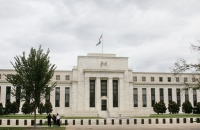
There is more to good central bank governance than independence
Nov 16, 2016 11:39 am UTC| Insights & Views Central Banks
Throughout the Presidential campaign Donald Trump repeatedly criticised the United States Federal Reserve, accusing it of creating a big fat ugly bubble through its monetary decisions, among many other things. Trumps...

IMF Maintains 2027 Global Growth Forecast at 3.4% Amid Rising Risks
Philippines Current Account Deficit Seen at $19.1 Billion in 2026

RBA Signals More Rate Hikes as Inflation Risks Rise

Gold Prices Rebound as Dollar Weakens Ahead of US Inflation Data

Asian Currencies Steady as Dollar Nears 18-Month High Ahead of US CPI

US Condemns China Sanctions on Taiwan Allies Belize and Paraguay
Kim Jong Un Showcases ICBM Ahead of Possible Trump Meeting

Trump Denies Russia and China Are Helping Iran in U.S. Conflict

Most Americans Oppose Election Betting on Prediction Markets, Poll Finds

Elon Musk Donates $366 Million to 2026 US Midterms

Blue Origin New Glenn Explosion Could Delay Launch Operations Until 2028
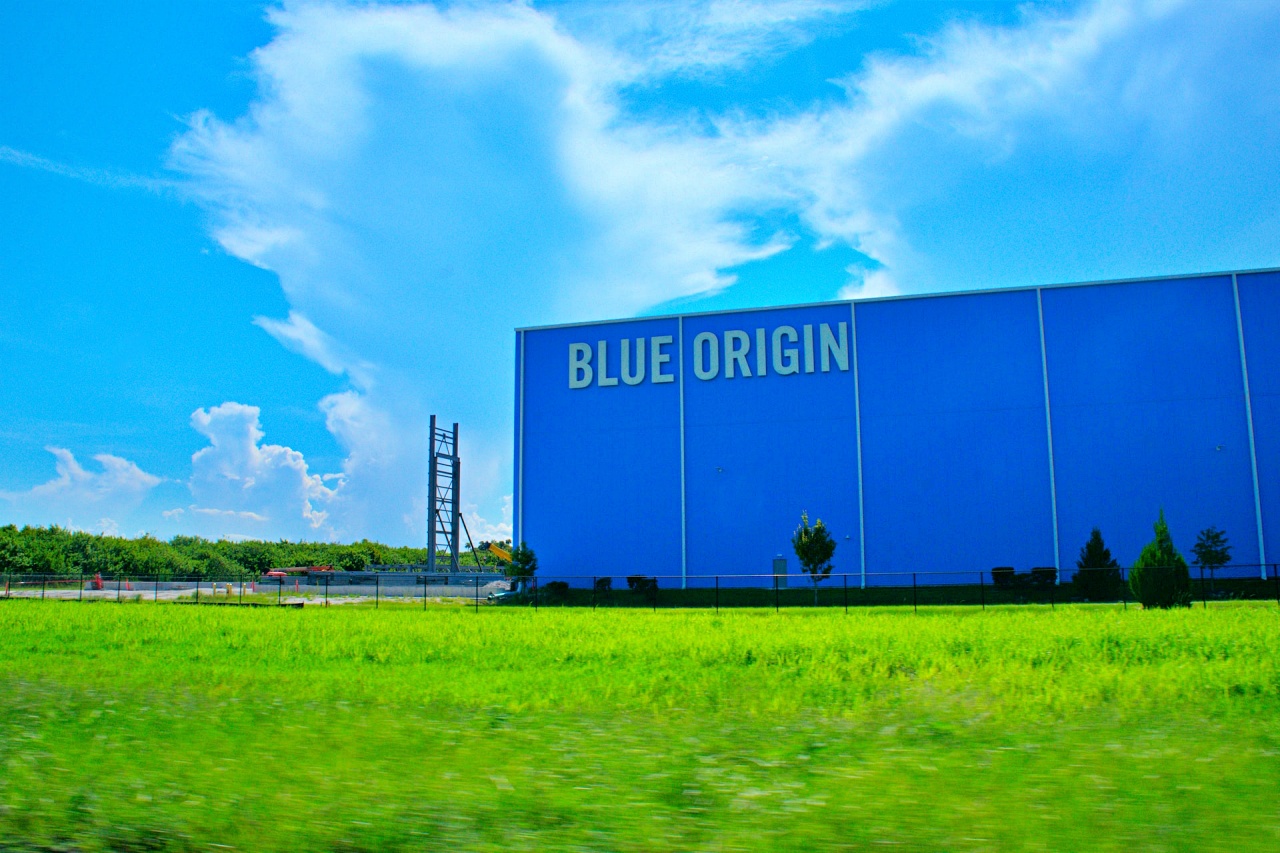
Blue Origin New Glenn Rocket Explodes During Launch Pad Test, Delaying Space Ambitions

SpaceX Delays Starship V3 Launch Ahead of Potential Record IPO

Trump Administration Releases New UFO Files and Apollo Mission Records

China vs. NASA: The New Moon Race and What's at Stake by 2030

Nvidia’s China AI Chip Market Share Falls to 34% as Huawei Gains Ground

Samsung, SK Hynix Shares Plunge as China Chip Competition Grows

Moonshot AI Executives Seek Settlement Ahead of Hong Kong IPO

Meta Launches Muse Wonder AI Models, Shares Rise 3.7%

Epic Games Delays Disney Shooter, Shifts to AI-First Development




- Market Data




