


 South Korea, US Discuss Warship Building Cooperation
  Europe Warns Russia Is Escalating Hybrid Attacks Across NATO
  Macron Challenges Trump’s Gaza Peace Claims at UN
  Trump Says U.S.-Iran Peace Deal Near After UN Talks
  Russian Strikes Kill Eight Across Ukraine as Energy Sites Hit
  Taiwan Vows to Advance US Arms Sales Ahead of Trump-Xi Meeting
  US Invites Putin to Miami G20, Opening Door to Trump Summit
  US Officials Split Over Response to Israeli West Bank Settlements
  Macron, Trump Discuss Ukraine-Russia Energy Strike Moratorium
  Trump Says ‘Freedom’ Is Coming to Cuba
  Iran Vows ‘Crushing’ Response as US Talks Continue
  US, China Extend Trade Truce to Jan. 10 Ahead of Trump-Xi Summit
  Ghana Says Western Support Growing for Slave Trade Reparations
  Marco Rubio to Meet Russia’s Lavrov in New York
  Trump to Press Xi on Release of US Nuclear Expert Held in China
  Scott Bessent Eyed as Trump’s New AI Czar
  Gaza Faces Evacuation Crisis as War-Damaged Buildings Risk Collapse


 Add as a preferred source on Google
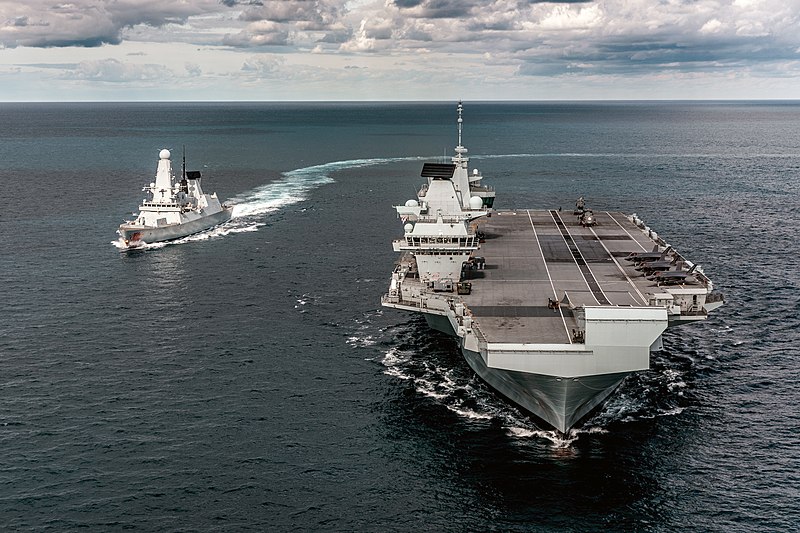
Tensions between countries in Asia have led to fears of a possible world war getting triggered. As fears remain, the west looks to stabilize its relations in the continent as the UK’s HMS Queen Elizabeth made its first port call in Japan this week.
The HMS Queen Elizabeth docked at the US Navy Base in Yokosuka, which guards the bay of Tokyo this week. The arrival of the aircraft carrier marks a turning point in the relations between the two countries, with the UK reaffirming its commitment to protecting interests in the South China Sea and its stance in deterring increasing aggression from China. This comes as China is making bolder moves by increasing its incursions into Taiwanese airspace as it looks to pressure Taiwan into accepting the sovereignty of China over the island nation.
Aside from Taiwan, China has also made sweeping claims to the South China Sea, which has been rejected by a tribunal back in 206. The region has also seen disputes between China and the surrounding countries that also have claims to the waters.
UK Commodore Steve Moorhouse, who commands the carrier strike group, said in a video message on Twitter that the visit is in light of the UK’s pledge to strengthen its relations in the Indo-Pacific region. Moorhouse also pledged that the trip by the carrier strike group would take relations with Japan to “the next level.”
The Yokosuka city office revealed that 1,240 crew members on the HMS Queen Elizabeth will not be disembarking from the ship.
Another issue that has stoked fears of world war is Russia’s ongoing development of nuclear weapons. United States Northern Command leader Glen VanHerck warned of the increasing threat that Russia is posing on US security back in August. VanHerck said that Russia was able to develop capabilities that would not have existed 20 years back during the Cold War.
Those capabilities include developing strike cruise missiles that could strike the US from its location. VanHerck also revealed that allied intelligence is also aware of Moscow’s developments in missiles and in submarines. VanHerck added that the investments made in cyber and space capabilities only add to the threat that Russia poses.







