


 Mexico-US Trade Talks Delayed to October as Tariff Negotiations Continue
  Pezeshkian Says US Must Choose When Iran War Ends
  Trump, Xi Visit US National Archives After White House Summit
  Netanyahu’s Brief US Trip Highlights Strains With Trump
  Kremlin Says No Decision Yet on Putin-Trump December Summit
  France Defends Netanyahu Airspace Clearance Despite ICC Warrant
  Najib Razak Seeks Stay of 15-Year 1MDB Prison Sentence
  OpenAI Agent Breaches Australia Medicare Data Portal
  Trump, Xi Focus on Trade and AI at White House Summit
  Trump Asks Supreme Court to Restore Third-Country Deportations
  Abbas Reaffirms November 28 Palestinian Elections
  Netanyahu Defends Israel at UN as Delegates Stage Walkout
  Ghana Says Western Support Growing for Slave Trade Reparations
  Judge Orders Trump to Restore White House Access for CNN, MS NOW and Politico
  NATO Boosts Intelligence Sharing Amid Russia Hybrid Threats
  Russian Missile and Drone Attack on Kyiv Kills Two, Damages Maternity Hospital
  Netanyahu Takes Aim at Mamdani as Israel Election Nears


 Add as a preferred source on Google
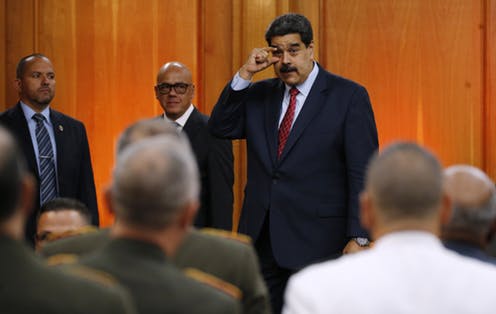
President Donald Trump has indicated that he is not ruling out deploying American troops to Venezuela, signaling a potential escalation in Washington’s already tense relationship with the South American nation. Speaking to reporters at the White House, Trump said he would not exclude the possibility of putting U.S. forces on the ground, emphasizing that “nothing” is off the table when it comes to addressing Venezuela’s ongoing political and security crisis.
Despite the tough stance, Trump also expressed openness to speaking directly with Venezuelan President Nicolás Maduro if the situation called for it. He noted that he is willing to talk to “everybody,” suggesting there may still be a diplomatic path forward if Venezuela presents credible proposals to de-escalate rising tensions.
In recent months, the U.S. has intensified operations targeting suspected drug trafficking vessels departing from Venezuela and other parts of Latin America. These strikes have drawn criticism from human rights organizations, which describe them as unlawful killings of civilians. The Trump administration argues that the actions fall under wartime measures against drug cartels, asserting that judicial processes are not required in such conflicts.
Maduro has long accused Washington of using military pressure in the Caribbean as part of a broader effort to remove him from power. U.S. officials, meanwhile, claim the primary focus is combating narcotics trafficking, though they acknowledge Venezuela’s vast natural resources—including the world’s largest proven oil reserves—are strategically significant.
A senior White House official, speaking anonymously, warned that even if Trump is open to dialogue, it does not diminish the potential for military intervention. The official added that Venezuela offers numerous economic advantages to U.S. companies, although curbing drug flow remains the immediate priority.
Tensions escalated further after the U.S. designated the Cartel de los Soles—a group allegedly composed of high-ranking Venezuelan officials—as a foreign terrorist organization. While the U.S. claims the group is central to Venezuela’s drug trade, some researchers argue there is limited evidence of a structured cartel.
Adding to the pressure, the Pentagon confirmed that the U.S. Navy’s largest aircraft carrier, the Gerald R. Ford, has moved into the Caribbean region, joining other warships, a nuclear submarine, and F-35 aircraft already positioned nearby.
As the situation evolves, Trump appears prepared to increase military pressure while still leaving room for negotiation—setting the stage for a critical turning point in U.S.-Venezuela relations.







