


 UK Home Asking Prices Rise for First Time Since May
  Asian Currencies Muted as Dollar Firms Ahead of Trump-Xi Summit
  Gold Prices Slip as Strong Dollar and Hawkish Fed Pressure Bullion
  Gold Prices Rise as Oil Slump Eases Fed Rate Hike Fears
  Yen in Focus as BOJ, Fed Rate Hikes Reshape Currency Markets
  France Debt-to-GDP Ratio Seen Hitting Record 119.3% in 2026
  Yen Weakens as Dollar Gains on Widening US-Japan Rate Gap
  Oil Prices Tumble on U.S.-Iran Diplomacy Hopes, Supply Relief
  Asian Stocks Mixed Ahead of Trump-Xi Meeting
  U.S. Stock Futures Rise Ahead of Trump-Xi Summit, Middle East Risks Weigh
  Fed Rate Hike Threatens Housing as U.S. Growth Leans on AI, Citi Says
  Gold Prices Rise as Oil Slide Eases Fed Rate Hike Fears
  Oil Prices Rise as U.S.-Iran Talks Fuel Diplomacy Hopes
  Strait of Hormuz Oil Shipments Hit Six-Month High as U.S. Clears Mines
  Vietnam, US Trade Deal Could Be Signed Soon, To Lam Says
  U.S. Dollar Hits Eight-Week High After Fed Rate Hike


 Add as a preferred source on Google
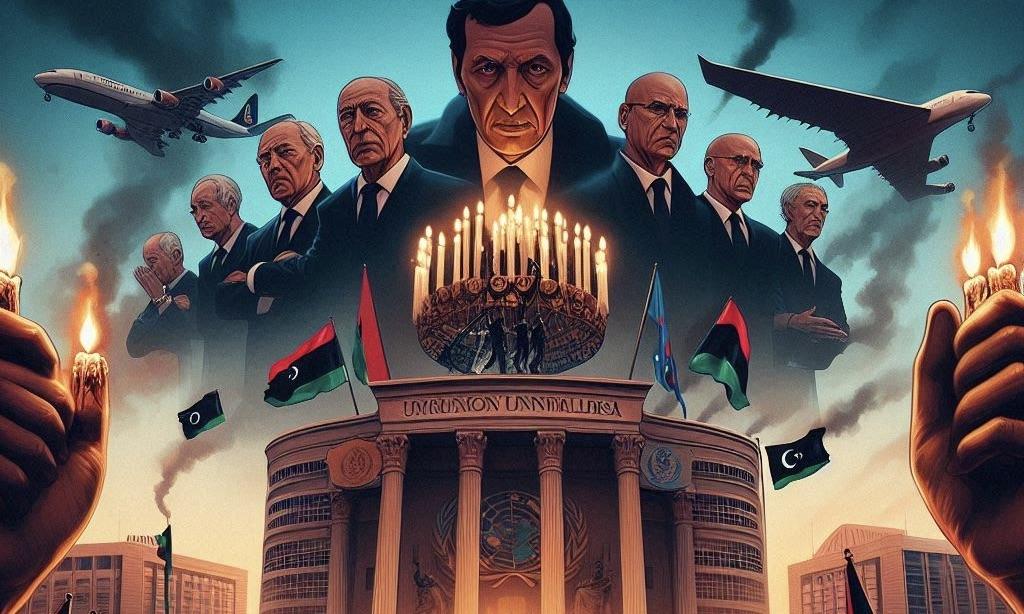
The UN's chief human rights official has accused Libya's political leaders of severe human rights abuses to suppress dissent and retain power, worsening the nation's crisis and deepening its social and economic divides.
UN Report: Libyan Leaders' Tactics Entrench Poverty and Crisis, Suppress Dissent
The chief human rights official of the United Nations has accused Libya's political leaders of suppressing political dissent to maintain their power. This has resulted in a divided nation and a populace trapped in poverty, crisis, and misery.
In a report submitted to the U.N (via VOA). Human Rights Council on July 9, Volker Türk, the U.N. high commissioner for human rights, delivered a stinging critique of the tactics employed by Libya's ruling oligarchy to eliminate their political opponents and maintain their power.
"A stalled political process, hijacked by actors whose interests align in preserving the status quo, is decimating the hope of Libyans for a more stable, open, and thriving society. Hopes they have had to carry for far too long, with little in return,” he said.
The human rights situation in Libya during the 12 months commencing in April 2023 is the subject of the high commissioner's report. In addition to an increase in arbitrary arrests and detentions, the report also details "some disturbing developments," including enforced disappearances and detention-related violations.
“Targeting of political opponents and dissenting voices across the country has accelerated,” he said.
Although the number of individuals detained is likely higher, he stated that his office has verified at least 60 instances of arbitrary detention of individuals who were "peacefully exercising their right to express political views.”
“In some cases, detention was followed by extrajudicial killing,” he said.
“All of this is corrosive to the prospects for healing Libya’s fractured social and political environment, especially as grievances around detentions were at the heart of the 2011 uprising,” he said.
He cautioned that the absence of accountability for the violations and atrocities that occurred 13 years ago “remains a serious obstacle to reconciliation today and serves as a driver of conflict.”
Thirteen Years Post-Qaddafi: Libya Remains Divided Amidst Human Rights Violations
Thirteen years after Muammar Qaddafi, Libya's erstwhile dictator, was removed from power, the country remains deeply divided. According to Arab News, two rival administrations control the country: the internationally recognized Government of National Unity, headquartered in Tripoli, and the Government of National Stability, which governs the eastern region.
Since 2014, Libya has not conducted presidential or parliamentary elections.
The high commissioner denounced the widespread violations and abuses "perpetrated at scale with impunity" against migrants, refugees, and asylum-seekers by both "state and non-state actors, often working in collusion" at the council.
His report details a plethora of atrocities that these vulnerable, destitute individuals endure, such as "trafficking, torture, forced labor, extortion, starvation in intolerable conditions of detention," as well as mass expulsions and the sale of human beings, including children.
“And in March this year a mass grave was discovered in southwestern Libya, containing at least 65 bodies presumed to be migrants,” Türk said.
Immediately after the mass grave was discovered in March, the International Organization for Migration stated, “The circumstances of their death and nationalities remain unknown, but it is believed that they died in the process of being smuggled through the desert.”
The high commissioner stated, “As if this were not horrific enough, we are following up on reports of another mass grave recently discovered in the desert area at the Libyan-Tunisian border.”
Türk stated that investigations into these offenses are necessary. “The responsibility for investigating these crimes falls squarely with the Libyan authorities. Reparations must be made, justice served and nothing like this must ever happen again.”
The high commissioner's allegations regarding the appalling treatment of refugees, migrants, and asylum seekers, as well as his accusations regarding mass graves, were not addressed by Halima Ibrahim Abdel Rahman, Libya's minister of justice.
The minister stated that specific comments “are not in line with reality,” pointing out that “Libya gives special importance to the rights of refugees, although many of the refugees present in the territory of our country are there clandestinely.”
She was also incensed by the high commissioner's assertion that human rights violations and atrocities against political dissidents are committed with impunity.
“What we see in the report does not fully reflect the efforts taken by the judiciary because we have prosecuted a high number of individuals accused of violating human rights while providing all legal guarantees” to people in “all places of detention, which are under the control of the Ministry of Justice,” she said.
Human rights chief Türk advised Libya to safeguard the people's right to freedom of assembly and association and reinstate the rule of law, which includes accountability for human rights violations.
“The stifling of civil society organizations, political activists, journalists, and many others is fostering a climate of fear,” he said.
“It is also undermining the very foundations necessary for Libya’s democratic transition, emboldening the spoilers, and enabling security actors to perpetrate human rights violations with impunity,” he said.
Photo: Microsoft Bing







