


 Ghana Says Western Support Growing for Slave Trade Reparations
  Marco Rubio to Meet Russia’s Lavrov in New York
  Netanyahu Takes Aim at Mamdani as Israel Election Nears
  Gaza Faces Evacuation Crisis as War-Damaged Buildings Risk Collapse
  OpenAI Agent Breaches Australia Medicare Data Portal
  Trump Board of Peace Unveils $2.45 Billion Gaza Recovery Plan
  US Officials Split Over Response to Israeli West Bank Settlements
  Zelenskiy Warns Russia Preparing Major Attack on Ukraine
  Mexico-US Trade Talks Delayed to October as Tariff Negotiations Continue
  Trump Says ‘Freedom’ Is Coming to Cuba
  South Korea, US Discuss Warship Building Cooperation
  Lula and Flavio Bolsonaro Tied in Brazil Runoff Poll
  Taiwan Vows to Advance US Arms Sales Ahead of Trump-Xi Meeting
  Russian Envoy Dmitriev Heads to US for Ukraine Talks
  Venezuela Promises Elections as Delcy Rodriguez Pledges Democratic Transition
  Russian Strikes Kill Eight Across Ukraine as Energy Sites Hit
  Russian Missile and Drone Attack on Kyiv Kills Two, Damages Maternity Hospital


 Add as a preferred source on Google
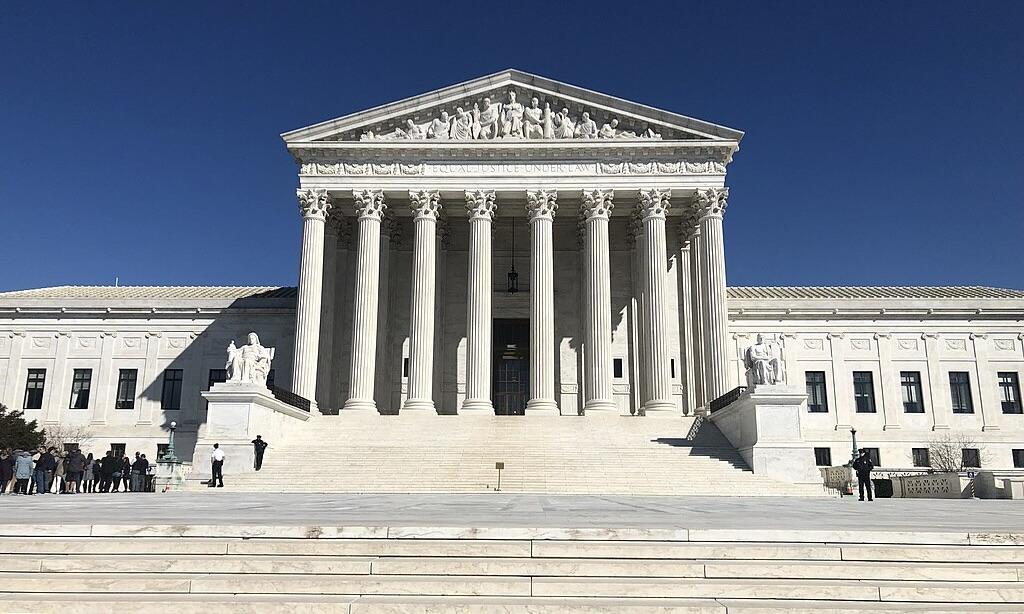
A bipartisan effort to overhaul the Supreme Court is gaining traction, with Senators Peter Welch (D-Vt.) and Joe Manchin (I-W.Va.) introducing a constitutional amendment to impose 18-year term limits on justices. The resolution, unveiled this week, seeks to curtail lifetime appointments while maintaining the Court's current nine-seat structure.
The proposal comes amid declining public confidence in the judiciary. A June Newsweek poll revealed that 58% of Americans support term limits for Supreme Court justices, signaling widespread frustration with the current system. Critics argue lifetime appointments contribute to politically charged confirmation battles and an increasingly partisan judiciary.
“Restoring public trust in our nation’s highest Court is both urgent and necessary,” Welch said in a statement. He believes term limits would eliminate “political gamesmanship” while ensuring a systematic and fair nomination process.
A Systematic Transition to New Terms
The proposed amendment includes a detailed transition plan to preserve the lifetime appointments of sitting justices while gradually implementing 18-year terms for new appointments. Under the new system, justices would serve staggered terms, with a vacancy arising every two years. This structure aims to provide consistency in judicial appointments and mitigate the influence of political cycles on the Court.
Manchin echoed concerns about the erosion of public trust, calling the lifetime appointment system “broken.” He criticized the current structure for fueling divisive confirmation hearings that undermine the judiciary’s integrity. The amendment, he said, offers a pathway to restore balance and fairness.
President Joe Biden has also advocated for Supreme Court reforms, including term limits and an enforceable ethics code. In a July op-ed for The Washington Post, Biden emphasized the U.S.’s uniqueness among democracies in granting lifetime tenure to justices. His reform agenda also includes measures to enhance judicial accountability and transparency, following recent controversies over undisclosed gifts and questionable ethics.
Divided Opinions on Reform
While the proposal has gained traction, opinions remain divided on the best path forward. Senator Elizabeth Warren (D-Mass.) has argued that term limits and other reforms could be implemented through legislation rather than a constitutional amendment. Speaking on CNN’s State of the Union, Warren suggested court expansion and term limits could both be achieved with legislative action.
The Judiciary Act, introduced by Senator Ed Markey (D-Mass.) and Representative Hank Johnson (D-Ga.), presents another alternative. This legislation calls for increasing the number of Supreme Court justices from nine to thirteen, a move some Democrats see as a solution to the Court’s perceived ideological imbalance.
The push for reform comes amid heightened scrutiny of the judiciary following controversial rulings on abortion rights, federal agency powers, and presidential immunity. Critics of the current system highlight the uneven distribution of appointments across administrations. For example, Donald Trump appointed three justices in a single term, while Barack Obama appointed only two over two terms.
Social Media Reacts
The proposal has ignited heated debate on social media, with users sharing a spectrum of views:
- @JusticeReformNow: “Term limits are a no-brainer. Lifetime appointments only breed partisanship in our courts!”
- @Constitutionalist45: “Another attack on the Constitution! Leave the Supreme Court alone.”
- @LegalEagle87: “Term limits are the only way to restore trust in our judiciary. Long overdue!”
- @PatriotMom2024: “If it ain’t broke, don’t fix it. This is just a power grab by the left.”
- @GenZForChange: “This could finally bring some balance to a broken system. The Supreme Court needs this reform.”
- @TraditionalistUSA: “What’s next? Expanding the court? This is just step one of a slippery slope.”







