


 China Warns US Arms Sales to Taiwan Could Disrupt Trump’s Planned Visit
  Japan Election 2026: Sanae Takaichi Poised for Landslide Win Despite Record Snowfall
  Trump Lifts 25% Tariff on Indian Goods in Strategic U.S.–India Trade and Energy Deal
  Trump Allegedly Sought Airport, Penn Station Renaming in Exchange for Hudson River Tunnel Funding
  Ohio Man Indicted for Alleged Threat Against Vice President JD Vance, Faces Additional Federal Charges
  U.S. Announces Additional $6 Million in Humanitarian Aid to Cuba Amid Oil Sanctions and Fuel Shortages
  Nighttime Shelling Causes Serious Damage in Russia’s Belgorod Region Near Ukraine Border
  India–U.S. Interim Trade Pact Cuts Auto Tariffs but Leaves Tesla Out
  U.S. to Begin Paying UN Dues as Financial Crisis Spurs Push for Reforms
  Missouri Judge Dismisses Lawsuit Challenging Starbucks’ Diversity and Inclusion Policies
  US Pushes Ukraine-Russia Peace Talks Before Summer Amid Escalating Attacks
  U.S.-India Trade Framework Signals Major Shift in Tariffs, Energy, and Supply Chains
  Trump Signs Executive Order Threatening 25% Tariffs on Countries Trading With Iran
  Norway Opens Corruption Probe Into Former PM and Nobel Committee Chair Thorbjoern Jagland Over Epstein Links
  New York Legalizes Medical Aid in Dying for Terminally Ill Patients
  Trump Endorses Japan’s Sanae Takaichi Ahead of Crucial Election Amid Market and China Tensions


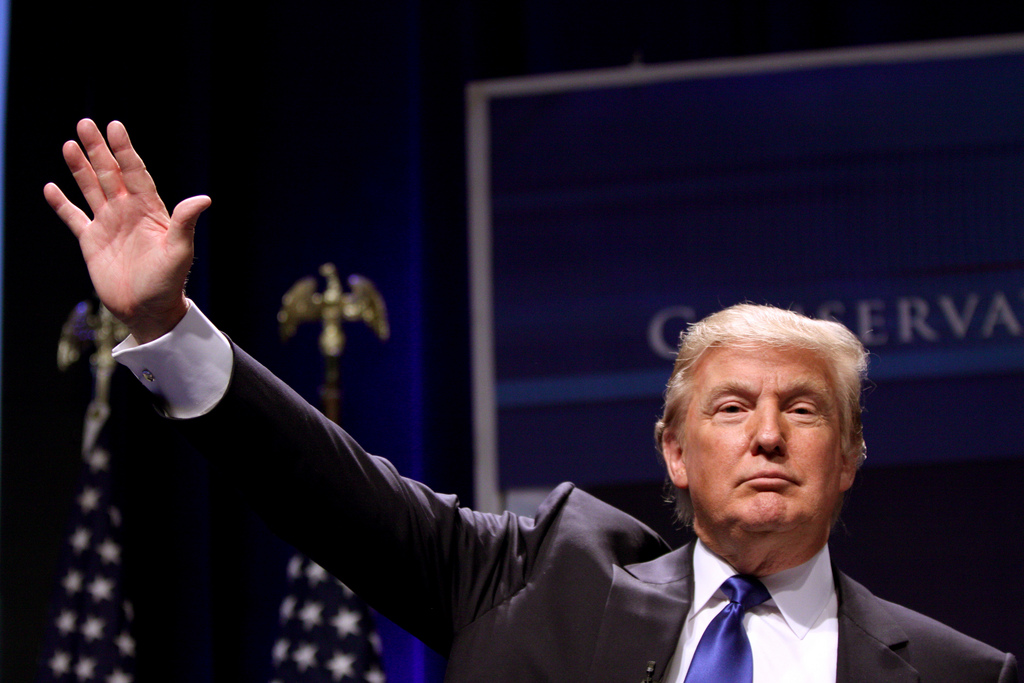
The results of “Super Tuesday”, when a clutch of US states voted to choose the two parties' nominees, have seriously ironed out both the Republican and Democratic primary campaigns. Both Donald Trump and Hillary Clinton scored major gains, and their rivals are now fully on the ropes. It may be that the campaigns are finally stabilising after a truly wild start to the primaries.
Donald Trump has bounced back remarkably from his loss in Iowa. He went into Super Tuesday having won New Hampshire, Nevada, and South Carolina; he’s also seen off experienced Republican candidates including onetime frontrunner Jeb Bush and New Jersey Governor Chris Christie – who has made the shocking move of endorsing Trump, to widespread disgust.
That left Trump with three principal rivals: Marco Rubio, Ted Cruz and John Kasich. All three headed into Super Tuesday in hopes of a major turnaround. Instead, they got routed. While Cruz won his home state of Texas (as expected) and netted Oklahoma as well, other delegate-rich states on the Republican side were called for Trump as soon as the polls closed, including Virginia, Tennessee, Massachusetts, Georgia, Alabama, and Arkansas.
Meanwhile, Marco Rubio, who has made a show of being the Republican mainstream’s best hope of stopping Trump, walked away with only one win, in Minnesota.
Hillary Clinton, meanwhile, confirmed that she has fully hit her stride after a rocky start to the primaries. She effectively tied Bernie Sanders in Iowa and lost big to him in New Hampshire, but then beat him convincingly in Nevada before trouncing him by an astonishing 47% in South Carolina – where, crucially, she won 90% of the black vote. That didn’t bode well for Sanders, whose campaign has been a barnstorming attack on income inequality and the deep divisions in American society – and on Super Tuesday, Clinton ultimately followed it with a huge sweep.
Georgia and Virginia were called for her as soon as the first polls closed (and tiny American Samoa soon followed). The delegate-rich southern states then quickly began falling into her column by big margins, and then a win in the New England state of Massachusetts with 116 delegates. Sanders won his small home state of Vermont and picked up Oklahoma, Colorado and Minnesota, but Clinton’s strength was simply too great across the rest of the states. Sanders is now clearly far behind, with very few hopes of recovery.
So what now?
Ready for Hillary
Now that Trump’s macho populism has all but steamrolled Cruz’s evangelical conservatism and Rubio’s moderation, and with Sanders' democratic socialism fading against Clinton’s pragmatic realism, this has fast started to become a contest between Trump and Clinton. And in that contest, the presidency is now Clinton’s to lose.
This would be true whoever was running. The other contenders on both sides simply cannot match her appeal: Sanders is too narrowly leftist for the general electorate, while Cruz and perhaps even Rubio would be too far right.
Trump, meanwhile, polls well among disaffected low income white Americans, which works well for that particular rump of the Republican Party, but much to the disappointment of its elite, who have so far been unable to stop the Trump machine – even as they desperately remind everyone that he’s simply too much of a risk, particularly on matters of national security and foreign policy.
Clinton, by contrast, polls especially well among middle-aged and older women, the poor, and middle class Americans, as well as minority communities. This is a winning coalition, one made up of many of the same groups that favoured President Obama in 2008 and 2012. These demographics have continued to swell their ranks, and in the absence of a major event (say, an utterly damning revelation in the drip feed of Clinton’s state department emails), the odds are ever in Clinton’s favour.
Even leaving aside the toxic, chaotic nature of the campaign so far, the prospect of a Trump presidency – or even a Republican one – seems very remote indeed.

Todd Landman receives funding from the Nuffield Foundation for his podcast series The Rights Track, and is a Fellow of the Royal Society of Arts (FRSA).
Todd Landman, University of Nottingham
This article was originally published on The Conversation. Read the original article.













