


 Russian Strikes Kill Eight Across Ukraine as Energy Sites Hit
  Iran Vows ‘Crushing’ Response as US Talks Continue
  China Tightens Fentanyl Rules Ahead of Trump-Xi Summit
  Trump to Press Xi on Release of US Nuclear Expert Held in China
  Taiwan Thanks US for Support Ahead of Trump-Xi Summit
  Kremlin Says No Grounds Yet for Ukraine Peace Talks
  Trump Administration Plans Faster FDA Reviews for Smoke-Free Nicotine Products
  Mexico-US Trade Talks Delayed to October as Tariff Negotiations Continue
  Trump Board of Peace Unveils $2.45 Billion Gaza Recovery Plan
  US Invites Putin to Miami G20, Opening Door to Trump Summit
  Lula and Flavio Bolsonaro Tied in Brazil Runoff Poll
  OpenAI Agent Breaches Australia Medicare Data Portal
  Venezuela Promises Elections as Delcy Rodriguez Pledges Democratic Transition
  Gaza Faces Evacuation Crisis as War-Damaged Buildings Risk Collapse
  Russian Envoy Dmitriev Heads to US for Ukraine Talks
  South Korea, US Discuss Warship Building Cooperation
  US, China Extend Trade Truce to Jan. 10 Ahead of Trump-Xi Summit


 Add as a preferred source on Google
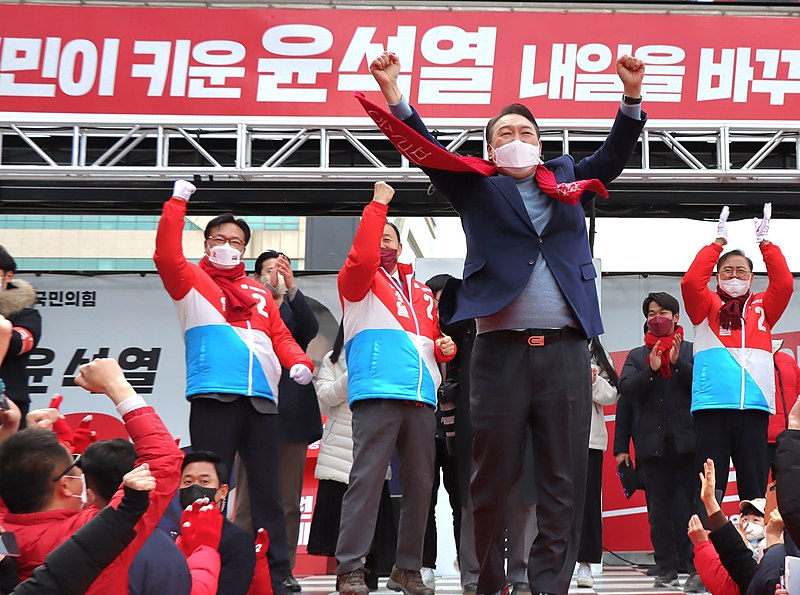
Following a close and bitter presidential race, South Korea has elected its new leader. Conservative opposition candidate Yoon Suk-yeol won the presidency, defeating his liberal rival Lee Jae-myung.
Yoon was elected to the presidency in South Korea this week in a close race between him and Lee. The conservative candidate won 48.6 percent of the country’s votes while Lee had 47.8 percent, from over 98 percent of votes that were counted. Yoon will be succeeding outgoing president Moon Jae-in, for a five-year term and will take office in May.
Yoon, who is a former top prosecutor, said Thursday that he intends to honor the Constitution and the parliament while working with the opposition parties when he takes office. Yoon said that his election was a “victory for the great people.” Yoon also thanked Lee and his other rival candidates in his acceptance speech.
“Our competition is over for now,” said Yoon. “We have to join hands and unite into one for the people and the country.”
In a separate event with supporters, Yoon also said that as president, “national unity” would be among his top priorities, along with his belief that all people should be treated equally regardless of their political, regional, and socioeconomic differences.
When it came to foreign policies, Yoon said that he intends to deal with provocations from North Korea sternly and seek to ramp up trilateral security cooperation with the US and Japan. An enhanced alliance with Washington would also be at the forefront of Yoon’s foreign policy while taking a more assertive approach on China.
Voter turnout during this year’s elections was at 77.1 percent with a record early voting, despite concerns that ballot counting would take longer due to the votes from COVID-19 patients. Around 44 million South Koreans 18 years old and above were eligible to vote. During early voting last week, 16 million ballots were cast.
With Yoon as the next president, he is set to face a host of challenges plaguing the country, with a low birth rate, rising house prices, and the effects of the COVID-19 pandemic on the country.







