


 Netanyahu’s Brief US Trip Highlights Strains With Trump
  France Defends Netanyahu Airspace Clearance Despite ICC Warrant
  NATO Boosts Intelligence Sharing Amid Russia Hybrid Threats
  US, China Extend Trade Truce to Jan. 10 Ahead of Trump-Xi Summit
  Kremlin Says No Decision Yet on Putin-Trump December Summit
  US Invites Putin to Miami G20, Opening Door to Trump Summit
  Russian Envoy Dmitriev Heads to US for Ukraine Talks
  OpenAI Agent Breaches Australia Medicare Data Portal
  South Korea, US Discuss Warship Building Cooperation
  Taiwan Thanks US for Support Ahead of Trump-Xi Summit
  Pezeshkian Says US Must Choose When Iran War Ends
  Russian Missile and Drone Attack on Kyiv Kills Two, Damages Maternity Hospital
  Ghana Says Western Support Growing for Slave Trade Reparations
  Trump Asks Supreme Court to Restore Third-Country Deportations
  US Backs Musk in Fight Against EU’s €120 Million X Fine
  Europe Warns Russia Is Escalating Hybrid Attacks Across NATO
  Trump, Xi Focus on Trade and AI at White House Summit


 Add as a preferred source on Google
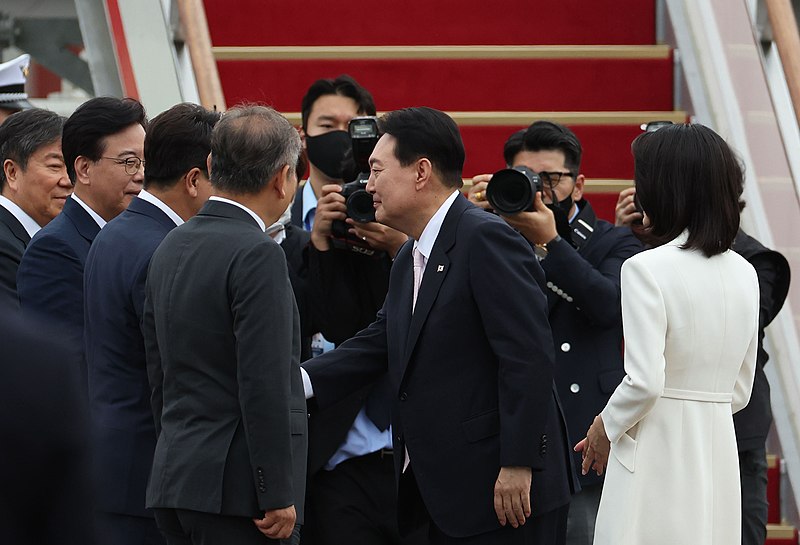
The South Korean and Iranian ambassadors were summoned by the countries’ respective foreign ministries this week following comments made by South Korean President Yoon Suk-yeol during a visit to the United Arab Emirates. Tehran summoned the South Korean ambassador to protest against Yoon’s remarks, while Seoul summoned the Iranian ambassador to reiterate the country’s stance.
During a visit to South Korean troops stationed in the UAE Monday, Yoon said the UAE was a “brother nation” of South Korea, stemming from the countries’ military and economic cooperation. In Yoon’s remarks, the South Korean leader compared the threat that the UAE faces from Iran to the threat South Korea faces from neighboring North Korea, triggering criticism from Tehran.
“The enemy of the UAE, its most-threatening nation, is Iran, and our enemy is North Korea,” said Yoon.
The Iranian foreign ministry criticized Yoon’s “interfering statements,” while the country’s deputy foreign minister on legal affairs, Reza Najafi, also summoned the South Korean ambassador to protest against Yoon’s remarks. Najafi went on to accuse South Korea of pursuing an “unfriendly” stance against Iran, citing the issue of frozen Iranian funds in South Korean banks.
Iran has long demanded that South Korea release around $7 billion of its funds that were frozen under sanctions by the United States.
South Korea’s first vice foreign minister Cho Hyun-dong summoned the Iranian ambassador to reiterate Seoul’s stance on relations with Iran on Thursday, according to ministry spokesperson Lim Soo-uk. The South Korean foreign ministry stressed that Yoon’s comments were not relevant to the country’s official policy on relations with Iran, warning Tehran against “unnecessary overinterpretation.”
Yoon also delivered remarks at the World Economic Forum in Davos on Thursday, calling for the strengthening of global supply chains saying that it was one of the most important tasks that the international community is facing. Yoon said Russia’s invasion of Ukraine further disrupted the stability of global supply chains following the COVID-19 pandemic.
Yoon stressed the importance of free trade in the face of growing protectionism, pledging to work with countries deemed “trustworthy” to stabilize global supply chains. Touching on the global climate crisis, Yoon said South Korea would gradually seek carbon neutrality by expanding the use of nuclear energy.







