


 California's AI Executive Order Pushes Responsible Tech Use in State Contracts
  Elon Musk Ties SpaceX IPO Access to Mandatory Grok AI Subscriptions
  SpaceX Eyes Historic IPO at $1.75 Trillion Valuation
  Reflection AI Eyes $25 Billion Valuation in Massive $2.5 Billion Funding Round
  Microsoft Eyes $7B Texas Energy Deal to Power AI Data Centers
  Norma Group Posts Revenue Decline in 2025, Eyes Modest Recovery in 2026
  MATCH Act Targets ASML and Chinese Chipmakers in New U.S. Export Crackdown
  Apple Turns 50: From Garage Startup to AI Crossroads
  Samsung Electronics Eyes Record Q1 Profit Amid AI-Driven Chip Boom
  Trump Administration Plans 100% Tariffs on Pharmaceutical Imports
  Cathay Pacific Holds Firm on Flight Capacity Amid Middle East Conflict and Rising Fuel Costs
  UAE's Largest Natural Gas Facility Suspended After Attack-Triggered Fire
  Fonterra Admits Anchor Butter "Grass-Fed" Label Misled Consumers After Greenpeace Lawsuit
  TSMC Japan's Second Fab to Produce 3nm Chips by 2028
  Cybersecurity Stocks Tumble After Anthropic's Claude Mythos AI Leak Sparks Market Fears
  Annie Altman Amends Sexual Abuse Lawsuit Against OpenAI CEO Sam Altman
  NASA's Artemis II Mission: First Crewed Lunar Journey Since Apollo


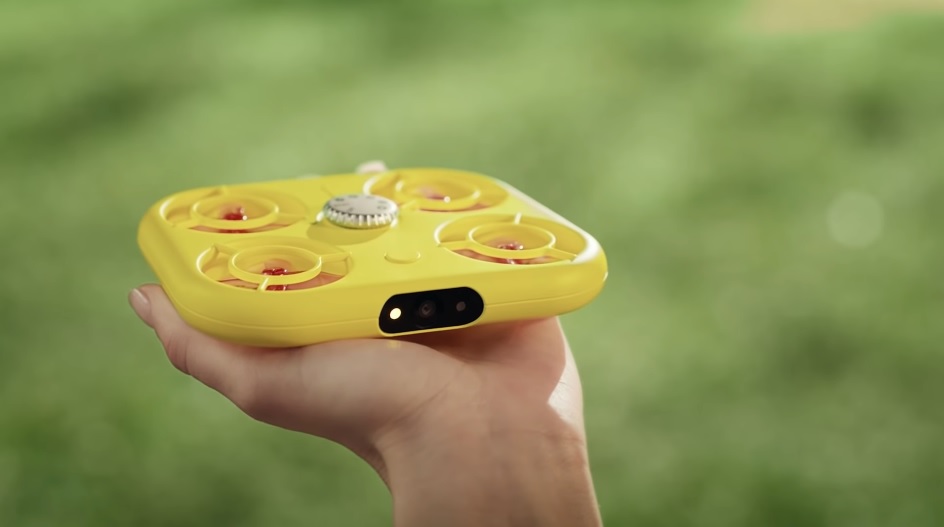
Snapchat’s parent company, Snap, launched its first selfie camera drone named Pixy in late April. Not even four months later, however, the company has reportedly decided to end further development of the hardware.
Snap CEO Evan Spiegel told employees during a Q&A session that further development of the Pixy is no longer part of the company's production plans, the Wall Street Journal reported. The change is said to be part of Snap’s wider plan to reallocate its resources to adjust amid an economic downturn.
Pixy was announced last April 29, starting at $230. But its availability was very limited, and there were no clear indications if Snap had planned to expand its shipments. Right upon its launch, Snap noted that Pixy will be available “while supplies last.” The selfie camera drone was only shipped to France and the United States as well.
It was also designed to be more portable and was billed as a “pocket-sized” drone that lands and takes off from the user’s palm. “With the simple tap of a button, Pixy flies in four preset flight paths,” Snap said in a press release from late April. “It can float, orbit, and follow wherever you lead, without a controller or any set-up.”
Unlike other camera drones in the market, Pixy was advertised as a companion device for Snapchat, much like Snap’s Spectacles. This means videos captured by Pixy can be wirelessly transferred and stored in Snapchat Memories, where users can then customize them with the app’s editing tools and other features.
The WSJ report said Snap would continue selling the existing model of the Pixy selfie camera drone. But that likely applies as long as supplies last. The official website indicates the device is still available for customers in the United States, as of this writing.
The standard purchase that costs $230 comes with the drone, a bumper and carrying strap, a rechargeable battery, and a USB-C charging cable. Snap also offers a $250 “flight pack” bundle with an additional dual battery charger and two extra batteries. But Snapchat users can also order the dual battery charger and extra battery separately for $50 and $20, respectively.







