


 TRUMP Memecoin Launches New Dinner Contest
  Iran Plans Stronger Response if US Attacks Resume
  US Conducts Non-Nuclear Explosion Test to Boost Nuclear Detection
  Netanyahu Says Israel May Join Flydubai Crash Attempt Probe
  Netanyahu Vows Probe Into Foiled Flydubai Crash Attempt
  Flydubai Co-Pilot Tried to Crash Israel-Bound Jet, Netanyahu Says
  Brazil Presidential Debate Canceled as Lula, Bolsonaro Skip Event
  California Leads Lawsuit Over Trump’s $810 Million Funding Cuts
  Putin Says Western Firms Could Regain Russian Assets
  Wicker Urges US to Uphold Taiwan Security Commitments
  Ukraine Deploys FP-7 Ballistic Missile in Combat for First Time
  Trump Praises Boeing 737 Max After Flydubai Crash Attempt
  US Alcohol Ban Exposes Canada’s Internal Trade Barriers
  New Zealand Election Raises Policy Uncertainty for Investors
  Israeli Settler Attack in West Bank Kills Palestinian
  Trump Taps Dennis Rodman as Kim Jong Un Outreach Continues


 Add as a preferred source on Google
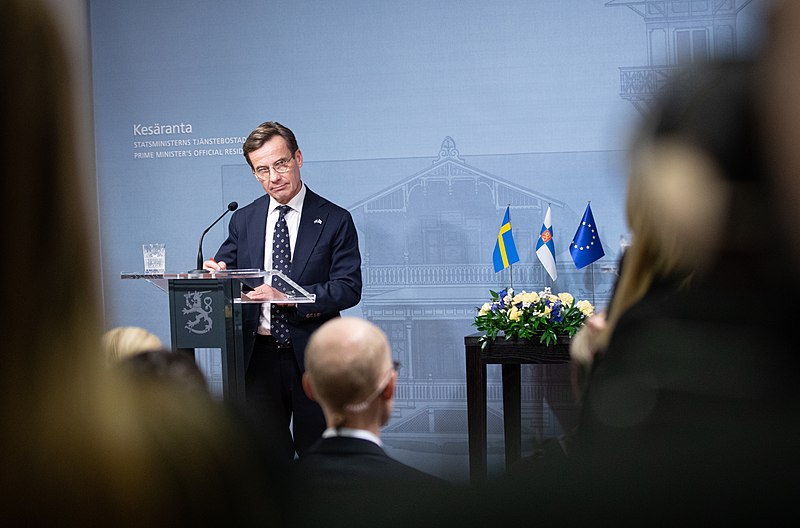
Sweden is set to deliver its biggest military assistance package yet to Ukraine. Stockholm said it was set to deliver an arms package worth $287 million.
Swedish Prime Minister Ulf Kristersson said Wednesday that they are set to deliver a military assistance package worth $287 million to Ukraine, its biggest package of military support yet. The new military aid package would now include an air defense system and ammunition from its military stockpile.
“It’s a bigger military support package than all eight previous packages combined,” Kristersson told a news conference. “It’s the single largest we’ve done, and we follow exactly the Ukrainian priority list of what they themselves think they need just now.”
Kristersson said the Swedish government was closely monitoring the developments surrounding the recent explosion in Poland near the Ukrainian border on Tuesday. Kristersson said that more information was needed to determine what actually took place.
Kristersson’s predecessor, under the Socialist Democrat Party, previously agreed to several tranches of humanitarian and military aid to Ukraine, which is worth over one billion crowns. Ukraine has long requested an Archer artillery system, but the system is not included in the current military package. However, Swedish defense minister Pal Jonson did not rule out including the system in a future military aid package, adding that more aid would be coming.
On the same day, European Commission Chief Ursula von der Leyen said the G7 and NATO countries at a meeting would continue to support Ukraine for as long as it is needed in recorded remarks condemning Russia’s acts in Ukraine.
In her remarks, von der Leyen said that the participants were prepared to assist Poland in a probe over the investigations following the missile incident that followed Russia’s barrage of attacks on Ukraine’s energy and civilian infrastructure.
The NATO alliance chief Jens Stoltenberg also said that while the blast in Poland was of a Ukrainian air defense rocket, Russia was ultimately responsible as it invaded Ukraine back in February. The missile that landed in a Polish grain facility killed two people and raised concerns that the war may spill over onto the neighboring countries.
Stoltenberg told reporters that while the missile having unlikely come from Russia eased the pressure, it did not mean that Moscow was not to blame.







