


 Ukrainian Drone Attacks Hit Russian Regions, Injuring at Least 12
  North Korea Rejects Nuclear Test Warning, Calls Nuclear Status Irreversible
  North Korea Warns South Korea Over US-Led Defense Role
  Najib Razak Seeks Stay of 15-Year 1MDB Prison Sentence
  NATO Boosts Intelligence Sharing Amid Russia Hybrid Threats
  Trump Asks Supreme Court to Restore Third-Country Deportations
  Pope Leo Backs Press Freedom After White House Media Ban
  US Comfortable With Canada Trade Standoff as Import Bans Loom
  US Backs Musk in Fight Against EU’s €120 Million X Fine
  Pezeshkian Says US Must Choose When Iran War Ends
  Colombia Extradites FARC Dissident Leader ‘Spider’ to US
  Putin Says Ukraine Peace Proposals Remain on Table
  Saudi Arabia, Turkey and Pakistan Plan Urgent Defence Talks Over Houthi Attacks
  Saudi Arabia Seeks Military Support as Houthi Attacks Escalate
  Abbas Reaffirms November 28 Palestinian Elections
  France Defends Netanyahu Airspace Clearance Despite ICC Warrant
  Evan Gershkovich Says FSB Set Trap for 2023 Russia Arrest


 Add as a preferred source on Google
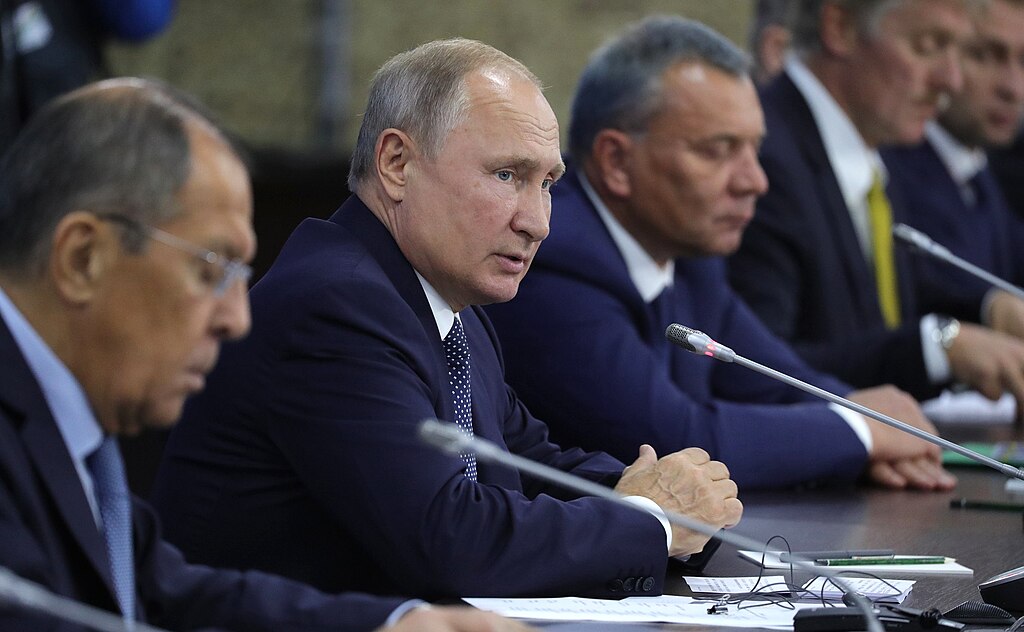
Russian President Vladimir Putin on Wednesday supervised a comprehensive test of the country’s nuclear triad—land, sea, and air—demonstrating Moscow’s strategic readiness amid escalating tensions with the West. The large-scale exercise aimed to evaluate the preparedness and command structure of Russia’s nuclear forces, which remain the largest in the world.
According to the Kremlin, the drill involved the successful launch of a land-based “Yars” intercontinental ballistic missile from a Russian cosmodrome, a “Sineva” ballistic missile fired from a nuclear-powered submarine stationed in the Barents Sea, and nuclear-capable cruise missiles launched from long-range strategic bombers. The exercise tested coordination among Russia’s nuclear command units, as well as the ability of personnel to operate effectively under simulated combat conditions. “All exercise tasks were completed,” the Kremlin confirmed in an official statement.
These nuclear readiness drills are part of Russia’s ongoing efforts to ensure its deterrence capabilities and demonstrate its military strength at a time of heightened East-West friction. Analysts note that such exercises serve both a technical and political purpose, showcasing Russia’s ability to maintain operational control and respond swiftly to potential threats.
The test coincided with NATO’s own annual nuclear training, Steadfast Noon, which began earlier this month. The Western alliance’s exercise includes around 60 aircraft—among them F-35A fighter jets and U.S. B-52 bombers—from 13 member nations. Hosted by Belgium and The Netherlands, NATO’s drills are designed to enhance nuclear deterrence coordination among allied forces.
As both Russia and NATO flex their nuclear capabilities, global observers warn that such parallel exercises highlight growing geopolitical instability and the risks associated with renewed nuclear posturing in an increasingly polarized world.







