


 Vietnam, US Trade Deal Could Be Signed Soon, To Lam Says
  Kremlin Says No Grounds Yet for Ukraine Peace Talks
  Gaza Faces Evacuation Crisis as War-Damaged Buildings Risk Collapse
  Marco Rubio to Meet Russia’s Lavrov in New York
  Venezuela Promises Elections as Delcy Rodriguez Pledges Democratic Transition
  China Tightens Fentanyl Rules Ahead of Trump-Xi Summit
  South Korea, US Discuss Warship Building Cooperation
  Trump Says ‘Freedom’ Is Coming to Cuba
  Sudan Rejects US Legitimacy Remarks, Defends Sovereignty
  Ghana Says Western Support Growing for Slave Trade Reparations
  Trump Says U.S.-Iran Peace Deal Near After UN Talks
  Europe Warns Russia Is Escalating Hybrid Attacks Across NATO
  Macron, Trump Discuss Ukraine-Russia Energy Strike Moratorium
  Zelenskiy Warns Russia Preparing Major Attack on Ukraine
  US Officials Split Over Response to Israeli West Bank Settlements
  US, China Extend Trade Truce to Jan. 10 Ahead of Trump-Xi Summit
  US Invites Putin to Miami G20, Opening Door to Trump Summit


 Add as a preferred source on Google
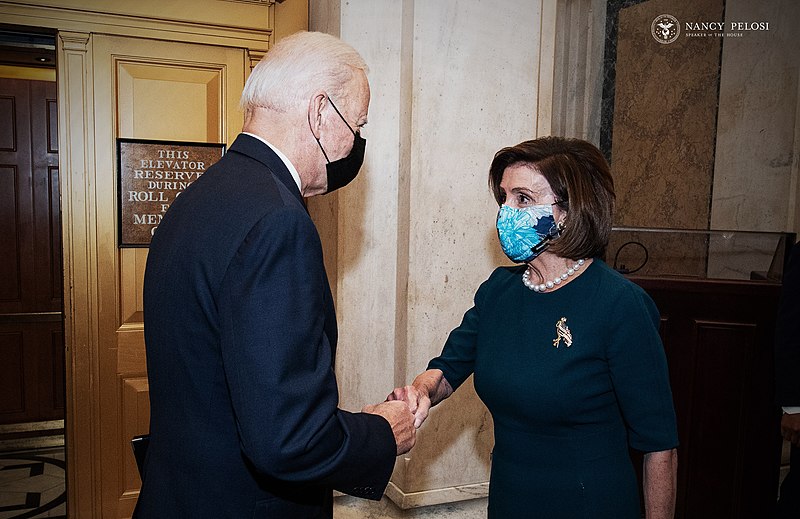
With the bipartisan infrastructure bill signed into law this week, Congress is set to pass another bill that makes up another major part of US President Joe Biden’s agenda. National Economic Council director Brian Deese said that the House would take up a vote on the social infrastructure bill this week.
In his appearance at CNN’s “State of the Union” over the weekend, Deese predicted that the House would vote on the social infrastructure package this week when it returns. Deese said he is confident that House Speaker Nancy Pelosi will bring the proposal to the floor, securing enough votes for the bill to pass and move to the Senate. This follows months of negotiations amongst factions of the Democratic Party regarding the provisions included in the bill.
“We are confident that Speaker Pelosi is going to bring it up and that it will pass this week. We will move forward to the next process and moving it to the Senate,” said Deese.
The social infrastructure package would have provisions to address climate change, paid leave, reduced drug prices, worker training, as well as provisions for care and education. From the original $3.5 trillion price tag spaced out over 10 years, it was reduced to $1.75 trillion.
Deese linked the passage of the bill to inflation, saying during an interview at ABC’s “This Week” that the BBB bill would lower inflation rather than contribute to it. Deese noted that economists have looked over the proposal and concluded that the bill would not add to long-term inflation pressure.
Pelosi had already touted the provisions of the bill during her attendance at the COP26 climate change summit in Glasgow last week. The House Speaker was among the US congressional delegation and Cabinet members in attendance at the conference, following Biden’s attendance at the summit shortly after the G20 conference.
“Our legislation is far-reaching, ensuring that future economy is greener and cleaner,” said Pelosi during a press conference in Glasgow.
“That means $250 billion in clean energy tax credits to develop and deploy the latest in future generations of clean power,” Pelosi added. “That means over $100 billion in addition for resilience including climate-smart agriculture and nature-based climate solutions; another $100 billion toward local and region-led climate and over $222 billion for environmental justice.”







