


 SpaceX Pivots Toward Moon City as Musk Reframes Long-Term Space Vision
  FDA Adds Fatal Risk Warning to J&J and Legend Biotech’s Carvykti Cancer Therapy
  Trump Administration Releases New UFO Files and Apollo Mission Records
  NASA Resumes Cygnus XL Cargo Docking with Space Station After Software Fix
  Cogent Biosciences Soars 120% on Breakthrough Phase 3 Results for Bezuclastinib in GIST Treatment
  Trump Administration to Launch Autism Initiatives Targeting Acetaminophen Use and New Treatment Options
  Blue Origin’s New Glenn Achieves Breakthrough Success With First NASA Mission
  Neuralink Expands Brain Implant Trials with 12 Global Patients
  China vs. NASA: The New Moon Race and What's at Stake by 2030
  Trump Signs Executive Order to Boost AI Research in Childhood Cancer
  SpaceX Prioritizes Moon Mission Before Mars as Starship Development Accelerates
  Eli Lilly’s Inluriyo Gains FDA Approval for Advanced Breast Cancer Treatment


 Add as a preferred source on Google
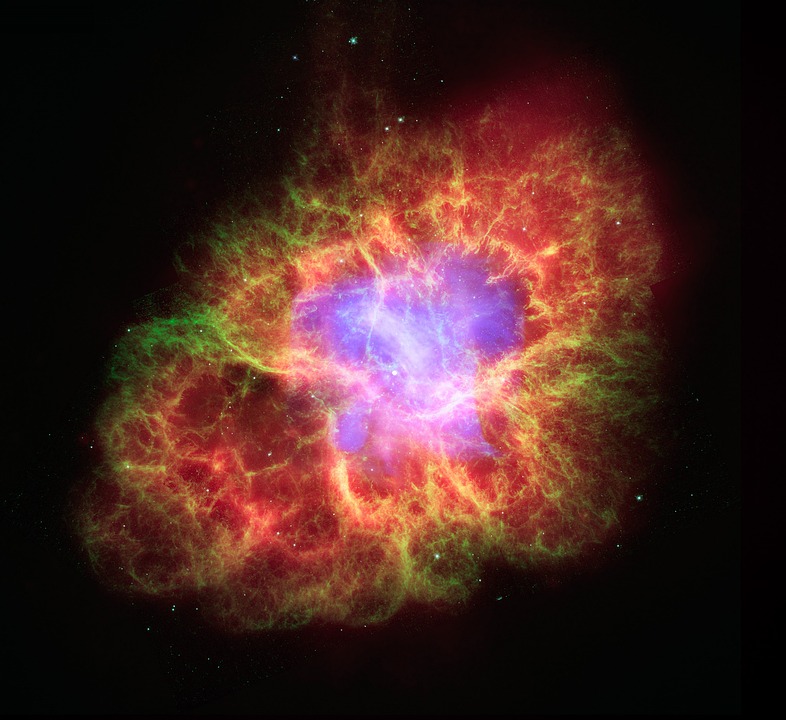
NASA and the ESA’s Hubble Space Telescope has given us many amazing photos of space phenomena. Recently, the Hubble was able to witness a supernova explosion millions of light-years away from Earth.
The supernova that the Hubble was able to capture and witness came from a spiral galaxy found 70 million light-years away from Earth. The telescope snapped a series of time-lapse photos of the stellar explosion, as part of the mission to see how big the universe is becoming. Both NASA and the ESA have zeroed in on the spiral galaxy referred to as NGC 2525 found in the Puppis constellation, that could be visible from our own Southern Hemisphere.
“No Earthly fireworks display can compete with this supernova, captured in its fading with glory by the Hubble Space Telescope,” said Dr. Adam Riess, Nobel Laureate of the Space Telescope Science Institute and Johns Hopkins University.
The supernova that the Hubble was able to capture is classified as a Type Ia supernova. This kind of supernova forms a white dwarf in a close binary system that consumes matter from its companion star.
Previously, the Hubble was able to capture another astounding phenomenon in the cosmos. NASA released another set of images taken by the Hubble of one particular galaxy cluster called Abell 2744. Much like the spiral galaxy that had a supernova explosion, the galaxy cluster is also found millions of light-years away from our own planet. The photo the agency released also pairs X-ray images from the Chandra X-ray Observatory, showing the extent of the enormousness of the universe we live in.
In the image, the stars seem to look like they are all close together. However, they are actually millions of light-years apart from each other in empty space.
“This image is of galaxy cluster Abell 2744. Galaxy clusters are the largest objects in the universe held together by gravity. They contain enormous amounts of superheated gas, with temperatures of tens of millions of degrees, which glows brightly in X-rays, and can be observed across millions of light-years between the galaxies,” said NASA.
The Hubble Space Telescope is in its last year of roaming around the universe. It will be retiring in 2021, with the James Webb Space Telescope taking its place.







