


 Trump and Merck KGaA Partner to Slash IVF Drug Costs and Expand Fertility Coverage
  Blue Origin New Glenn Rocket Explodes During Launch Pad Test, Delaying Space Ambitions
  Neuralink Expands Brain Implant Trials with 12 Global Patients
  SpaceX Prioritizes Moon Mission Before Mars as Starship Development Accelerates
  Blue Origin’s New Glenn Achieves Breakthrough Success With First NASA Mission
  Jared Isaacman Confirmed as NASA Administrator, Becomes 15th Leader of U.S. Space Agency
  SpaceX’s Starship Completes 11th Test Flight, Paving Way for Moon and Mars Missions
  FDA Pilot Program Eases Rules for Nicotine Pouch Makers
  China vs. NASA: The New Moon Race and What's at Stake by 2030
  Trump Administration to Launch Autism Initiatives Targeting Acetaminophen Use and New Treatment Options
  Tabletop particle accelerator could transform medicine and materials science
  SpaceX Pivots Toward Moon City as Musk Reframes Long-Term Space Vision
  Cogent Biosciences Soars 120% on Breakthrough Phase 3 Results for Bezuclastinib in GIST Treatment
  Is space worth the cost? Accounting experts say its value can’t be found in spreadsheets
  Trump Administration Releases New UFO Files and Apollo Mission Records


 Add as a preferred source on Google
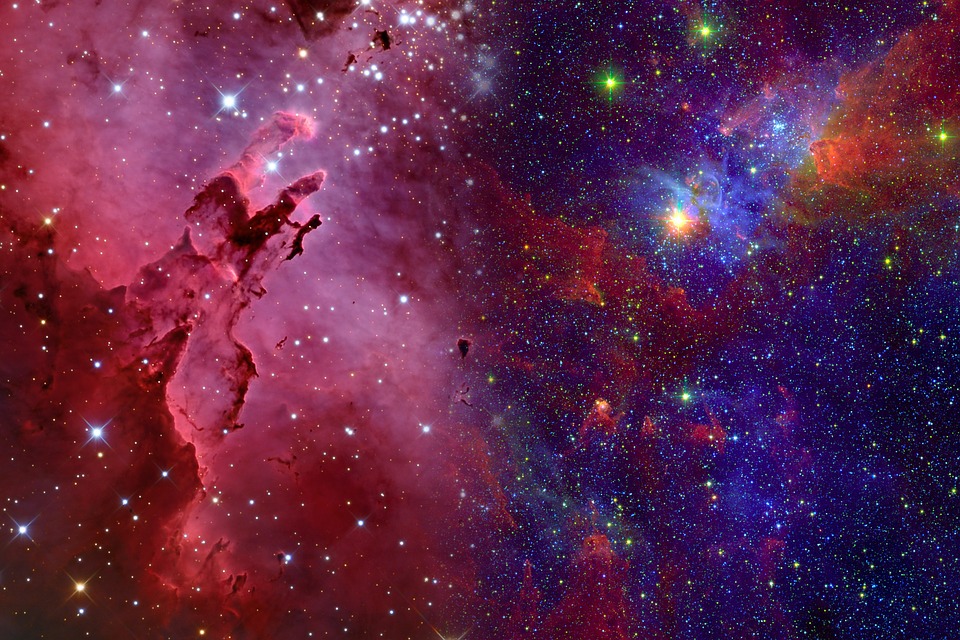
NASA and ESA’s Hubble Space Telescope is currently roaming around space and taking photos of phenomena that occur in the universe. Recently the US space agency released a series of photos taken by the Hubble of star clusters in our own Milky Way galaxy.
A satellite image of a star cluster that is referred to as NGC 1805 was released by NASA, showing thousands of stars together. NGC 1805 is found close to the Large Magellanic Cloud, which is a galaxy near the edge of the Milky Way. NASA reveals that this particular region is especially crowded, 1000 times closer to each other compared to other stars like our Sun. However, because of their closeness and how stars orbit its companion star, NASA said it is unlikely that there would be planets around these stars.
“The striking difference in star colors is illustrated beautifully in this image, which combines different types of light: blue stars, shining brightest in near-ultraviolet light, and red stars, illuminated in red and near-infrared,” said NASA.
The agency also noted the Hubble’s capabilities of photographing such phenomena, how the Hubble can observe space phenomena in ultraviolet light because it is positioned above our planet’s atmosphere. This cluster of stars could be seen from the southern hemisphere, specifically in the Dorado constellation. The Hubble is currently in its last year of observing space and is set to retire in 2021, with the James Webb Space Telescope taking its place.
In other related phenomenon, another discovery made by the Hubble came in the form of an unknown space object shaped like an “X” and traveling through space at a speed of 11,000 miles per hour.
This mysterious space object was first picked up by astronomer Jim Scotti of the Spacewatch Project that identifies Near-Earth Asteroids. Scotti reported this sighting to NASA, and the images came up of an X-shaped figure measuring 1,500 miles in diameter. This sighting was featured on the Amazon Prime program NASA’s Unexplained Files.
NASA astronomers were also baffled by the sighting, and while a definite explanation of what it is has yet to be revealed, it is believed that the X-shape is a result of two asteroids colliding with each other.







