


 Trump, Xi Focus on Trade and AI at White House Summit
  Abbas Reaffirms November 28 Palestinian Elections
  Japanese Bank Stocks Surge as Bond Yields Fuel Rate Hike Bets
  European Stocks Fall as Bond Yields and Geopolitical Risks Weigh
  South Korea, US Discuss Warship Building Cooperation
  Saudi Arabia, Turkey and Pakistan Plan Urgent Defence Talks Over Houthi Attacks
  France Defends Netanyahu Airspace Clearance Despite ICC Warrant
  Pezeshkian Says US Must Choose When Iran War Ends
  Judge Orders Trump to Restore White House Access for CNN, MS NOW and Politico
  Oil Prices Jump 3% as Houthi Attack Revives Supply Fears
  Asian Currencies Mixed as Dollar Holds Near Two-Month High
  U.S. 10-Year Treasury Yield Hits 2007 High as Fed Rate Hike Bets Rise
  EU Defence Build-Up Too Slow for 2030 Russia Readiness Goal
  Netanyahu’s Brief US Trip Highlights Strains With Trump
  US, China Extend Trade Truce to Jan. 10 Ahead of Trump-Xi Summit
  Mexico-US Trade Talks Delayed to October as Tariff Negotiations Continue
  US Senate Rejects Iran War Powers Resolution in 50-49 Vote


 Add as a preferred source on Google
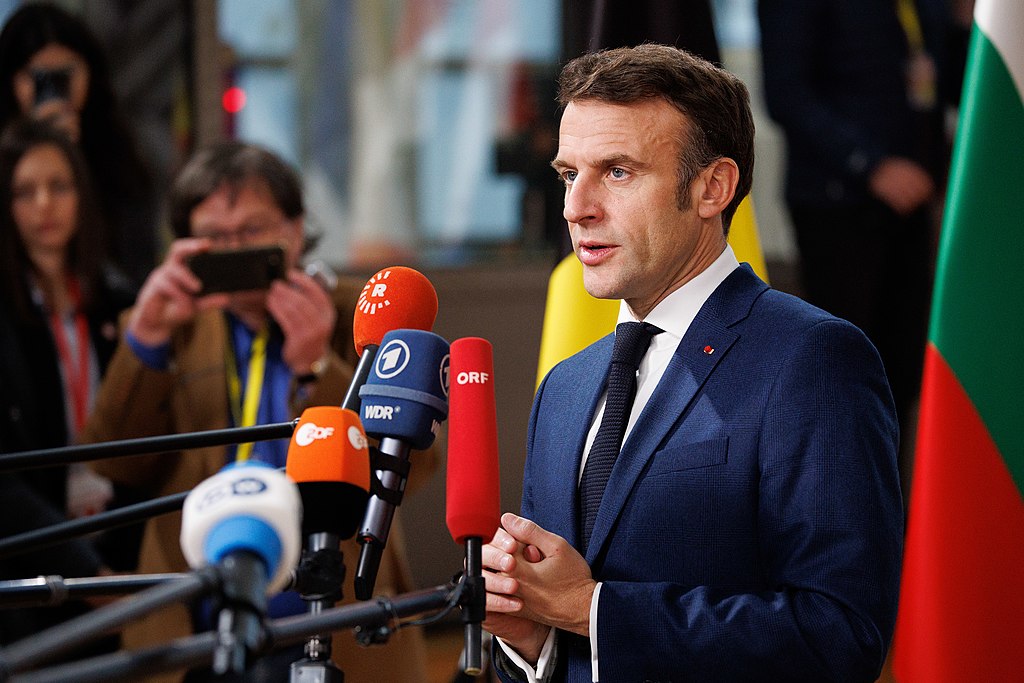
French President Emmanuel Macron has strongly criticized recent tariff threats reportedly made by U.S. President Donald Trump concerning Greenland, warning that Europe will not tolerate economic intimidation and will respond collectively if such measures are confirmed. Macron’s remarks underscore growing tensions between the United States and Europe over geopolitical and trade-related issues, including territorial influence and international cooperation.
Speaking on Saturday via a post on X, Macron emphasized that threats or pressure tactics would not sway France or its European partners. He made it clear that Europe would stand firm not only on the issue of Greenland but also on other sensitive global matters such as Ukraine and broader international security concerns. According to Macron, intimidation has no place in modern diplomacy, particularly when it comes to trade relations among long-standing allies.
Macron stated that tariff threats are unacceptable and fundamentally incompatible with the principles of cooperation and mutual respect that underpin transatlantic relations. He stressed that if the United States were to move forward with trade penalties, European nations would respond in a unified and coordinated way, signaling a strong collective stance from the European Union. This message reflects Europe’s determination to protect its economic interests while maintaining political sovereignty in the face of external pressure.
Greenland, an autonomous territory within the Kingdom of Denmark, has increasingly drawn international attention due to its strategic location and valuable natural resources. Any suggestion of tariffs linked to the region has therefore raised concerns across Europe, not only as a trade issue but also as a matter of geopolitical stability.
Macron’s comments highlight Europe’s intent to project unity and resilience amid rising global tensions. By reaffirming Europe’s readiness to respond collectively, the French president aims to deter unilateral trade actions and reinforce the importance of diplomacy over confrontation. As discussions around tariffs, global security, and territorial influence continue, Europe’s coordinated response could play a crucial role in shaping future relations with the United States.







