


 Oil Prices Ease as Iran Tensions Clash With Diplomacy Hopes
  Fed Unveils Stablecoin Rules Under GENIUS Act
  Dollar Hits Two-Month High as Fed Rate Hike Bets Rise
  Japan Private-Sector Growth Slows as Domestic Demand Weakens
  Asian Stocks Fall as Bond Yields Surge Ahead of Trump-Xi Summit
  Gold Prices Fall as Treasury Yields Rise on Fed Rate Hike Bets
  Gold Drops Over 1% as Dollar, Treasury Yields Surge on Fed Rate Hike Bets
  U.S. Treasury Yields Surge as 30-Year Hits 22-Year High
  US Stock Futures Fall as Treasury Yields Surge Ahead of Trump-Xi Summit
  South Korea, US Discuss Warship Building Cooperation
  Russian Envoy Dmitriev Heads to US for Ukraine Talks
  China’s ‘Lipstick King’ Says AI Won’t Replace Livestream Hosts
  Oil Prices Jump 3% as Houthi Attack Revives Supply Fears
  RBI Uses $10 Billion Currency Swaps to Drain Excess Rupee Liquidity
  US, China Extend Trade Truce to Jan. 10 Ahead of Trump-Xi Summit
  Soybean Futures Slip as Traders Await Trump-Xi Trade Signals


 Add as a preferred source on Google
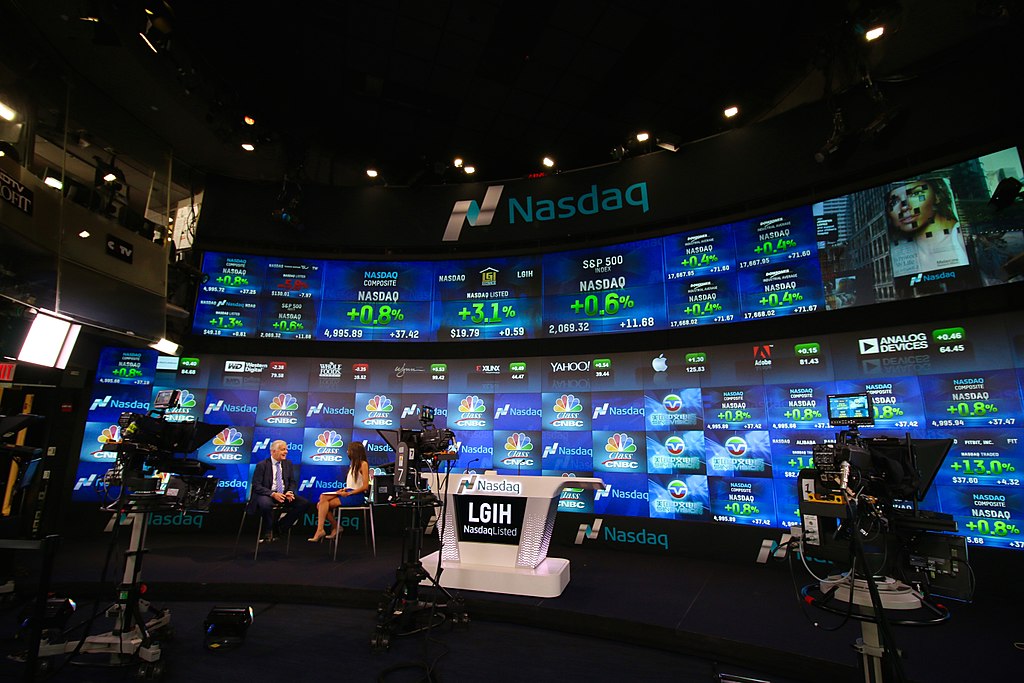
U.S. stocks closed lower on Tuesday as a sharp sell-off in technology shares weighed heavily on Wall Street. Concerns surrounding artificial intelligence (AI) demand intensified after a major decline in South Korea’s technology sector, triggering broad weakness in semiconductor and AI-related stocks.
The S&P 500 fell 1.4% to 7,365.67, while the Nasdaq Composite dropped 2.2% to 25,587.04. The Dow Jones Industrial Average was relatively resilient, ending 0.1% lower at 51,665.43.
Investor sentiment deteriorated after reports suggested that South Korean memory-chip giant SK Hynix may shift part of its production focus from advanced AI-related high-bandwidth memory (HBM) chips to traditional DRAM products. The news sparked fears that AI demand growth could be slowing, sending SK Hynix shares down more than 12% and dragging Samsung Electronics lower. South Korea’s KOSPI index plunged 10%, marking one of its largest single-day declines on record.
The weakness quickly spread to U.S. markets, where semiconductor stocks suffered significant losses. The Philadelphia Semiconductor Index plunged 7.9%, while major chipmakers including Micron, Marvell Technology, Lam Research, and Sandisk experienced steep declines. The S&P 500 Technology sector dropped 3.7%.
Market participants are increasingly questioning whether massive AI infrastructure investments will generate sufficient returns to justify current valuations. Companies across the technology industry continue to raise capital for AI expansion projects, creating additional concerns about future profitability and shareholder dilution.
Adding to the pressure, expectations for a more hawkish Federal Reserve have strengthened. Futures markets now indicate the possibility of two interest-rate hikes this year, pushing bond yields higher and reducing investor appetite for growth-oriented technology stocks.
Despite the market sell-off, economic data offered some support. S&P Global’s flash U.S. Composite PMI rose to 52.2 in June, its highest level in five months, while both manufacturing and services activity exceeded expectations.
Meanwhile, oil prices declined as shipping activity through the Strait of Hormuz increased. Traders also monitored conflicting statements from U.S. and Iranian officials regarding nuclear inspections and ongoing diplomatic negotiations.
Among individual stocks, SpaceX recovered from early losses and finished slightly higher after briefly falling below its IPO opening price. Carnival shares dropped nearly 5% after issuing weaker-than-expected profit guidance, citing higher fuel costs and geopolitical uncertainty.







