


 US Stock Futures Fall as Treasury Yields Surge Ahead of Trump-Xi Summit
  US 10-Year Treasury Yield at 6% Emerges as New Market Risk Threshold
  Asian Stocks Mixed Ahead of Trump-Xi Meeting
  US Dollar Hits Two-Month High as Fed Rate Hike Bets Rise
  Novo Nordisk Weighs Direct NYSE Listing to Boost U.S. Profile
  RBI Uses $10 Billion Currency Swaps to Drain Excess Rupee Liquidity
  Gold Prices Rise as Oil Slide Eases Fed Rate Hike Fears
  OpenAI Urges US-Led Global Standards for Frontier AI
  Tencent Launches TenPayGo Payment App for Foreign Tourists in China
  Oil Prices Rise as U.S.-Iran Talks Fuel Diplomacy Hopes
  SoftBank Raises $11.1 Billion in Bond Sale to Fund OpenAI Investment
  Mexico-US Trade Talks Delayed to October as Tariff Negotiations Continue
  Wall Street Falls as Treasury Yields Surge, Oil Rebounds on Iran Tensions
  BlackBerry Shares Rise as Q2 Earnings, Revenue Beat Estimates
  Meta Partners With Shopify to Bring Shop Pay Checkout to Muse AI
  Paramount-Warner Bros $110 Billion Deal Draws Antitrust Backlash
  Dollar Hits Two-Month High as Fed Rate Hike Bets Rise


 Add as a preferred source on Google
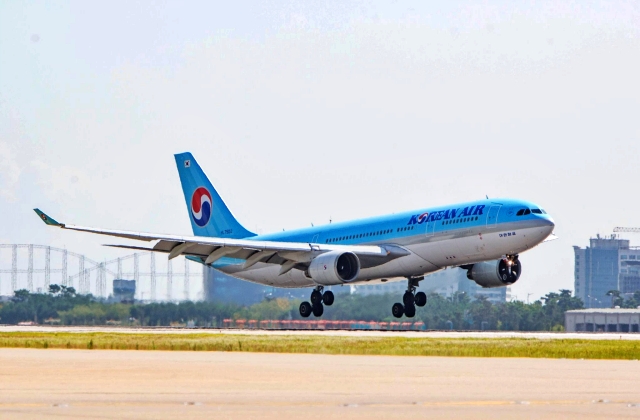
Korean Air, the biggest airline in South Korea, revealed on Monday, May 31, that it has earned another approval from two more countries over its acquisition of Asiana Airlines, a smaller local carrier. This means that it is getting closer to full take over of its former rival.
Approvals needed for the acquisition deal to go ahead
Yonhap News Agency reported that Korean Air did not only receive approval from Thailand’s watchdog but also from the Philippines. The two countries are the latest to greenlight the acquisition of Asiana Air, following Turkey that issued its approval in February.
Minus the three countries mentioned, Korean Air still needs to win the nods of regulators from the U.S., South Korea, China, Japan, Australia, the European Union and Vietnam. The carrier’s spokesperson confirmed that they are just awaiting the same positive response from the other countries and the ₩1.8 trillion or $1.6 billion acquisition deal will push through.
The South Korean airline previously said that it is aiming to merge with Asiana by 2024, after the completion of the takeover process that it is hoping to happen by next year. Once Korean Air and Asiana merged, it was predicted that it would become one of the largest airlines in the world.
Thailand completes Korean Air-Asiana merger review
Korean Air cleared another two countries for its Asiana Air acquisition and while it needs more nations to approve the deal, it is doing its best to gain their nod too. At this time, the airline is cooperating with the respective commissions and supplying them with the needed documents so it can finalize the merger and finish the acquisition process as soon as possible.
“Thailand’s Office of Trade Competition Commission recently completed its review of the business combination with Asiana, and stated that the submission of a prerequisite business combination report was not necessary,” Flight Global quoted Korean Air as saying in a statement today.
Meanwhile, Korean Air must have the approval from the regulatory board of economic competition from other countries to make sure that the merger will not affect other businesses. It is also needed to prevent monopoly in the air and travel business.







