


 Ghana Says Western Support Growing for Slave Trade Reparations
  Netanyahu Takes Aim at Mamdani as Israel Election Nears
  Kremlin Says No Decision Yet on Putin-Trump December Summit
  NATO Boosts Intelligence Sharing Amid Russia Hybrid Threats
  Abbas Reaffirms November 28 Palestinian Elections
  OpenAI Agent Breaches Australia Medicare Data Portal
  Taiwan Thanks US for Support Ahead of Trump-Xi Summit
  Mexico-US Trade Talks Delayed to October as Tariff Negotiations Continue
  North Korea Rejects Nuclear Test Warning, Calls Nuclear Status Irreversible
  Trump Asks Supreme Court to Restore Third-Country Deportations
  Sudan Rejects US Legitimacy Remarks, Defends Sovereignty
  Pezeshkian Says US Must Choose When Iran War Ends
  EU Defence Build-Up Too Slow for 2030 Russia Readiness Goal
  North Korea Warns South Korea Over US-Led Defense Role
  US, China Extend Trade Truce to Jan. 10 Ahead of Trump-Xi Summit
  Europe Warns Russia Is Escalating Hybrid Attacks Across NATO
  US Backs Musk in Fight Against EU’s €120 Million X Fine


 Add as a preferred source on Google
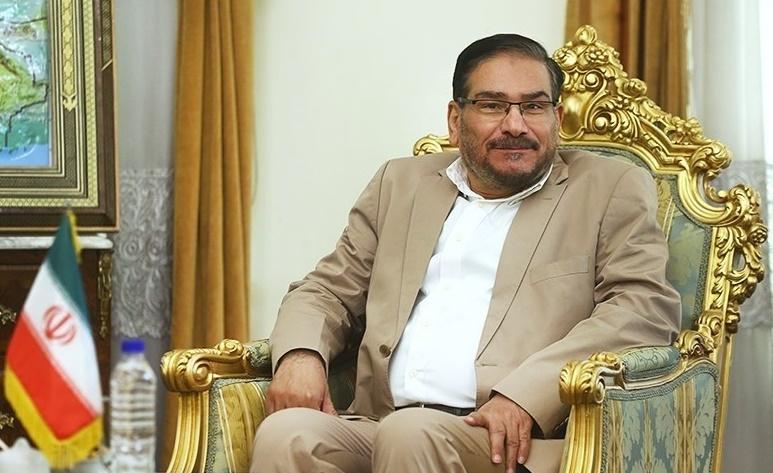
The top Iranian security official and a longtime ally of Supreme Leader Ali Khamenei was announced to be stepping down from the position after serving 10 years. The resignation follows the deal two months prior between Iran and Saudi Arabia to normalize relations and end a political rift.
Ali Shamkhani, the country’s top security official and an ally of Khamenei, would be stepping down as the secretary of Iran’s Supreme National Security Council after serving in the role for ten years, according to state media on Monday. Shamkhani stepped down two months after the signing of a China-brokered deal with Saudi Arabia, ending the political rift between the two countries. State television later reported that Khamenei had made Shamkhani his political adviser and that Revolutionary Guards commander, Ali Akhbar Ahmadian, would be succeeding Shamkhani as national security chief.
An Iranian insider said earlier that the change in leadership in the Supreme National Security Council would unlikely impact policies and that Shamkhani was being considered for a more important position.
Shamkhani was appointed to the Supreme National Security Council in 2013 and previously served as Iran’s defense minister under former Iranian President Mohammad Khatami from 1997 to 2005. Shamkhani also previously joined Iran’s Revolutionary Guards shortly after its formation in 1979 and was its deputy commander from 1981 to 1988.
Ahmadian served as the joint chief of staff of the Revolutionary Guards in the 2000s and became the leader of its strategic center.
Meanwhile, a report by the Associated Press found that a new Iranian atomic facility near its Natanz facility would likely be very deep underground for it to be destroyed by air strikes. Citing experts and satellite images, the report said Iran has been digging tunnels into a mountain near its Natanz nuclear site.
The report said the installation of this new facility is poised to complicate the efforts by the West to curb Iran’s nuclear program, which Tehran has long argued would be used for peaceful purposes. According to the director of the Washington-based Arms Control Association, Kelsey Davenport, completing such a facility “would be a nightmare scenario that risks igniting a new escalatory spiral.”
Photo: Mohammadali Marizad (Tasnim News Agency)/Wikimedia Commons(CC by 2.0)








.jpg)