


 Neuralink Expands Brain Implant Trials with 12 Global Patients
  FDA Adds Fatal Risk Warning to J&J and Legend Biotech’s Carvykti Cancer Therapy
  NASA and Roscosmos Chiefs Meet in Florida to Discuss Moon and ISS Cooperation
  Eli Lilly’s Inluriyo Gains FDA Approval for Advanced Breast Cancer Treatment
  NASA Astronauts Wilmore and Williams Recover After Boeing Starliner Delay
  Neuren Pharmaceuticals Surges on U.S. Patent Win for Rare Disorder Drug
  Astronomers have discovered another puzzling interstellar object − this third one is big, bright and fast
  Is space worth the cost? Accounting experts say its value can’t be found in spreadsheets
  Trump Signs Executive Order to Boost AI Research in Childhood Cancer
  SpaceX Starship Explodes in Texas During Test, Citing Nitrogen Tank Failure
  SpaceX’s Starship Completes 11th Test Flight, Paving Way for Moon and Mars Missions


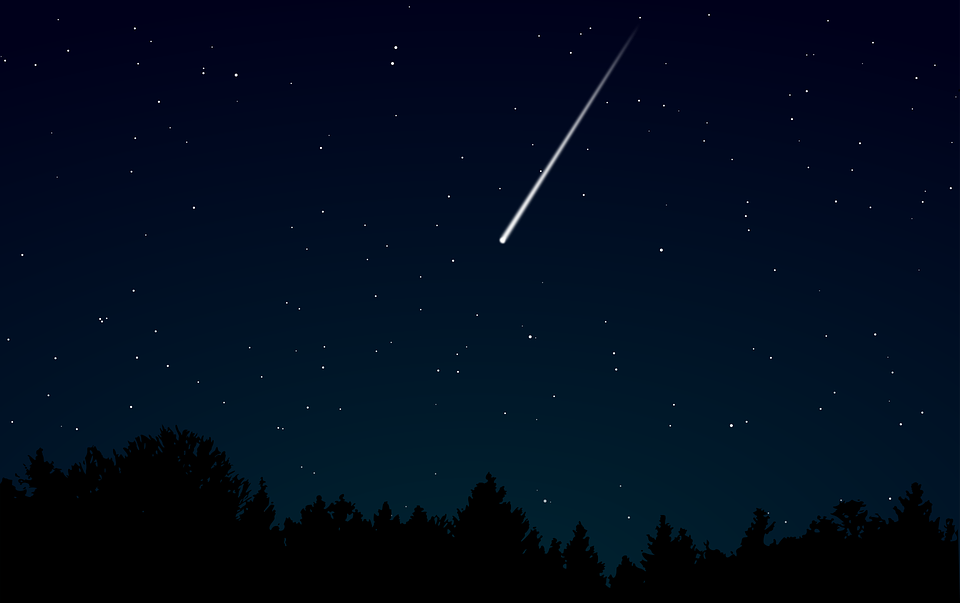
Among the amazing phenomena that could be seen up in the sky is in the form of meteor showers. Many celestial being enthusiasts might look forward to the upcoming meteor shower by the Geminids next week.
It is surprisingly a frequent occurrence that meteor showers happen in the sky. However, there is a chance to witness a meteor shower happen and Express reports that it is the Geminids, also known as the King of Meteor Showers, that will be lighting up the sky next week. As to when it will happen, NASA says that it will be seen in the skies on the 14th December, when the meteor shower is at its peak.
Although this event is something to look forward to, there may still be instances such as the moon that might get in the way of the shooting stars appearing. Nevertheless, people can look forward to seeing up to 100 meteors per hour.
The Geminids asteroids come from the supposedly extinct comet known as 3200 Phaethon, which was first seen back in 1983. This space rock was labeled as potentially hazardous by NASA when it was first sighted passing by Earth, due to measuring five kilometers in width. It would be as big as the asteroid that was responsible for the extinction of the dinosaurs 66 million years ago.
But the Geminids meteor shower is not the only shooting star event this December. Telegraph reports that the Ursids meteor shower is also going to take place this year, with its peak days on the 21st and 22nd December, just in time for the Christmas season. The Ursids meteorites are known to produce up to 10 asteroids per hour but it is possible that there may be more, as it seems to be an unpredictable kind of meteor shower
As long as the conditions are ideal for stargazing, many might be able to witness the meteor showers that are going to happen in the last few weeks of 2019. A moonless sky is the most ideal situation as it allows people to see the meteors more clearly. The ideal time is between midnight and in the darker hours of the morning.













