


 US Senate Rejects Iran War Powers Resolution in 50-49 Vote
  Kremlin Says No Decision Yet on Putin-Trump December Summit
  Xi Calls for Deeper U.S.-China AI Cooperation in Trump Talks
  EU Defence Build-Up Too Slow for 2030 Russia Readiness Goal
  US Supreme Court Revives Trump Administration Voter Citizenship Database
  US Comfortable With Canada Trade Standoff as Import Bans Loom
  Yemen Violence Displaces 130,000 as Civilian Toll Rises
  North Korea Rejects Nuclear Test Warning, Calls Nuclear Status Irreversible
  Trump Asks Supreme Court to Restore Third-Country Deportations
  Pope Leo Backs Press Freedom After White House Media Ban
  Saudi Arabia Seeks Military Support as Houthi Attacks Escalate
  Netanyahu Defends Israel at UN as Delegates Stage Walkout
  Trump, Xi Visit US National Archives After White House Summit
  Trump Warns China Against Supporting Iran in Xi Talks
  Pope Leo Warns UN, Multilateral Groups Face Crisis
  NATO Boosts Intelligence Sharing Amid Russia Hybrid Threats


 Add as a preferred source on Google
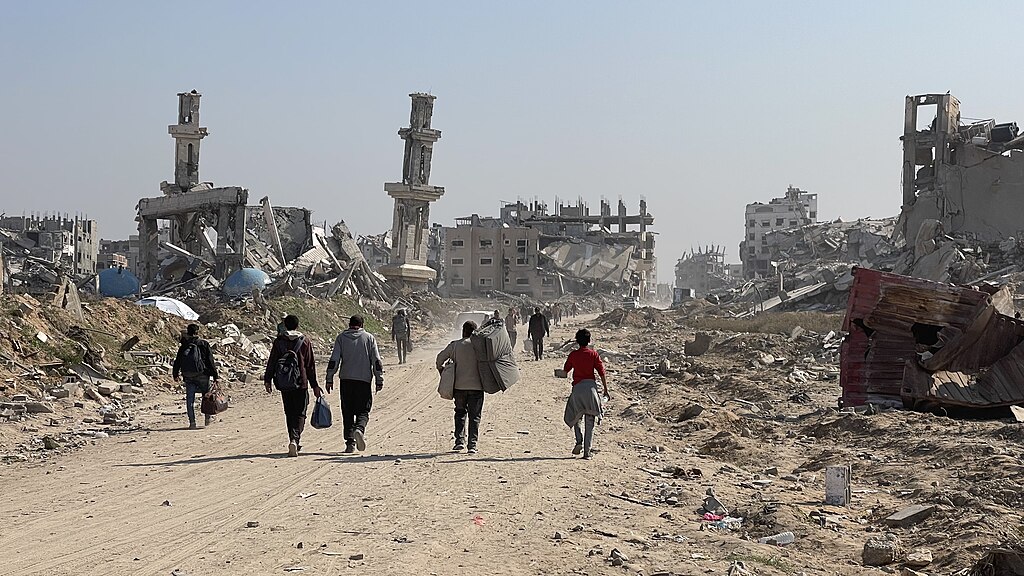
Efforts to implement U.S. President Donald Trump’s Gaza peace plan are faltering, raising the likelihood of a de facto partition between Israeli- and Hamas-controlled areas. According to multiple European officials, progress on the plan has stalled, and reconstruction may only proceed in the Israeli-held zone, deepening Gaza’s division for years to come.
Under the first stage of the plan, launched October 10, Israel controls about 53% of Gaza, including farmland, Rafah, and parts of Gaza City. Nearly two million Palestinians now live in tent camps and destroyed neighborhoods under Hamas rule. Drone footage shows catastrophic damage across Gaza City following months of Israeli bombardments.
The next stage of the Trump plan envisions an Israeli withdrawal from the “yellow line,” a transitional governing body, disarmament of Hamas, and reconstruction. However, with Hamas refusing to disarm and Israel rejecting Palestinian Authority involvement, implementation appears stalled. While Washington has drafted a U.N. Security Council resolution to authorize a multinational force and transitional authority for two years, few countries are willing to send troops.
U.S. Vice President JD Vance and Jared Kushner have suggested reconstruction could begin in the Israeli-controlled zone to create “model areas,” a move critics warn could entrench division. Israel’s Prime Minister Benjamin Netanyahu insists he does not intend to reoccupy Gaza but will maintain a security buffer to prevent new Hamas attacks.
European leaders caution that Gaza risks becoming trapped between “peace and war,” while regional powers like Jordan and Palestine reject any territorial split. Reconstruction costs are estimated at $70 billion, but funding remains uncertain without a unified Palestinian authority. As the situation stagnates, the humanitarian crisis deepens—threatening to make Gaza’s fragmentation a long-term reality.







