


 Netanyahu’s Brief US Trip Highlights Strains With Trump
  North Korea Warns South Korea Over US-Led Defense Role
  U.S. Dollar Hits Two-Month High as Oil, Treasury Yields Surge
  Japan Private-Sector Growth Slows as Domestic Demand Weakens
  Wall Street Ends Flat as Oil, Treasury Yields and Fed Jitters Rattle Markets
  Netanyahu Takes Aim at Mamdani as Israel Election Nears
  Asian Currencies Mixed as Dollar Holds Near Two-Month High
  Japanese Bank Stocks Surge as Bond Yields Fuel Rate Hike Bets
  Taiwan Thanks US for Support Ahead of Trump-Xi Summit
  US, China Extend Trade Truce to Jan. 10 Ahead of Trump-Xi Summit
  Asian Stocks Fall as Surging Bond Yields Rattle Markets
  Netanyahu Defends Israel at UN as Delegates Stage Walkout
  Oil Prices Ease as Iran Tensions Clash With Diplomacy Hopes
  Russian Envoy Dmitriev Heads to US for Ukraine Talks
  Dollar Holds Near Two-Month High as Yen Approaches 160
  Kremlin Says No Decision Yet on Putin-Trump December Summit
  Oil Prices Surge as U.S.-Iran Diplomacy Hopes Fade


 Add as a preferred source on Google
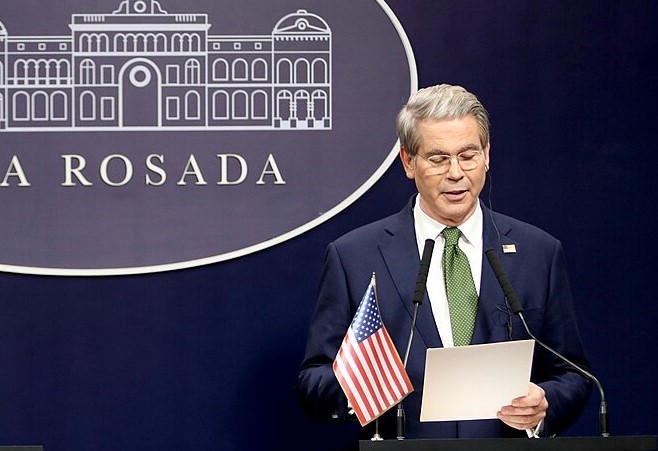
The upcoming G20 finance chiefs meeting in Durban faces growing uncertainty amid escalating global tensions. U.S. Treasury Secretary Scott Bessent’s second consecutive absence raises concerns about Washington’s commitment to global economic cooperation. Analysts say the U.S. no-show, paired with Donald Trump’s aggressive tariff agenda, threatens the G20’s credibility and effectiveness.
Trump’s trade strategy now includes a blanket 10% tariff on all imports, with targeted duties—50% on steel and aluminum, 25% on autos, and up to 200% on pharmaceuticals. Additional tariffs on 25 countries, many of them BRICS members, are set to take effect August 1. With eight G20 countries now part of BRICS, including South Africa, geopolitical divisions are sharpening.
Experts warn that Bessent’s absence may signal the U.S. shift toward a stripped-down G20 model during its presidency next year. “It’s problematic not to have the world’s largest economy at the table,” said Josh Lipsky of the Atlantic Council, noting the implications for global economic stability.
Meanwhile, Africa’s debt crisis looms large. Sub-Saharan Africa’s external debt has surged to $800 billion—45% of regional GDP. Chinese lending has slowed, creating an $80 billion financing gap. Former South African finance minister Trevor Manuel emphasized the need for transparency in loan terms, especially regarding China’s Belt and Road Initiative.
Adding to the pressure, U.S. and European aid cuts threaten 25% of the region’s external financing. Political analyst Lumkile Mondi warned that Africa’s high debt and low growth may deter future investment.
South Africa, under its G20 presidency motto “Solidarity, Equality, Sustainability,” had hoped to focus on climate finance and North-South trust. But ongoing trade disputes and aid rollbacks now dominate the agenda, dampening hopes for consensus.







