


 US, China Extend Trade Truce to Jan. 10 Ahead of Trump-Xi Summit
  Gaza Faces Evacuation Crisis as War-Damaged Buildings Risk Collapse
  Venezuela Promises Elections as Delcy Rodriguez Pledges Democratic Transition
  South Korea, US Discuss Warship Building Cooperation
  US Backs Musk in Fight Against EU’s €120 Million X Fine
  France Defends Netanyahu Airspace Clearance Despite ICC Warrant
  Russian Missile and Drone Attack on Kyiv Kills Two, Damages Maternity Hospital
  Sudan Rejects US Legitimacy Remarks, Defends Sovereignty
  US Officials Split Over Response to Israeli West Bank Settlements
  Trump Asks Supreme Court to Restore Third-Country Deportations
  Netanyahu Defends Israel at UN as Delegates Stage Walkout
  Europe Warns Russia Is Escalating Hybrid Attacks Across NATO
  Russian Envoy Dmitriev Heads to US for Ukraine Talks
  Netanyahu’s Brief US Trip Highlights Strains With Trump
  Trump Administration Plans Faster FDA Reviews for Smoke-Free Nicotine Products
  Yemen Violence Displaces 130,000 as Civilian Toll Rises
  Trump, Xi Focus on Trade and AI at White House Summit


 Add as a preferred source on Google
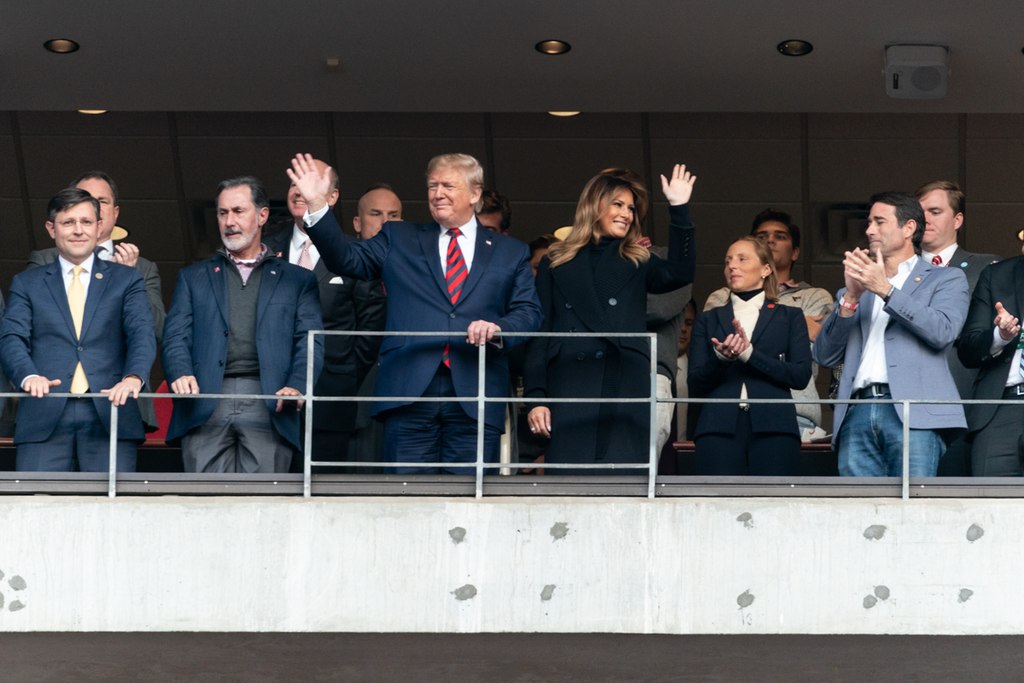
Former President Donald Trump’s recent comments on military drafts and foreign involvement have ignited conversation across the political spectrum. In a public statement, Trump expressed his firm opposition to the potential for U.S. citizens to be sent to fight overseas, underscoring that he does not want “Americans’ children to be drafted and killed in a foreign country.” His words were direct and candid, striking a chord among Americans weary of prolonged military engagements abroad.
The former president’s remark, “We’re tired of fighting,” captured the attention of veterans, families, and political analysts alike, who see it as a departure from previous foreign policy stances. Trump, known for his “America First” agenda, is positioning himself once again as a voice against extensive foreign intervention. His message is gaining traction at a time when many Americans are voicing concerns about potential conflicts overseas, with particular anxieties surrounding tensions in the Middle East and Eastern Europe.
“We’ve been through enough,” Trump continued, reflecting on years of American military operations in regions like the Middle East, which, he argues, have drained resources, lives, and morale. “Our focus needs to be here, at home,” he said, reinforcing his long-standing belief in prioritizing domestic security and economic revitalization over international entanglements.
Trump’s comments have resonated strongly with families who fear the possibility of a renewed military draft. For some, the notion of their children being drawn into a distant conflict is reminiscent of the anxieties that surrounded past wars. His words have sparked a renewed debate over military conscription, which has not been utilized in the United States since the Vietnam War era but remains a topic of unease as global tensions rise.
Military experts and political analysts have taken note of Trump’s comments as indicative of his stance on future U.S. involvement in foreign disputes should he re-enter office. While some interpret his message as a commitment to peace, others worry it could signify a step back from global responsibilities and alliances. “Trump’s approach to foreign policy has always been unconventional,” said a political science professor at Georgetown University. “His words speak to an audience tired of America’s role as the global enforcer.”
For Trump’s base, however, his reluctance to engage in foreign conflicts is not seen as isolationist but rather as practical. “It’s about time someone spoke the truth,” shared one supporter online, noting that the U.S. has spent decades embroiled in costly international operations. “Our children shouldn’t be put on the line for battles that don’t directly protect our country.”
Meanwhile, critics argue that Trump’s statement lacks nuance, with some claiming it risks undermining longstanding alliances. They suggest that the former president’s approach could lead to a weakened U.S. presence on the world stage and embolden adversarial nations. Despite these concerns, Trump’s message has sparked discussion about the U.S.’s approach to foreign policy and the draft, an issue that resonates deeply with many families and veterans.
As the 2024 election approaches, Trump’s clear stand against sending American youth to fight in foreign wars may become a central theme of his campaign. His message of “we’re tired of fighting” has already made waves, reflecting a sentiment that is likely to continue influencing debates on America’s role in global conflicts.







