


 France Defends Netanyahu Airspace Clearance Despite ICC Warrant
  Trump Asks Supreme Court to Restore Third-Country Deportations
  Najib Razak Seeks Stay of 15-Year 1MDB Prison Sentence
  US Supreme Court Revives Trump Administration Voter Citizenship Database
  Evan Gershkovich Says FSB Set Trap for 2023 Russia Arrest
  US Comfortable With Canada Trade Standoff as Import Bans Loom
  North Korea Warns South Korea Over US-Led Defense Role
  US Backs Musk in Fight Against EU’s €120 Million X Fine
  Netanyahu Defends Israel at UN as Delegates Stage Walkout
  Ukrainian Drone Attacks Hit Russian Regions, Injuring at Least 12
  Trump, Xi Visit US National Archives After White House Summit
  NATO Boosts Intelligence Sharing Amid Russia Hybrid Threats
  Trump, Xi Focus on Trade and AI at White House Summit
  North Korea Rejects Nuclear Test Warning, Calls Nuclear Status Irreversible
  Pezeshkian Says US Must Choose When Iran War Ends
  Trump Warns China Against Supporting Iran in Xi Talks
  EU Agrees €6.6 Billion Military Aid Funding for Ukraine


 Add as a preferred source on Google
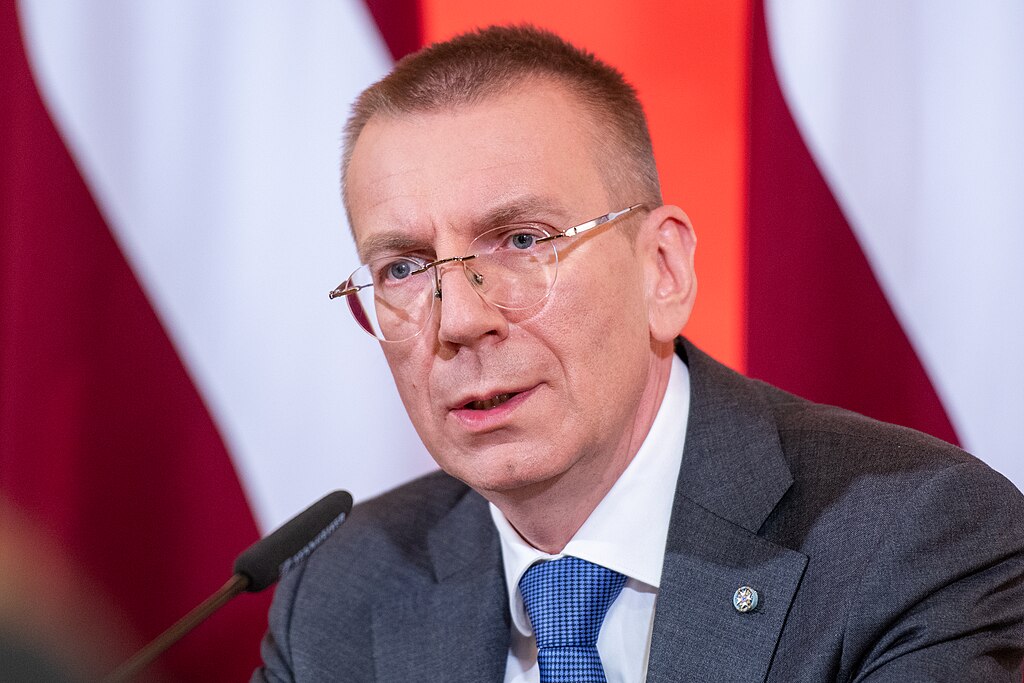
Latvian President Edgars Rinkevics has called on NATO to enhance its protection of the Baltic States, following multiple incidents of Russian military aircraft violating alliance airspace. Speaking at a NATO military committee meeting in Riga, Rinkevics said the region needs stronger defence measures, stressing that “transforming Baltic air policing to a Baltic air defence mission with respective rules of engagement should be a priority.”
The appeal comes after several recent confrontations. Earlier this month, NATO jets intercepted and shot down Russian drones over Poland, while Estonia reported that three Russian MiG-31 fighter jets violated its airspace for 12 minutes before being escorted out by NATO forces. Lithuania also echoed the demand, with Defence Minister Dovile Sakaliene confirming that Vilnius has already prepared a position paper recommending additional capabilities such as ground-based air defence systems, advanced sensors, and detection technologies.
NATO officials acknowledge Russia’s repeated airspace violations but remain cautious about expanding the current mission. Admiral Giuseppe Cavo Dragone, chair of the NATO military committee, noted that it would be “premature” to make such a decision until ongoing investigations are completed. Still, he admitted that shifting from an air policing mission to an air defence mission could be considered, depending on the final assessment.
Russia has rejected accusations of airspace violations, denying that its drones were targeting Poland and disputing Estonia’s claims. However, Baltic leaders argue that Moscow’s actions are part of a consistent pattern of aggression aimed at destabilizing NATO’s eastern flank.
Since 2004, NATO has patrolled the airspace over Latvia, Lithuania, and Estonia, scrambling jets when unidentified aircraft approach or intrude. Following the incidents over Poland, NATO launched Operation Eastern Sentry, aimed at reinforcing defences along its eastern borders. Despite this move, Baltic leaders insist that stronger air defence measures are urgently needed to deter further Russian provocations.







