


 Neuralink Plans High-Volume Brain Implant Production and Fully Automated Surgery by 2026
  Blue Origin New Glenn Rocket Explodes During Launch Pad Test, Delaying Space Ambitions
  Tabletop particle accelerator could transform medicine and materials science
  SpaceX Prioritizes Moon Mission Before Mars as Starship Development Accelerates
  Cogent Biosciences Soars 120% on Breakthrough Phase 3 Results for Bezuclastinib in GIST Treatment
  Eli Lilly’s Inluriyo Gains FDA Approval for Advanced Breast Cancer Treatment
  Trump and Merck KGaA Partner to Slash IVF Drug Costs and Expand Fertility Coverage
  Is space worth the cost? Accounting experts say its value can’t be found in spreadsheets
  FDA Pilot Program Eases Rules for Nicotine Pouch Makers
  Trump Signs Executive Order to Boost AI Research in Childhood Cancer
  NASA Resumes Cygnus XL Cargo Docking with Space Station After Software Fix
  NASA Artemis II: First Crewed Moon Mission Since Apollo Takes Four Astronauts on 10-Day Lunar Journey
  SpaceX Pivots Toward Moon City as Musk Reframes Long-Term Space Vision


 Add as a preferred source on Google
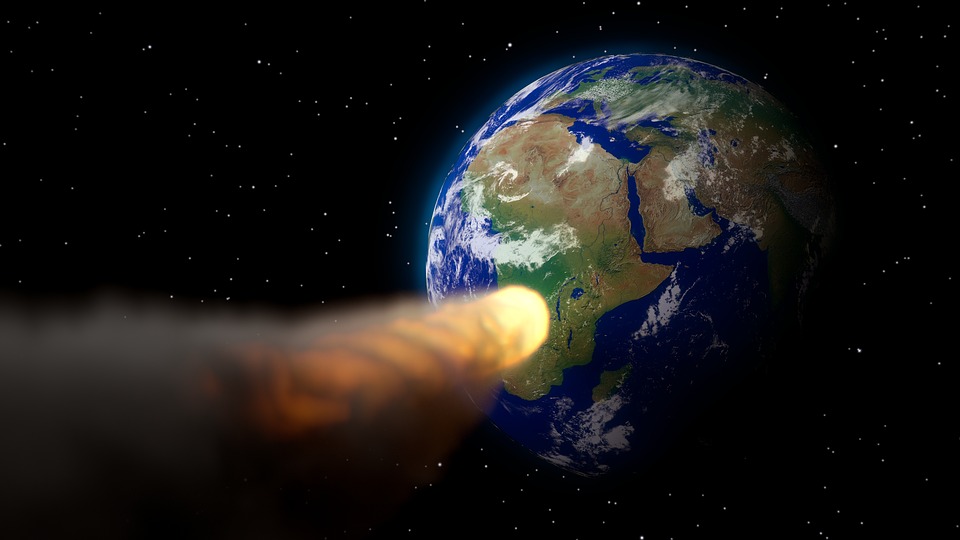
Over the year, asteroids have come and gone, comets and meteor showers have also been passing by. However, there is still the possibility that an asteroid may make an uninvited visit to the planet, moving past the atmosphere and the consequences will be disastrous.
Meteorologists Dr. Simon King and Dr. Claire Nasir have described what would happen when an asteroid would hit Earth. There are usually a few possibilities when a space rock would approach the atmosphere. Small asteroids may burn up on entry due to the atmosphere, but the other kinds of asteroids, some still small but big enough to make it past the atmosphere or other giant rocks past the sizes of the world’s tallest structures, may be colliding into land or water. The scientists described that rocks measuring past one or two kilometers may bring on disastrous consequences that would affect the entire world, not just the place it landed.
They explained that shock waves and wind blasts may be brought on by the asteroid colliding. The air pressure could potentially do internal damage to bodies, and the strong winds are enough to hurl people into several directions, while leveling buildings and uprooting forests. The other catastrophic events that may occur from an asteroid collision are tsunamis, flying debris from the rock, annihilation, and strong seismic shaking or earthquakes.
On a more positive note, because asteroids have their own orbits to follow, their movements can be very predictable. This means that by the time asteroids might hit the Earth, we should be anticipating that to happen, and space agencies all over the world may have already prepared safety measures to make sure the planet dodges any asteroid collisions.
Many asteroids have been seen approaching the Earth’s vicinity, and a previous report reveals a good portion of those asteroids have impacts as huge as a nuclear bomb, mostly even more than the force of a nuclear bomb. According to the scientists behind World Asteroid Day, which occurs every 30th of June, there are about 21, 443 asteroids that have the nuclear bomb-like force if it ever makes a collision with the Earth.
This is just a portion of the millions of asteroids classified as Near Earth Objects or NEOs that can potentially do some damage on the Earth in case of an impact.







