


 Sudan Rejects US Legitimacy Remarks, Defends Sovereignty
  Europe Warns Russia Is Escalating Hybrid Attacks Across NATO
  Kremlin Says No Grounds Yet for Ukraine Peace Talks
  Zelenskiy Warns Russia Preparing Major Attack on Ukraine
  US, China Extend Trade Truce to Jan. 10 Ahead of Trump-Xi Summit
  Taiwan Thanks US for Support Ahead of Trump-Xi Summit
  Trump Board of Peace Unveils $2.45 Billion Gaza Recovery Plan
  Trump Administration Plans Faster FDA Reviews for Smoke-Free Nicotine Products
  South Korea, US Discuss Warship Building Cooperation
  Iran Vows ‘Crushing’ Response as US Talks Continue
  US Invites Putin to Miami G20, Opening Door to Trump Summit
  Russian Missile and Drone Attack on Kyiv Kills Two, Damages Maternity Hospital
  Mexico-US Trade Talks Delayed to October as Tariff Negotiations Continue
  Trump to Press Xi on Release of US Nuclear Expert Held in China
  Trump Says ‘Freedom’ Is Coming to Cuba
  Judge Orders Trump to Restore White House Access for CNN, MS NOW and Politico
  Ghana Says Western Support Growing for Slave Trade Reparations


 Add as a preferred source on Google
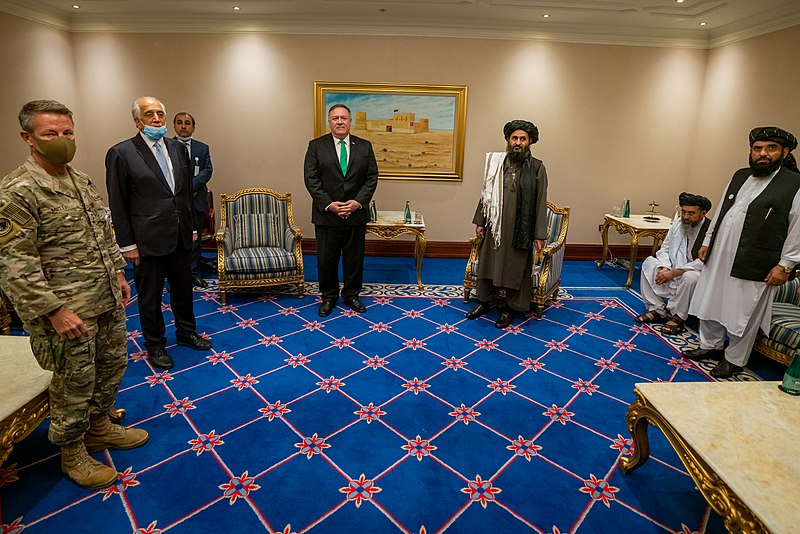
Afghanistan and the whole world are now reeling from the aftermath of the military evacuation made by the US and its allies upon the resurfacing of the Taliban. As the insurgent group seeks to form its own government, the Taliban has also announced its interim officials.
The Taliban announced Tuesday that the UN-sanctioned Taliban veteran Mullah Mohammad Hassan Akhund is to be the leader of Afghanistan’s new Taliban-ruled government. Taliban spokesperson Zabihullah Mujahid announced at a press conference that the group’s co-founder, Abdul Ghani Baradar would be the deputy leader. The rest of the officials Mujahid named are still in an acting capacity.
“The cabinet is not complete, it is just acting,” said Mujahid during the press conference at the Government Information and Media Center in Kabul. “We will try to take people from other parts of the country.”
Mullah Yaqub was named as the acting defense minister. Yaqub is the son of the late Taliban founder and Supreme Leader Mullah Omar. Haqqani network leader Sirajuddin Haqqani was also named as acting interior minister and Amir Khan Muttaqi, who was involved in the negotiations in Doha, Qatar, was named the acting foreign minister.
The insurgent group has been expected to announce its government after a rapid takeover of Afghanistan in the heels of the evacuations of the US and other allies. The Taliban has also looked to show a more moderate mindset, pledging to have a more inclusive government. However, it appears unlikely that there would be women appointed into government positions.
As the Taliban rapidly took control of Afghanistan, in the midst of evacuations, Afghan President Ashraf Ghani was revealed to have fled the country. This week, Ghani released a statement apologizing to the public for fleeing as well as explaining why he had to leave.
Ghani said in the statement that he had no choice but to leave, as his security team had advised him that if he should remain, there would be clashes in the streets similar to what was seen in Kabul during the 1990s. Ghani said that it was the most difficult decision he had to make, but in order to avoid more bloodshed, he had to leave.
However, Ghani also noted that he ultimately was unable to bring peace and stability to Afghanistan like his predecessors.







