


 US Conducts Non-Nuclear Explosion Test to Boost Nuclear Detection
  Marco Rubio to Visit Iceland, Greece and Portugal
  South Korea Warns Ukraine Over North Korean POW Dispute
  Tsai Ing-wen to Visit US for Stanford Security Conference
  Trump Praises Boeing 737 Max After Flydubai Crash Attempt
  Netanyahu Vows Probe Into Foiled Flydubai Crash Attempt
  TRUMP Memecoin Launches New Dinner Contest
  Trump Demands Powell Resign Over Fed Renovation Cost Overruns
  US Alcohol Ban Exposes Canada’s Internal Trade Barriers
  Iran Plans Stronger Response if US Attacks Resume
  California Leads Lawsuit Over Trump’s $810 Million Funding Cuts
  Trump Says He Raised Political Prisoners With Xi
  Israeli Settler Attack in West Bank Kills Palestinian
  Lula Leads Flavio Bolsonaro 48%-45% in Datafolha Poll
  Ukraine Deploys FP-7 Ballistic Missile in Combat for First Time
  US Officials See China Taiwan Invasion Before 2028 as Less Likely


 Add as a preferred source on Google
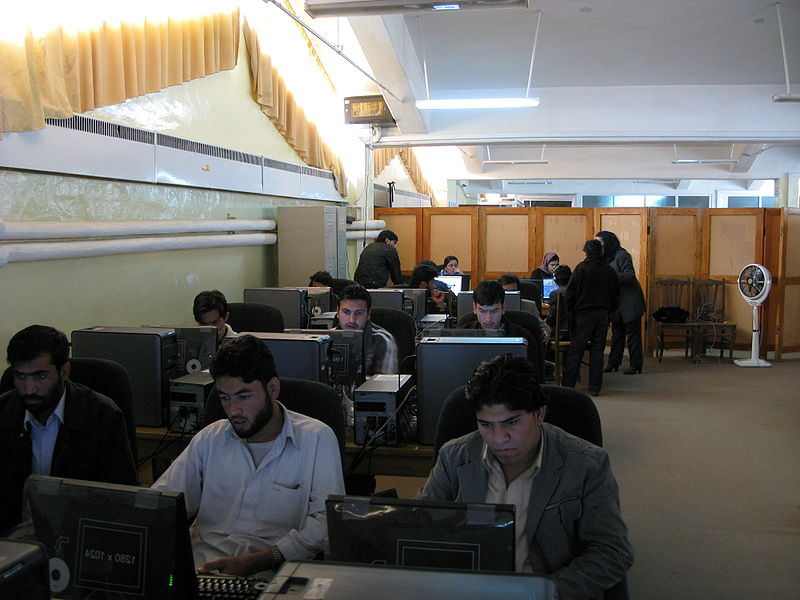
Since taking control of Afghanistan back in August 2021, the Taliban has imposed restrictions on women and girls, including in terms of education. Some universities in the country have recently reopened, with small numbers of female students seen attending.
Small numbers of female students were seen attending some of the universities in Afghanistan as the institutions have reopened for the first time since the insurgent group’s rise to power, according to Al Jazeera. This is as most schools for girls and all public universities closed when the Taliban took control, leading to fears that women and girls would once again be barred from attending school similar to when the insurgent group ruled with a hardline approach from 1996 to 2001.
Universities in the provinces of Laghman, Nangarhar, Kandahar, Nimroz, Farah, and Helmand opened Wednesday, officials have revealed. One small group of women, according to AFP, were also seen entering Laghman University on the same day. A witness told Reuters that female students were seen entering Nangarhar University through a separate door.
More universities are set to reopen this month. Nevertheless, not many students were seen attending Nangarhar University and members of the insurgent group guarded the entrances.
The Taliban has said that there are no objections to women receiving education, but want classes to be segregated and that the curriculum would be based on its principles.
Some students have also expressed sadness that many of their classmates decided to flee Afghanistan when the Taliban came to power and the western-backed government collapsed. Laghman University, for instance, has faced a shortage of women teachers.
In other related news, the US has given the green light to global banks to transfer money to Afghanistan for humanitarian purposes. Aid groups have also been allowed to pay teachers and healthcare workers at government-run institutions without fearing of breaching sanctions against the Taliban.
The US Treasury Department recently provided guidance on sanctions exemptions that were issued back in September and December for humanitarian work in Afghanistan. The Treasury said that banks can process transactions related to humanitarian operations. This included “clearing, settlement, and transfers through, to, or otherwise involving privately-owned and state-owned Afghan depository institutions.”







