


 US Dollar Holds Steady as Fed Rate Bets and Iran Tensions Drive Markets
  Gold’s Bull Run Intact: Safe-Haven Bids Overpower Treasury Yield Pressure
  US Treasury Buybacks Ease Global Bond Yield Surge
  European Stocks Slide as Iran War Escalation Sends Oil Higher
  Oil Prices Rise as Trump Threatens Tougher Iran Economic Measures
  BSP Sees Philippine Inflation Easing, Keeps Policy Options Open
  RBA Signals More Rate Hikes Possible as Australia Battles Stubborn Inflation
  Fed Minutes Signal Rate Hikes Remain Possible as Inflation Risks Persist
  BOJ Minutes Signal More Rate Hikes as Inflation Risks Grow
  Asian Stocks Slide as Chip Selloff and High Bond Yields Hit Markets
  Australia Unemployment Rate Hits 4.5% as Jobs Fall in July
  Asian Currencies Rise as Dollar Hovers Near Multi-Month Lows
  US Dollar Hits Three-Month Low as Treasury Yields Fall


 Add as a preferred source on Google
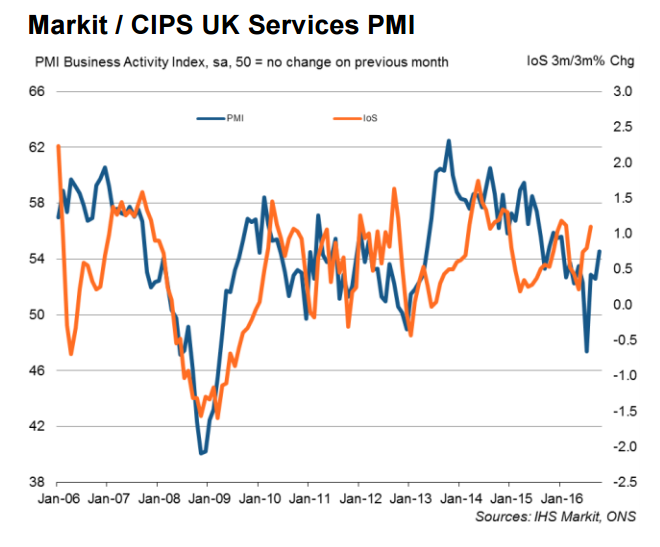
Britain's services sector accelerated in October, according to the latest PMI data from IHS Markit, released on Thursday. The UK Markit/CIPS October PMI services sector index strengthened to 54.5 from 52.6 the previous month, beating forecast of 52.5 and also the strongest figure since January. The headline balance is well above the pre-referendum reading of 52.3, although still a little shy of the long-term average of 55.1.
Orders accelerated to the strongest level in nine months. The forward-looking business expectations component, a more reliable guide to official estimates of service sector output posted another rise to 69.1 from 66.4 in September, the strongest since May. The pace of employment growth also held broadly steady and in line with its long-term average.
Data is likely to maintain expectations of solid GDP growth in the short term, especially given the dominance of the services sector in the economy. The Bank of England left interest rates unchanged as widely expected and ramped up its growth forecasts for 2017. The data will ease worries about the economic impact of a "hard" Brexit while further reducing the likelihood of additional Bank of England monetary stimuli.
That said, evidence of mounting price pressures will complicate the Bank of England's mission to keep the economy on a stable course. As in the manufacturing and construction PMI reports, price pressures were evident in today's services PMI data. The input price balance rose to 64.9 from 58.9 (the highest since March 2011) and the prices charged balance firmed to 53.3 from 52.8 (the highest since April 2011).
The effects of a weaker pound are clearly evident. Costs are consequently rising at the fastest rate for over five years. If sustained, the increase in prices threatens to curb both corporate hiring and consumer spending, as firms seek to reduce staff costs and households see their pay eroded by rising inflation.
"An encouraging picture of the economy gaining further growth momentum in October is marred by news that inflationary pressures are rising rapidly," said Chris Williamson at Markit.
Cable spiking as we write, $1.25 levels in sight after Bank of England ditches plans for another rate cut. GBP/USD was up 1.41 percent at 1.2477 at 12:15 GMT, while EUR/GBP was at 0.8870, down 1.64 percent.







