


 Brazil Cuts Selic Rate to 14% as Inflation Eases but Risks Persist
  South Korea Producer Prices Fall 0.4% in July
  Fed Minutes Signal Rate Hikes Remain Possible as Inflation Risks Persist
  BOJ Expected to Hold Rates Steady While Signaling More Hikes Ahead
  Goldman Sachs Names 9 Top Japanese Semiconductor and Electronics Stocks
  Fed Holds Interest Rates Steady as Kevin Warsh Says Rising Treasury Yields Tighten Financial Conditions
  BOJ Minutes Signal More Rate Hikes as Inflation Risks Grow
  U.S. Public Debt Tops $40 Trillion for First Time
  Asian Chip Stocks Plunge as Bond Yields Fuel AI Valuation Fears
  US Plans ‘Toughest Sanctions in History’ on Iran, Bessent Says
  Japan Trade Deficit Widens as Imports Surge on Energy and AI Demand


 Add as a preferred source on Google
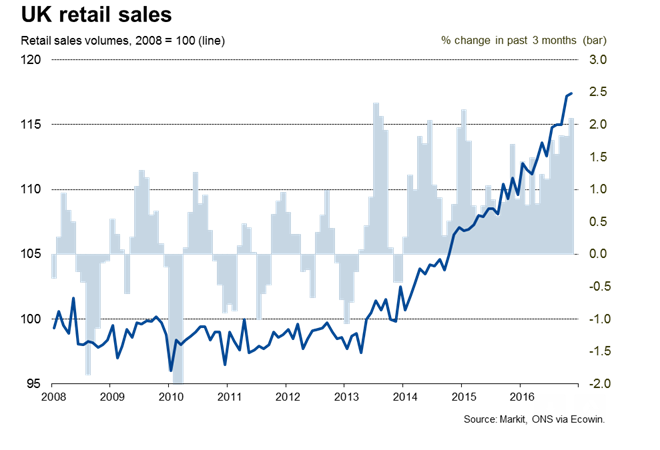
Data from the Office for National Statistics (ONS), showed on Friday that U.K. retail sales volumes unexpectedly dropped by 0.3 percent compared with the previous month, widely missing analysts expectations for a 0.9 percent rise. Compared with January 2015, sales were up 1.5 percent, the weakest performance since November 2013.
Details of the report suggested higher fuel and food prices were key factors contributing to the slowdown. Data is consistent with the message from various private sector surveys such as those of BRC and CBI, along with John Lewis sales that retail spending in the first few weeks of 2017 has been lacklustre. Analysts expect further slowing in consumer spending as rising inflation is set to further eat into real wages this year.
Data released earlier this week showed UK inflation rose more than expected in November, with further upward pressure likely to appear in coming months. Expensive clothing and the impact of June’s Brexit vote on the prices paid by consumers for technology goods pushed UK's inflation to more than two-year high in November. Data released on Tuesday by the Office for National Statistics showed UK consumer prices rose 1.2 percent compared with a year ago, beating economists’ expectation for a 1.1 percent annual rise.
"A sharp turnaround in the inflation environment has put a sharp brake on the growth of retail spending - and we are likely to see more of the same as we move through 2017 and next year," said Andrew Sentance, senior economic adviser at PwC.
Bank of England (BoE) forecasts that inflation would surge to about 2.8 percent by mid-2018, as sterling's slump after Brexit vote pushes up the cost of imports. November's data clearly underscores how inflation in Britain looks set to rise sharply next year. BoE Governor Mark Carney has said the central bank could tolerate some overshoot against its inflation target, to help accommodate economic growth and employment. A BoE survey earlier this month showed Britons expect a sharp rise in inflation over the coming year which has raised expectations that a hike in interest rates is on the way.
"Today’s data alongside the report of slower wage growth released earlier this week will only reinforce the concerns of the majority on the Bank of England’s rate-setting committee that there are downside risks to economic growth, as well as upside risks to inflation that need careful monitoring." said Lloyds Bank in a report.
FTSE 100 falters and Cable slumps to hit lows of 1.2387 as U.K. retail sales show unexpected fall. FxWirePro's Hourly GBP Spot Index was also bearish at -76.1494 at 1220 GMT. For more details on FxWirePro's Currency Strength Index, visit http://www.fxwirepro.com/currencyindex.







