


 Russia Signals Further Restrictions on Telegram Amid Ongoing Regulatory Disputes
  Trump Administration Plans Chip Tariff Exemptions for Big Tech Amid AI Data Center Push
  FTC Questions Apple News Over Alleged Bias Against Conservative Media
  Nicaragua Ends Visa-Free Entry for Cubans, Disrupting Key Migration Route to the U.S.
  FDA Rejects Review of Moderna’s Flu Vaccine Application, Shares Slide
  Trump Maritime Action Plan Targets U.S. Shipbuilding Revival and Port Fee Funding
  Pentagon Seeks Broader Access to AI Tools on Classified Military Networks
  Trump Administration Sues Harvard Over Alleged Race-Based Admissions Practices
  Mexico Senate Approves 40-Hour Workweek Reform, Bill Advances to Lower House
  Minnesota Governor Says Trump Immigration Crackdown Could End Soon
  Mark Carney to Attend Tumbler Ridge Vigil After Tragic British Columbia School Shooting
  Peru Congress Schedules Debate on Motion to Remove President Jose Jeri Amid Scandal
  U.S. Offers Payments to Afghans in Qatar as Camp As Sayliyah Closure Nears
  Trump Lifts 25% Tariff on Indian Goods in Strategic U.S.–India Trade and Energy Deal
  Macron Urges Stronger European Defense Strategy and Nuclear Deterrence Reform


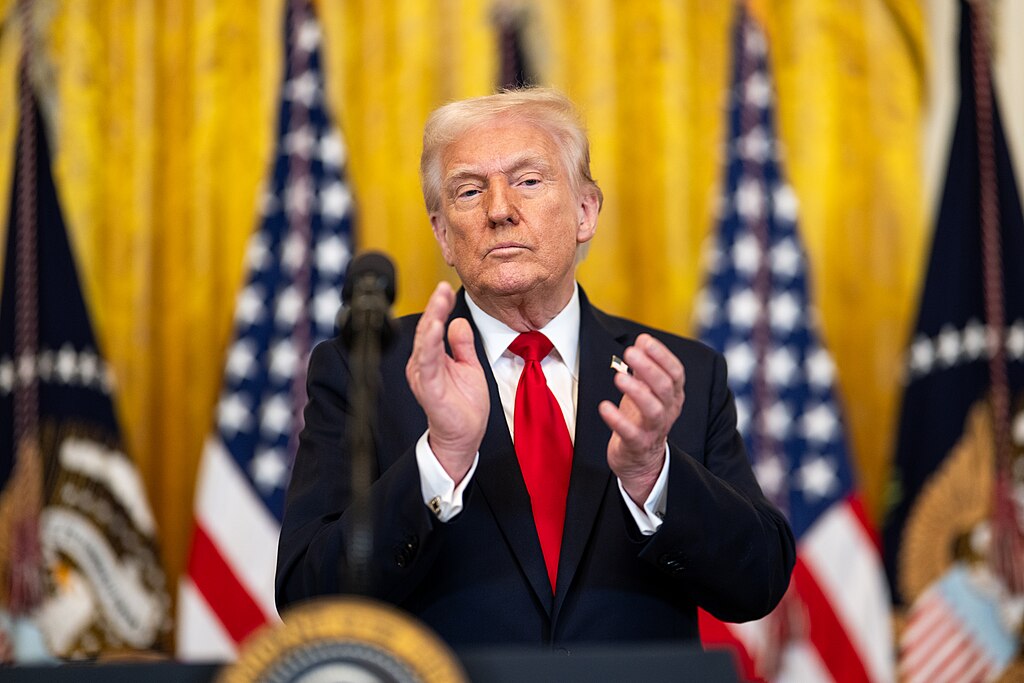
U.S. President Donald Trump announced Friday that he intends to pursue voter identification requirements for the upcoming November midterm elections, with or without congressional approval. The statement, made on Truth Social, signals a renewed push for stricter election laws and has reignited debate over federal versus state authority in U.S. elections.
Trump said he plans to issue an executive order mandating voter ID requirements but did not provide specific details or clarify the legal basis for such action. His proposal aligns with a House-passed bill backed by Republican lawmakers that would require proof of citizenship to vote in U.S. federal elections. However, the legislation is unlikely to advance in the Senate, where similar measures have previously stalled.
The voter ID bill represents the latest iteration of election reform proposals that gained traction during the 2024 presidential campaign. These efforts were largely fueled by Trump’s repeated claims that widespread voter fraud contributed to his 2020 election loss—allegations that have been widely disputed and rejected by courts. Comparable bills passed the House twice, including last April and again in 2024, but ultimately failed to secure Senate approval.
Under the U.S. Constitution, state governments are primarily responsible for administering elections, with oversight typically handled by county and local officials rather than the federal government. Legal experts note that any executive order seeking to impose nationwide voter ID requirements could face significant constitutional challenges.
Republicans currently hold narrow majorities in both the House of Representatives and the Senate. Historically, the president’s party tends to lose congressional seats during midterm elections, adding political weight to the debate over election integrity and voting regulations.
As the 2026 midterm elections approach, Trump’s executive order proposal is likely to intensify discussions surrounding voter ID laws, proof of citizenship requirements, and the balance of power between state and federal election authority.













