


 US Officials Split Over Response to Israeli West Bank Settlements
  Gaza Faces Evacuation Crisis as War-Damaged Buildings Risk Collapse
  US, China Extend Trade Truce to Jan. 10 Ahead of Trump-Xi Summit
  EU Defence Build-Up Too Slow for 2030 Russia Readiness Goal
  Netanyahu’s Brief US Trip Highlights Strains With Trump
  Sudan Rejects US Legitimacy Remarks, Defends Sovereignty
  Judge Orders Trump to Restore White House Access for CNN, MS NOW and Politico
  South Korea, US Discuss Warship Building Cooperation
  Ghana Says Western Support Growing for Slave Trade Reparations
  Netanyahu Takes Aim at Mamdani as Israel Election Nears
  Trump, Xi Focus on Trade and AI at White House Summit
  Venezuela Promises Elections as Delcy Rodriguez Pledges Democratic Transition
  Russian Envoy Dmitriev Heads to US for Ukraine Talks
  Taiwan Thanks US for Support Ahead of Trump-Xi Summit
  Netanyahu Defends Israel at UN as Delegates Stage Walkout
  US Senate Rejects Iran War Powers Resolution in 50-49 Vote
  Mexico-US Trade Talks Delayed to October as Tariff Negotiations Continue


 Add as a preferred source on Google
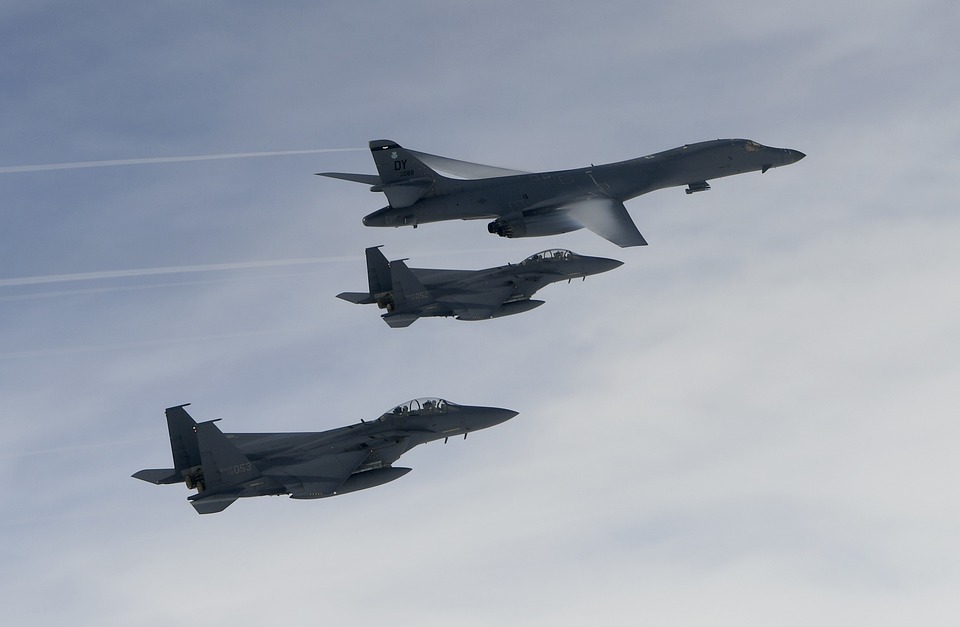
The South Korean government unveiled a $440 million strategy to improve the country’s defenses following a recent incursion by North Korean drones. The recent incursion marks the first time since the 2018 inter-Korean military pact.
The South Korean defense ministry announced on Wednesday that the country would spend $440 million to improve its defense capabilities following the drone incursion on Monday. The strategy also comes as the failed response by the South Korean military to the drones prompted criticism from President Yoon Suk-yeol.
The newly introduced budget would see $261 billion on all defense capabilities until 2027, with an average annual increase of 6.8 percent. The increased defense spending will include the development of an airborne laser weapon and a signal jammer. The South Korean military also intends to increase its drone capabilities to three squadrons.
The ministry said that the country also plans to acquire more stealth jets and ballistic missile submarines. The country will also fast-track the development of systems to intercept rockets, according to the ministry.
On the same day, Yoon said that any provocation by North Korea must be met with retaliation without hesitation, even as Pyongyang possesses a nuclear arsenal. In a meeting with aides, according to press secretary Kim Eun-hye, Yoon said that retaliating against North Korea’s provocations is “the most powerful means to deter provocations.”
Following the South Korean military’s failed response, Yoon said the military failed to shoot down the drones that were flying over South Korea for hours. South Korea deployed drones over North Korea for three hours as part of the response.
Aside from deploying drones over North Korea, the South Korean military fired warning shots and scrambled jets in response to the incursion. The drones were first detected over the city of Gimpo. One of the five drones was seen flying close to the capital Seoul while the others flew near the west coast.
Eunice Kim of Al Jazeera reported that several commercial flights at the airports in Incheon and Gimpo “were grounded for about 50 minutes” at the military’s request, but it was not clear if the drones that flew over were armed.







