


 Erdogan Condemns White House Correspondents’ Dinner Shooting, Voices Support for Trump
  DOJ Ends Probe Into Fed Chair Jerome Powell, Boosting Kevin Warsh Confirmation Prospects
  U.S. Budget Airlines Seek $2.5 Billion Government Aid Amid Rising Jet Fuel Costs
  Trump Rejects Iran Proposal as War Tensions Push Oil Prices Higher
  US Envoy Urges Taiwan to Approve Defense Budget Amid Rising China Tensions
  Trump Urges Iran to Call for Talks as War Stalemate Disrupts Oil Markets
  Trump Skeptical of Iran Hormuz Proposal as Nuclear Talks Stall
  China Conducts Live-Fire Drills Near Luzon as U.S.-Philippines Balikatan Exercises Expand
  King Charles and Queen Camilla Visit the U.S. Amid Political Tensions and Historic Milestone
  King Charles Addresses U.S. Congress, Emphasizes UK-US Alliance Amid Political Tensions
  Bennett and Lapid Form Alliance to Challenge Netanyahu in Upcoming Israel Election
  White House Dinner Shooting Sparks Security Concerns and Succession Discussions
  White House Correspondents’ Dinner Shooting Raises New Security Concerns for U.S. Leaders
  Iran Proposes Strait of Hormuz Reopening Deal Amid Stalled U.S. Talks
  King Charles to Join NYC Mayor at 9/11 Memorial During U.S. State Visit
  Republican Lawmakers Urge National Guard Role for World Cup Drone Security
  White House Withdraws Trump’s National Park Service Nominee Amid Criticism


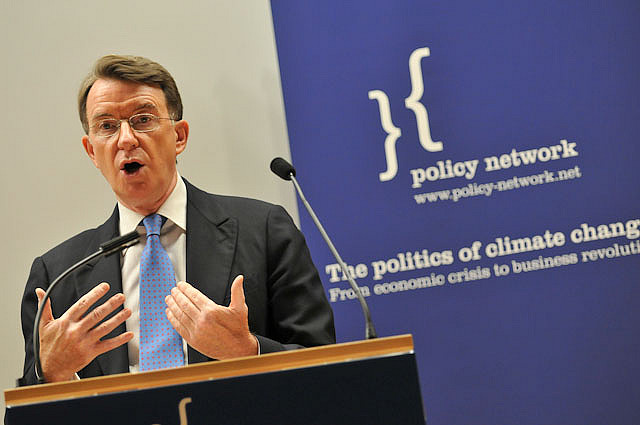
Former British government minister Peter Mandelson has resigned from Prime Minister Keir Starmer’s Labour Party following renewed media scrutiny over his past connections to disgraced U.S. financier Jeffrey Epstein. The development comes after fresh reports emerged based on files released by the U.S. Department of Justice, prompting Mandelson to step down to avoid causing further controversy for the party.
In a letter to the Labour Party reported by the BBC and other UK media, Mandelson said he was “regretful and sorry” to be associated once again with the furor surrounding Epstein. While strongly denying allegations that he received financial payments from Epstein, Mandelson stated he intended to investigate the claims but felt it was appropriate to relinquish his party membership during that process. He emphasized that his decision was driven by a desire not to embarrass Labour or distract from its political priorities.
Mandelson’s resignation follows his dismissal last year as Britain’s ambassador to the United States, a role he lost after U.S. lawmakers released documents highlighting his past relationship with Epstein. Among those documents was a letter in which Mandelson referred to Epstein as “my best pal,” intensifying political pressure and public criticism.
A central figure in Labour’s rise to power during the Tony Blair era of the 1990s and early 2000s, Mandelson played a key role in shaping the party’s electoral strategy and modernization efforts. However, his career has been marked by controversy. He resigned as trade minister in 1998 over an undeclared loan used to purchase a home and again left the cabinet in 2001 following allegations linked to a passport application involving an Indian billionaire, though he was later cleared of wrongdoing.
Currently on leave from the House of Lords, Mandelson also previously served as European Union trade commissioner. Separately, Prime Minister Keir Starmer recently stated that Britain’s former Prince Andrew should testify before a U.S. congressional committee regarding his own ties to Epstein, underscoring the continued political fallout from the case.
This latest resignation highlights how renewed revelations about Jeffrey Epstein continue to reverberate through British politics, affecting high-profile figures and reigniting debates over accountability, transparency, and political integrity.







