


 China Warns US Arms Sales to Taiwan Could Disrupt Trump’s Planned Visit
  Trump Congratulates Japan’s First Female Prime Minister Sanae Takaichi After Historic Election Victory
  Anutin’s Bhumjaithai Party Wins Thai Election, Signals Shift Toward Political Stability
  Federal Judge Restores Funding for Gateway Rail Tunnel Project
  Trump Allows Commercial Fishing in Protected New England Waters
  Nicaragua Ends Visa-Free Entry for Cubans, Disrupting Key Migration Route to the U.S.
  TrumpRx.gov Highlights GLP-1 Drug Discounts but Offers Limited Savings for Most Americans
  Bosnian Serb Presidential Rerun Confirms Victory for Dodik Ally Amid Allegations of Irregularities
  Netanyahu to Meet Trump in Washington as Iran Nuclear Talks Intensify
  U.S. Lawmakers to Review Unredacted Jeffrey Epstein DOJ Files Starting Monday
  Trump Says “Very Good Talks” Underway on Russia-Ukraine War as Peace Efforts Continue
  New York Legalizes Medical Aid in Dying for Terminally Ill Patients
  Trump’s Inflation Claims Clash With Voters’ Cost-of-Living Reality
  Trump Signs Executive Order Threatening 25% Tariffs on Countries Trading With Iran
  India–U.S. Interim Trade Pact Cuts Auto Tariffs but Leaves Tesla Out
  US Pushes Ukraine-Russia Peace Talks Before Summer Amid Escalating Attacks
  U.S.-India Trade Framework Signals Major Shift in Tariffs, Energy, and Supply Chains


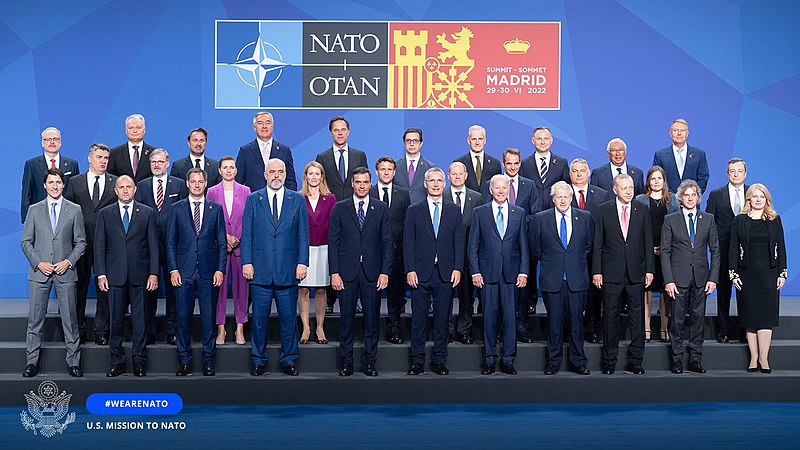
In a major shift in security in Europe this week, the NATO alliance has officially extended an invitation for Finland and Sweden to join the military grouping. The invitation came as both countries broke their neutrality to apply for membership following Russia’s invasion of Ukraine.
The NATO alliance Wednesday invited Finland and Sweden to join the grouping, the 30 countries finalizing their decision during the summit in Madrid, while also formally agreeing that Russia poses a direct threat to the security of allies, according to a statement from the summit.
“Today, we have decided to invite Finland and Sweden to become members of NATO,” said the NATO leaders in a declaration, following Turkey’s lifting of its veto over the bids of both countries.
“We will make sure to protect all allies, including Finland and Sweden,” said NATO Secretary-General Jens Stoltenberg
The ratification in the parliaments of allies will likely take up to a year. Once ratification is settled, Finland and Sweden will be officially covered by the Title 5 collective defense clause of the alliance, putting the two countries under the protective grouping of the United States.
NATO allies are also set to increase their military presence in the Nordic region by holding more military exercises and naval patrols in the Baltic sea to reassure Sweden and Finland.
“We are sending a strong message to Putin; ‘You will not win’,” said Spanish Prime Minister Pedro Sanchez in his remarks.
NATO allies have also agreed on a new strategic concept, which is its master planning document. Russia, which was previously designated as a partner of the alliance, is now the main threat. The planning document also cited China as a growing challenge.
The summit this week also had the leaders of South Korea and Japan in attendance as observers.
South Korean President Yoon Suk-yeol warned of the threat to universal values amidst a time of conflict and competition, referring to the war in Ukraine and China’s engagement with Moscow, according to a South Korean official.
“As a new structure of competitions and conflicts is taking shape, there is also a movement that denies the universal values that we have been protecting,” said Yoon in his remarks at the summit. Yoon added that the international community is facing security threats that one country cannot solve on its own.













