


 Supreme Court Backs Lisa Cook, Defends Federal Reserve Independence Against Trump Firing Attempt
  Russia Intensifies Assault on Kostiantynivka as Ukraine’s Donetsk Defense Faces Mounting Pressure
  Canada Grants C$7 Million to Greenland Molybdenum Mine to Strengthen Critical Minerals Supply
  Andy Burnham Sets Out Vision to Decentralize Britain as Labour Leadership Race Begins
  Trump Urges Gasoline Retailers to Cut Prices to $2.50 Per Gallon, Warns of Legal Action
  Javier Milei Cabinet Chief Manuel Adorni Resigns Amid Spending Scandal Investigation
  Trump Announces September Overhaul of Washington’s East Potomac Golf Links
  China Expands Export Controls, Adds 20 Japanese Companies to Restricted List
  Iran Skips U.S. Technical Talks Over Unmet MoU Conditions and Frozen Funds Dispute
  US, Iran Agree to Halt Attacks Ahead of Doha Talks on Strait of Hormuz
  Mexico, U.S. Launch Sterile Fly Facility to Combat New World Screwworm Outbreak
  Trump Signs Memorandum Backing Americans’ Right to Repair Their Own Vehicles
  Israeli Airstrike Kills Three in Central Gaza Despite Ceasefire
  Russian Attacks Kill Four in Ukraine as Zaporizhzhia and Kharkiv Come Under Fire
  Maria Corina Machado’s Return to Venezuela Faces U.S. Hesitation After Deadly Earthquakes
  Trump Threatens 100% Tariffs on Countries Imposing Digital Services Taxes on U.S. Tech Firms


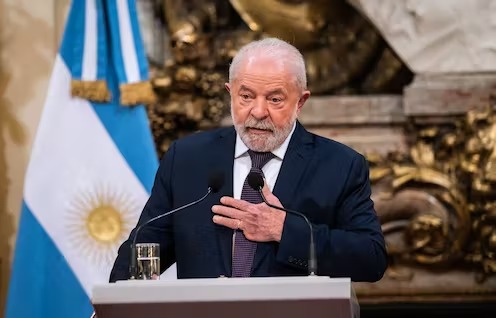
Brazilian President Luiz Inácio Lula da Silva is preparing to submit a new nominee for the Supreme Federal Court after the Senate rejected his initial choice, marking a historic political setback. According to sources familiar with the situation, Lula’s administration is moving quickly to fill the vacant seat, highlighting growing tensions in Brasília ahead of the October presidential election.
The rejection of Solicitor General Jorge Messias makes Lula the first Brazilian leader in over a century to see a Supreme Court nominee blocked by Congress. This development underscores the increasingly strained relationship between the executive branch and a conservative-leaning legislature. With Brazil’s political climate heating up, the Supreme Court nomination has become a key issue influencing the broader election narrative.
Opposition leaders, including Senator Rogério Marinho, argue that the decision should be postponed until after the election, suggesting the next president should have the authority to appoint a justice. This stance mirrors a similar strategy used in the United States in 2016, when Congress delayed consideration of a Supreme Court nominee during an election year. Critics warn that postponing the appointment could allow the incoming president to significantly reshape the court, potentially filling multiple vacancies.
Recent polls indicate a tight race between Lula and Senator Flávio Bolsonaro, son of former President Jair Bolsonaro, further intensifying the stakes. Currently, two of the court’s eleven justices were appointed by Bolsonaro, and any additional appointments could shift the ideological balance.
In response to political resistance, Lula is reportedly considering nominating a woman, aiming to increase public support and make it more difficult for senators to reject the candidate. Brazil’s Supreme Court currently has only one female justice, and increasing gender representation could become a strategic advantage.
Despite internal concerns about another possible rejection, Lula’s allies emphasize that the authority to nominate justices rests solely with the president. As the election approaches, the outcome of this nomination could play a crucial role in shaping Brazil’s judiciary and political future.







