


 Lavrov Claims U.S. Seeks Control Over Damaged Nord Stream Pipelines
  US Military Eyes 10,000 Troop Surge to Middle East Amid Iran Nuclear Tensions
  Trump Signs Executive Order to Pay TSA Workers Amid Airport Security Crisis
  California Renames Cesar Chavez Day to Farmworkers Day Following Sexual Abuse Allegations
  SMIC Allegedly Supplies Chipmaking Tools to Iran's Military, U.S. Officials Warn
  God on their side: how the US, Israel and Iran are all using religion to garner support
  Iran-U.S. Negotiations: Tehran Reviews American Peace Proposal Amid Ongoing Gulf Conflict
  U.S. Praises Kurdistan's Role in Oil Markets Amid Iran War Fallout
  Jay Bhattacharya to Continue Leading CDC as White House Searches for Permanent Director
  CPAC 2026: Republicans Back Trump's Iran Strikes Amid Growing Public Skepticism
  China Opens Door to Stronger U.S. Trade Ties Amid Rising Tensions
  Iran Demands Lebanon Be Part of Any Ceasefire Deal With Israel and the U.S.
  WTO Reform Talks Begin in Cameroon Amid Global Trade Tensions
  G7 Summit 2026: South Africa Excluded Amid U.S. Pressure, Kenya Invited Instead
  G7 Foreign Ministers Gather in France Amid Global Tensions and U.S. Policy Uncertainty
  Trump Seeks Quick End to U.S.-Iran Conflict Amid Ongoing Middle East Tensions


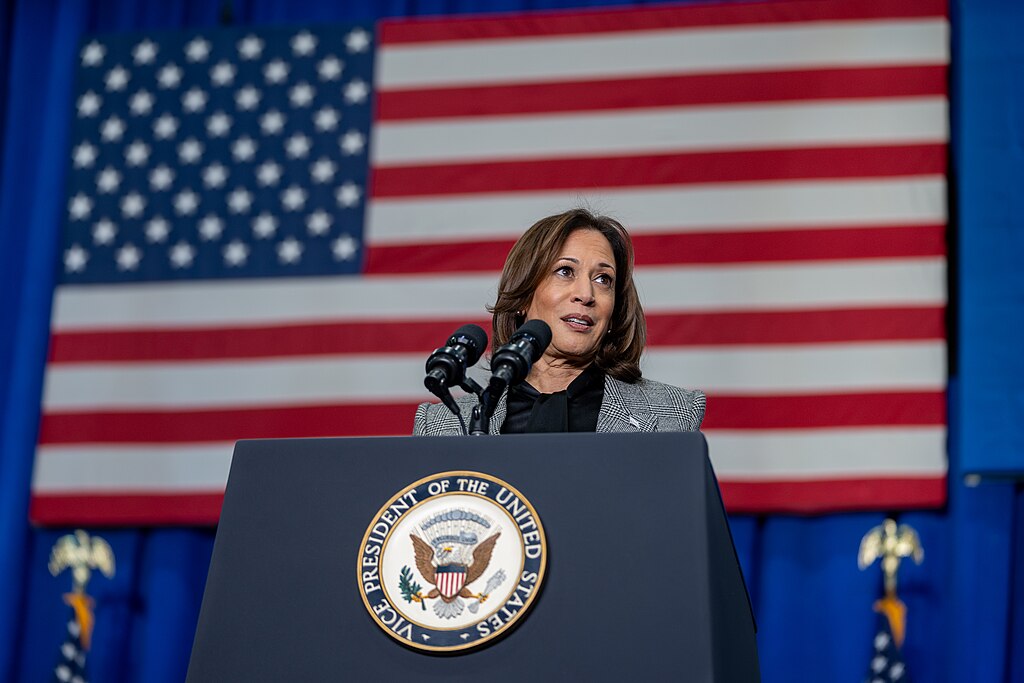
Vice President Kamala Harris is under increasing scrutiny for her repeated use of the same rehearsed phrases during public appearances, drawing comparisons to a notorious moment in the 2016 GOP primary debates when Senator Marco Rubio was called out for his repetitive talking points. Critics argue that Harris’ reliance on familiar rhetoric may weaken her public image, particularly as she prepares for the challenges ahead of the 2024 election.
The situation echoes Rubio’s widely remembered misstep in a 2016 debate, when he repeatedly delivered the same talking point, prompting then-New Jersey Governor Chris Christie to call him out for the over-reliance on scripted lines. The moment is often cited as a turning point in Rubio’s campaign, as it led to negative coverage and further attacks from his opponents.
Harris’ critics are now making similar observations, noting that she has often leaned on familiar phrases and pre-packaged responses when addressing key issues. While this is not uncommon in political communication, especially for high-profile figures, the frequency and repetition of certain statements have led to increased media attention. Political commentators have questioned whether Harris is effectively engaging with the public or simply relying on polished but overused soundbites.
The comparison to Rubio is striking given the impact that moment had on his campaign. In the 2016 GOP primary, Rubio was viewed as a rising star with strong debate skills, but his robotic repetition of the same phrase damaged his credibility. Some analysts are beginning to wonder if Harris could face a similar backlash as she prepares for a potential presidential run or continues to support President Joe Biden in the 2024 race.
Harris has faced other communication challenges during her vice presidency, with some critics pointing to moments where her responses appeared vague or lacked depth. Despite her impressive political resume, which includes serving as a senator from California and attorney general of the state, Harris has struggled to maintain consistent public approval, particularly in handling sensitive policy topics. Repeated phrases may only add to concerns about her communication style.
Supporters argue that Harris’ messaging is rooted in the need for clarity and consistency, especially on issues like voting rights, economic recovery, and healthcare. They believe that repetition can help reinforce key policy points, ensuring that voters understand her positions. However, the growing focus on her repetitive statements suggests that this approach may not resonate with all audiences.
As the political landscape becomes more competitive ahead of the 2024 election, public perception of Harris’ ability to communicate effectively will be critical. The vice president is expected to play a key role in the Biden administration’s reelection efforts, particularly as President Biden himself faces questions about his age and vigor.
The potential for Harris to face the same level of criticism as Rubio did in 2016 remains uncertain. However, the parallels between their communication strategies raise questions about how political figures can avoid being boxed in by rehearsed lines while maintaining a consistent message.
EconoTimes cannot independently verify the claims regarding Kamala Harris’ communication strategy or the comparisons to Marco Rubio’s 2016 debate performance.







