


 Trump's Signature to Appear on U.S. Currency Starting Summer 2025
  Lavrov Claims U.S. Seeks Control Over Damaged Nord Stream Pipelines
  WTO Reform Talks Begin in Cameroon Amid Global Trade Tensions
  G7 Summit 2026: South Africa Excluded Amid U.S. Pressure, Kenya Invited Instead
  Jay Bhattacharya to Continue Leading CDC as White House Searches for Permanent Director
  What does China’s host bid mean for the High Seas Treaty?
  Ukraine-Russia War: Frontline Updates as Spring Offensive Looms
  Russia Strikes Kharkiv and Izmail as Cross-Border Drone War Escalates
  Russia Accused of Helping Iran Target U.S. Forces, European Powers Tell G7
  Chinese Universities with PLA Ties Found Purchasing Restricted U.S. AI Chips Through Super Micro Servers
  China Opens Door to Stronger U.S. Trade Ties Amid Rising Tensions
  Trump Seeks Quick End to U.S.-Iran Conflict Amid Ongoing Middle East Tensions
  Iran Demands Lebanon Be Part of Any Ceasefire Deal With Israel and the U.S.
  Maduro Faces Rare Narcoterrorism Charges in U.S. Court
  CPAC 2026: Republicans Back Trump's Iran Strikes Amid Growing Public Skepticism
  G7 Foreign Ministers Gather in France Amid Global Tensions and U.S. Policy Uncertainty


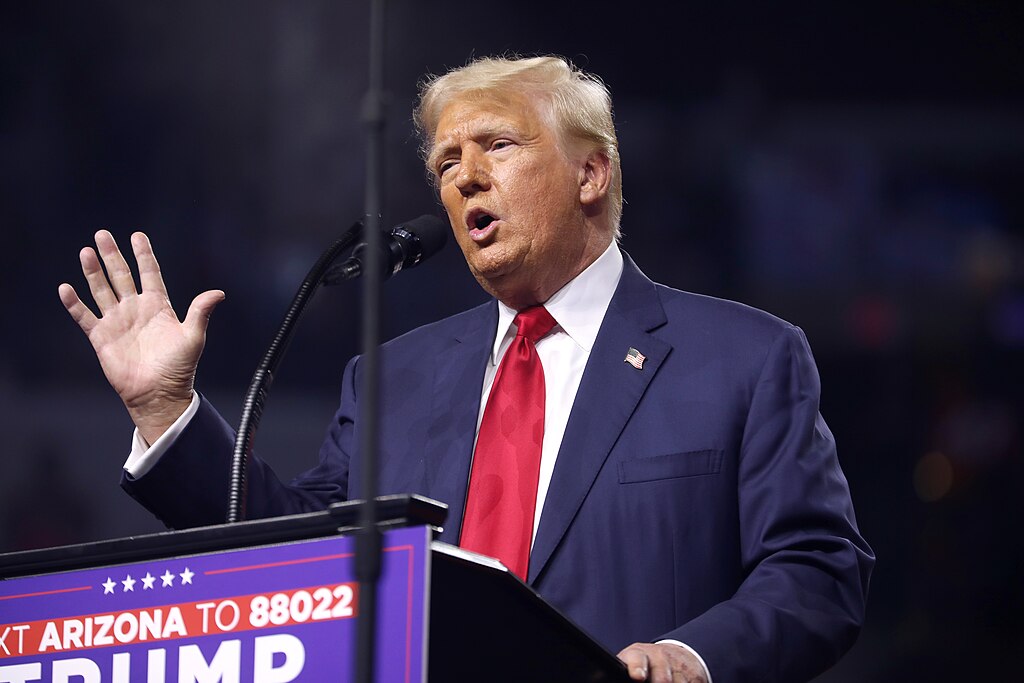
As inflation continues to grip the nation, former President Donald Trump has made a bold campaign promise to cut inflated automobile insurance prices in half, positioning himself as the solution to rising costs under the Biden-Harris administration. Trump’s pledge comes as Vice President Kamala Harris has acknowledged that inflation remains a pressing issue, further intensifying the political debate over the administration’s handling of the economy.
Trump's proposal to target auto insurance prices is aimed directly at a widespread consumer concern, with many Americans grappling with increasing premiums. Rising inflation has led to higher costs across various sectors, with insurance rates seeing significant spikes due to increased vehicle repair costs, labor shortages, and supply chain disruptions. Trump's promise to reduce these costs by 50% highlights his focus on tackling one of the most visible pain points for consumers as part of his 2024 presidential campaign.
The former president has long criticized the Biden-Harris administration's economic policies, blaming them for the persistent inflation that has affected nearly every facet of American life. Auto insurance, a necessity for most households, has become an unexpected flashpoint in the inflation debate, with rates rising dramatically in several states. Trump’s campaign aims to capitalize on this frustration, portraying himself as a champion for working-class Americans burdened by these soaring costs.
In contrast, the Biden-Harris administration has been focused on broader economic recovery measures, attempting to curb inflation through initiatives like the Inflation Reduction Act and efforts to stabilize supply chains. However, inflation remains a thorny issue, and Vice President Harris recently admitted that prices are still far too high, reflecting the administration’s ongoing struggle to get inflation under control.
Despite the administration’s efforts, inflation has remained a top concern for voters, with Republicans seizing on the issue as a key talking point ahead of the 2024 election. Trump’s promise to cut auto insurance prices aligns with his broader critique of the Biden administration’s handling of the economy, as he continues to blame rising prices on what he describes as reckless spending and ineffective policies.
The specifics of Trump’s plan to slash auto insurance costs have not been fully outlined, but his pledge has already gained traction among supporters who view the current economic conditions as unsustainable. Reducing auto insurance premiums would resonate with middle-class voters who have seen their budgets stretched thin by higher prices for everyday goods and services.
Inflation has been a persistent challenge for the Biden administration, particularly as the Federal Reserve continues to raise interest rates in an attempt to bring prices under control. While the administration points to job growth and economic recovery as signs of progress, the lingering effects of inflation have overshadowed those gains. Trump’s focus on tangible consumer issues like auto insurance could potentially shift the conversation as the 2024 election approaches.
The debate over inflation and its impact on American households is set to play a critical role in the upcoming election. Trump’s pledge to tackle auto insurance prices, coupled with Harris’ acknowledgment of the inflation problem, underscores the competing narratives that will dominate the political landscape in the months ahead.
EconoTimes cannot independently verify Donald Trump’s claims about reducing auto insurance prices or the impact of inflation under the Biden-Harris administration.







