


 Trump Signs “America First Arms Transfer Strategy” to Prioritize U.S. Weapons Sales
  Trump Backs Nexstar–Tegna Merger Amid Shifting U.S. Media Landscape
  Nighttime Shelling Causes Serious Damage in Russia’s Belgorod Region Near Ukraine Border
  Jack Lang Resigns as Head of Arab World Institute Amid Epstein Controversy
  South Korea Assures U.S. on Trade Deal Commitments Amid Tariff Concerns
  Trump Allegedly Sought Airport, Penn Station Renaming in Exchange for Hudson River Tunnel Funding
  Pentagon Ends Military Education Programs With Harvard University
  U.S.-India Trade Framework Signals Major Shift in Tariffs, Energy, and Supply Chains
  Trump’s Inflation Claims Clash With Voters’ Cost-of-Living Reality
  Trump Lifts 25% Tariff on Indian Goods in Strategic U.S.–India Trade and Energy Deal
  India–U.S. Interim Trade Pact Cuts Auto Tariffs but Leaves Tesla Out
  Netanyahu to Meet Trump in Washington as Iran Nuclear Talks Intensify
  Trump Endorses Japan’s Sanae Takaichi Ahead of Crucial Election Amid Market and China Tensions
  U.S. to Begin Paying UN Dues as Financial Crisis Spurs Push for Reforms
  Missouri Judge Dismisses Lawsuit Challenging Starbucks’ Diversity and Inclusion Policies
  U.S. Announces Additional $6 Million in Humanitarian Aid to Cuba Amid Oil Sanctions and Fuel Shortages


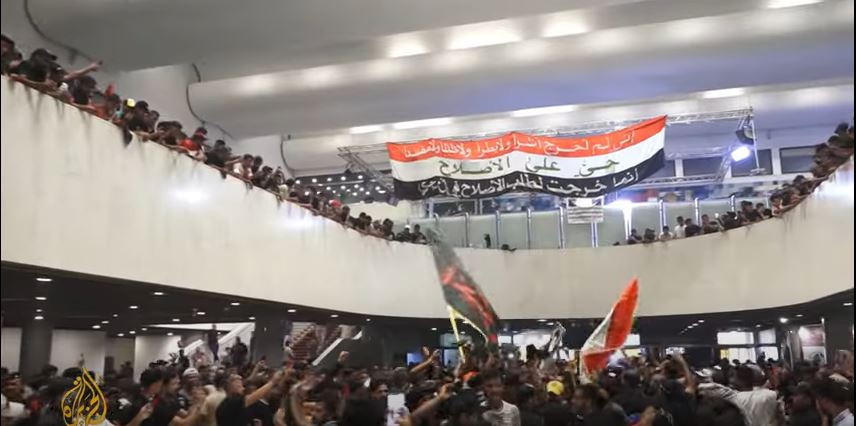
The Iraqi parliament elected its new president and, in turn, its prime minister last week, clearing nearly a year of political deadlock in the country. As the new leaders are set to form a new government, the movement of Iraqi Shia cleric Muqtada al-Sadr announced its refusal to join.
The Sadrist faction of lawmakers announced Saturday that they would not join the new government being formed by prime minister-designate Mohammad Shia al-Sudani. The refusal by the Sadrist movement comes two days after the Iraqi parliament elected Abdul Latif Rashid as the new president, who designated al-Sudani. al-Sudani is backed by the pro-Iran Coordination Framework that has 128 out of 329 seats in parliament.
“We stress our firm and clear refusal for any of our affiliates to participate…in this government formation,” tweeted al-Sadr’s close associate, Mohammed Saleh al-Iraqi.
In a statement Saturday, al-Iraqi said the new government “has a clear subordination to militias” and that it would not “meet the people’s aspirations.”
al-Iraqi added that the Sadrist movement does not intend to participate in any government formed by al-Sudani “or any other candidate from among the old faces or those affiliated with the corrupt.” al-Iraqi said that those who choose to associate themselves with their ministries “does not represent us.”
Back in June, al-Sadr ordered his faction of lawmakers that hold 73 seats in parliament to resign, leaving the chamber to the pro-Iran Coordination Framework, which includes representatives of the former paramilitary unit Hashd al-Shaabi.
The incoming cabinet would be facing $87 billion in revenue from oil exports that are kept in the central bank’s coffers. The funds could be used to rebuild infrastructure in the country, but it could only be used after lawmakers approve the state budget proposed by the government once formed.
The United States welcomed Rashid’s election as the country’s new president last week, breaking the deadlock that started when al-Sadr’s bloc won the most seats in parliament in October last year.
“The United States urges all parties to refrain from violence and to resolve differences amicably and peacefully through the political process,” the US State Department said in a statement.













