


 Australia Unemployment Rate Hits 4.5% as Jobs Fall in July
  Japan Trade Deficit Widens as Imports Surge on Energy and AI Demand
  Brazil Cuts Selic Rate to 14% as Inflation Eases but Risks Persist
  China Set to Hold Benchmark Lending Rates Steady for 15th Month
  US Dollar Holds Steady as Fed Rate Bets and Iran Tensions Drive Markets
  Chile Central Bank Holds Interest Rate at 4.5% as Inflation and Global Risks Persist
  Asian Stocks Rally as KOSPI, Nikkei Surge on Bond Market Relief
  Singapore Central Bank’s Exchange Rate Policy Explained: Why MAS Uses the S$NEER Instead of Interest Rates
  Trump Says Iran Talks Halted as Strait of Hormuz Dispute Fuels Oil Concerns


 Add as a preferred source on Google
The Bank of Japan (BoJ) in its November 1 monetary policy meeting mentioned its optimism over the growth of the economy, with a moderate rate of recovery observed in the global demand. The central bank is expected to maintain an easing bias, but shall not remain compelled to ease in the medium term.
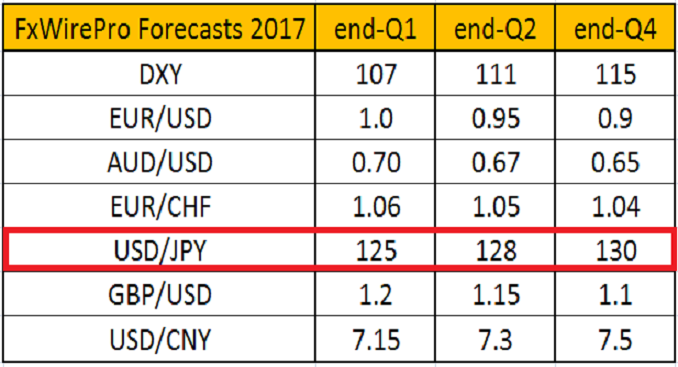
We foresee that the USD/JPY currency pair will test the 130 level towards the end of 2017, for the first time since April 2002. Also, the 10-year Treasury yield spread will likely widen, at over 250 basis points for the first time since 2010.
The BoJ aims at achieving the 2 percent inflation target with expectations of buying around JPY80 trillion of government bonds per year. Upward pressure on global yields since the US election could potentially mean more QE, though.
If Trump successfully implements his fiscal plan, consumer inflation will surely rise, giving the Federal Reserve wider space for an interest rate hike. Thereby, rising Fed fund rate will increase the cost of borrowing. After the Presidential election result, JPY witnessed a massive selling against U.S. dollar, sending the USD/JPY higher by 17 percent to 118.67 in just a month’s time.
Lastly, the BoJ’s first two-day monetary policy meeting for 2017 will take place on January 30-31. We foresee that the central will remain committed to holding its 10-year JGB yields near zero, while keeping interest rate steady at -0.10 percent.







