

 Menu
Menu

 Search

- News

- Economy

- Central Banks
- Investing
- Research
- Roundups
- Digital Currency
- Insights
- Technical Analysis
- Technology
- Business
- Law
- Health
- Nature
- Fintech
- Science
- Topic
- Opinions
- ©Econometrics LLC . All Rights Reserved.
Marta Miret
Profesora de Psicología Médica, Universidad Autónoma de Madrid
Marta es Licenciada en Psicología, Licenciada en Antropología Social y Cultural y Doctora en Psicología Clínica y de la Salud. Se formó en la Universidad Autónoma de Madrid, Boston University (Estados Unidos) y Pontificia Universidade Católica do Rio de Janeiro (Brasil). Actualmente es profesora del Departamento de Psiquiatría de la Universidad Autónoma de Madrid, Centro Colaborador de la Organización Mundial de la Salud, e investigadora adscrita al Centro de Investigación Biomédica en Red de Salud Mental (CIBERSAM). Es la secretaria académica del Departamento de Psiquiatría de la Universidad Autónoma de Madrid, vocal del subcomité de ética de la Facultad de Medicina, presidenta de la comisión de segundo curso del grado en Medicina y coordinadora académica del programa Erasmus.
Es investigadora principal de varios proyectos europeos y nacionales. Su campo de investigación es la epidemiología de los trastornos mentales, los trastornos afectivos, la conducta suicida y la relación entre el estado de salud, el bienestar subjetivo y la soledad. He publicado numerosos artículos científicos en revistas internacionales, participado en numeroso congresos nacionales e internacionales y dirigido seis tesis doctorales.

Less 
Marta Pachocka
Assistant Professor, SGH Warsaw School of Economics and Centre of Migration Research, University of Warsaw, Warsaw School of Economics
Dr. Marta Pachocka is the Head of the Migration Policies Research Unit at the Centre of Migration Research (CMR) of the University of Warsaw, Assistant Professor in the Department of Political Studies, and the Institute of International Studies of the Collegium of Socio-Economics of SGH Warsaw School of Economics. She received her Ph.D. in economics in 2013, but her academic profile is truly interdisciplinary, also including political science and migration studies. She has considerable experience as both a team leader and member in implementing cross-sector and multi-stakeholder projects co-funded by the National Science Centre, National Bank of Poland, Capital City of Warsaw, various ministries, EU Programmes (Horizon 2020, Lifelong Learning Programme, Erasmus+, Creative Europe), and others. She is on the Board of the PECSA and the Research Committee RC46 ‘Migration and Citizenship’ of the International Political Science Association (IPSA). She supports the European Commission Representation in Poland as an EU expert member of the Team Europe network. She is also a member of the International Steering Committee of the Metropolis Project, focused on international migration and migration policies. She was a Visiting Research Fellow at the Centre for European Studies of the Sciences.
Less
Marta Torre-Schaub
Directrice de recherche CNRS, juriste, spécialiste du changement climatique et du droit de l’environnement et la santé, Université Paris 1 Panthéon-Sorbonne
Marta Torre-Schaub est juriste, docteur en droit, spécialiste de droit de l’environnement et du changement climatique. Elle est directrice de recherche au CNRS. Elle exerce ses fonctions à l’ISJPS (Institut des sciences juridique et philosophiques de la Sorbonne). Elle co-dirige l’axe environnement de l'institut des sciences juridique et philosophique de la Sorbonne. Elle est expert nommée à l’Agence nationale de la sécurité sanitaire de l’alimentation, de l’environnement et du travail sur les produits phytosanitaires et les risques. Elle dirige depuis 2018 le GDR du CNRS CLIMALEX.
Elle est fondatrice du réseau de chercheurs « Droit et changement climatique » qu’elle dirige et anime. Elle a été boursière Fulbright à New York University en 2004 et Fellow Researcher dans le Global Program of Research de la même université en 2005.
Elle est auteur de nombreux articles et rapports ainsi que d’un certain nombre d’ouvrages dont : "La justice climatique, aspects juridiques" en cours de rédaction aux éditions de la Fondation Léopold Mayer et "Justice climatique : les recours en justice", aux éditions du CNRS 2019, ainsi que « Essai sur la construction juridique de la catégorie de marché », publié chez LGDJ en 2002, qui a obtenu le prix de thèse Dupin Aîné de la Chancellerie des Universités ; « Droit et climat », dossier scientifique, Cahiers de droit, sciences et technologies, CNRS, 2008 ; (co-dir) « La mondialisation des concepts en droit de l’environnement », Paris, LGDJ, 2009 ; (dir) « Le Bien-être et le droit », Publications de la Sorbonne 2016 ; « L’essentiel des grands arrêts de la jurisprudence en droit de l’environnement », Paris, Gualino, LGDJ, 2017 ; « Bilan et perspectives de l’Accord de Paris », Paris, IRJS, 2017.
Elle pilote actuellement plusieurs programmes de recherches : Les dynamiques du contentieux climatique, usages et mobilisations du droit, financé par la Mission droit et justice, et Climate Change Law, Green Pathways to Transition avec Columbia University à New York.
Less
Marta Vicente-Crespo
Program Manager, CARTA, African Population and Health Research Center
Less
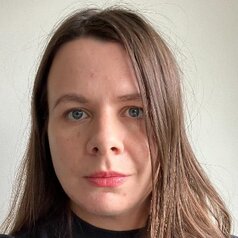
Marta Zboralska
Bowra Junior Research Fellow, University of Oxford
Marta Zboralska is a Leverhulme Early Career Fellow at the Ruskin School of Art and Bowra Junior Research Fellow at Wadham College.
Her current research project, Art After Witold Gombrowicz, maps responses to the Polish writer across the field of visual art. Demonstrating the author’s wide-ranging, transnational influence on artists – which has thus far escaped recognition – the project uses art-historical methodologies to study how Gombrowicz’s prose has been transformed into a variety of materials and mediums, traversing geographical contexts.
Marta completed her PhD at UCL in 2020, with a thesis titled The Art of Being Together: Inside the Studio of Henryk Stażewski and Edward Krasiński. The final chapter of her doctorate won the Association for Women in Slavic Studies 2020 Graduate Essay Prize. She was an Arts and Humanities Research Council Fellow at the Archives of American Art, Smithsonian Institution, in 2017, and Project Assistant on the Getty Foundation-funded initiative Confrontations: Sessions in East European Art History in 2019-20. In 2022, her Art Journal article 'Living Color: Henryk Stażewski’s Interior Models' was shortlisted for the Royal Historical Society's Alexander Prize. Her latest article, ‘Henryk Stażewski’s Art in America’, was published in the Spring 2023 issue of Archives of American Art Journal.
Before commencing her fellowship, Marta lectured at Oxford's Department of History of Art, UCL, and the University of Essex.
Less

Marta-Marika Urbanik
Assistant Professor, University of Alberta
I am an urban ethnographer, specializing in gangs, neighbourhood redevelopment, and inner-city policing in the Canadian context. My research interests include issues pertaining to harm reduction, neighbourhood violence, gangs, neighbourhood revitalization, and police-community relations (including police misconduct).
Less
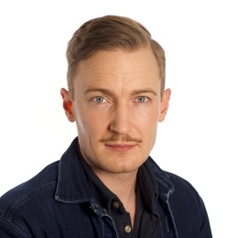
Mårten Hammarlund
PhD candidate of Psychology, Stockholm University
I am a licensed clinical psychologist, licensed child psychotherapist (Swedish National Board of Health and Welfare), and PhD candidate within a project that is lead by prof. Pehr Granqvist and postdoc Tommie Forslund. My research mainly regards contextual risk factors among mothers with intellectual disability or ADHD, in relation to various parenting capacities (e.g., parental mentalizing, interpretation of children's emotional signals), and child socioemotional development (attachment). I also teach attachment theory, mentalization theory, and developmental psychopathology on various courses on the clinical psychology/psychotherapy programs, as well as on the master program in psychology.
Beyond the field of attachment research, I also have a strong interest in developmental psychology more generally. My main interests concern the developmental roots of intersubjectivity and social learning, as well as developmentally informed clinical interventions for children and their families. I am a member of an international group of researchers and clinicians who work with Parental Embodied Mentalizing (a method for assessing automatic mentalizing in parents of infants), as well as of the International Relations Committe of APA Division 39 Society for Psychoanalysis and Psychoanalytic Psychotherapy. I am also engaged in questions relating to child welfare, and applications of developmental theory in a wider societal context.
Less
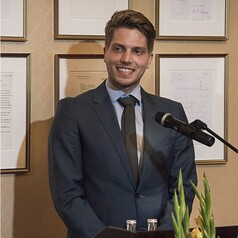
Marten Risius
Senior Lecturer in Business Information Systems, The University of Queensland
I am a Senior Lecturer at the University of Queensland School of Business. My work focuses on issues regarding online engagement and the digital society like online extremism, disinformation, doxing, privacy, and blockchain technologies. I am an ARC DECRA fellow as well as the recipient of the Association of Information Systems and VHB Early Career Awards.
Less
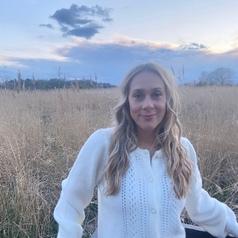
Martha Geiger
PhD Candidate in Sociology, University of Warwick
I am currently in the final year of my PhD in Sociology. My research broadly explores equine (horses, donkeys and mules) labour relations and protection in sub-Saharan Africa.
Martha has gained valuable research, project management, and leadership experience in Canada, UK, Ethiopia, South Africa and Botswana. She previously worked as a Senior Research Associate at the University of Bristol where she led a study in Ethiopia investigating the socio-economic dimensions of the lives of working animals.
Less
Martha McGill
Historian of Supernatural Beliefs, University of Warwick
Dr Martha McGill is a historian of supernatural beliefs at the University of Warwick. In collaboration with Dr Imogen Knox, she has developed an online exhibition about early modern divination, Stars, Sieves and Stories. It features interactive fortune-telling methods and a ‘choose your own adventure’ story. https://starsandsieves.com
______
My research interests lie in early modern British intellectual, social and cultural history. My work has explored how changing conceptions of the supernatural reflect on religious culture, developments in natural philosophy, relations between different social groups, and national identity.
I completed a PhD in History at the University of Edinburgh in 2016. I subsequently held postdoctoral fellowships at the Institute for Advanced Studies in the Humanities, Edinburgh, and the Warburg Institue, London. In 2018 I started at the University of Warwick as a British Academy Postdoctoral Fellow, working on a project entitled 'Bodies, Selves and the Supernatural in Early Modern Britain'. You can read more about this project in this blog postLink opens in a new window.
I'm passionate about bringing history to wider audiences, and have led on a range of engagement projects. Most recently I worked with students to develop and market a pair of educational card gamesLink opens in a new window about the early modern witch hunts, with proceeds going to charity, and developed an exhibitionLink opens in a new window about early modern divination. Please see above for more on my publications, online interviews, and teaching. For further information and teaching resources, see my personal websiteLink opens in a new window.
Less
Martha Newson1
Associate Professor in Psychology, University of Greenwich
Martha Newson joined Greenwich in 2023 as Associate Professor in Psychology. Though working with modern human populations, Martha’s research is strongly informed by evolutionary theory. Her highly inter-disciplinary research draws from anthropology, psychology, evolutionary theory and criminology, so she has connections across academic disciplines.
Her research and consultancy practice is guided by the themes of social cohesion, ritual, and belonging. Her primary focus is on the rituals underlying social cohesion and the ensuing cooperation and conflict emerging from tightly bonded groups.
Dr Newson has worked with a range of challenging populations, from fundamentalist Indonesian Muslims to London’s ravers. She has particular experience working with football fans, including surveys and interviews with hardcore Brazilian, Indonesian and Australian fans (ultras) and collecting hormonal samples from fans at live World Cup events.
She gained a BSc in Human Sciences from the University of Sussex then taught English in Vietnam and Spain, before completing her postgraduate studies at the University of Oxford in Cognitive and Evolutionary Anthropology. She remains a Research Affiliate at the University of Oxford (Centre for the Study of Social Cohesion).
Dr Newson provides consultancy and commentary on issues related to group psychology, belonging, conflict, and cooperation. This concerns human behaviour and evolutionary psychology in general terms, and with regard to football fandom specifically. Previous consultancy clients include Guinness, the Premier League, Manchester City and Hyundai among others.
Martha has contributed to Discovery’s Why We Hate, produced by Steven Spielberg, as well as numerous BBC and Sky TV features in the UK, such as BBC News and Sky News, alongside a number of radio shows including Radio 4’s World at One and PM programmes. Her research has also featured in The Guardian, The Telegraph, The Independent, International Business Times, The Daily Mail, The Sun, Haaratz, Der Spiegel and many others.
Less
Martha O'Hagan Luff
Associate Professor, Trinity Business School, Trinity College Dublin
Martha O'Hagan Luff is an Assistant Professor of Finance in Trinity College Dublin, and the Director of the MSc in Law and Finance. She holds a BA in Economics, an MSc in Finance and a PhD in International Finance from Trinity College. Her research interests are in the areas of Home Bias in Equity Investments, Entrepreneurship and Sustainable Finance.
She has published articles in many journals including the International Business Review, International Journal of Finance and Economics and Small Business Economics. Prior to completing her PhD she worked in Investment Banking in London and Dublin, for Bank of America, Credit Suisse First Boston and Bank of Ireland Global Markets. Her area of specialisation was derivatives and financial engineering.
Less
Martha Prevezer
Professor of Governance and Economic History, Queen Mary University of London
Less
Martha Stiegman
Associate Professor, Environmental and Urban Change, York University, Canada
Martha Stiegman is an Associate Professor in the Faculty of Environmental and Urban Change at York University. She is white settler of mixed French ancestry, from Mi’kma’ki/Nova Scotia. Her community-based research and collaborative video work examine Indigenous / settler treaty relations in their historic and contemporary manifestations, with particular attention to food sovereignty and justice; as well as participatory and visual research methodologies.
Less

Martijn Jeroen van der Linden
Professor of Practice in New Finance, Hague University of Applied Sciences
Van der Linden is a Professor of Practice in New Finance at The Hague University of Applied Sciences and obtained his Ph.D. from Delft University of Technology in 2022. In his research, he developed design guidelines for the monetary and financial system in the digital age.
Currently, his research focuses on central bank digital currencies (CBDCs), stablecoins, deposit banks, cryptocurrencies, financial instability, and the liberalization and re-regulation of banking.
Less
Martin Zimmer
Professor of mangrove ecology, Leibniz Centre for Tropical Marine Research (ZMT)
Less
Martin Andresen
Professor of Criminology, Simon Fraser University
Martin A. Andresen is a professor in the School of Criminology at Simon Fraser University. He is also an Affiliated Scholar in the Center for Evidence-Based Crime Policy at George Mason University, a Member of the Crime and Place Working Group in the Center for Evidence-Based Crime Policy at George Mason University, a Member of the Space, Place, and Crime Working Group in the European Society of Criminology, and an editorial board member for: Journal of Criminal Justice; International Criminal Justice Review; Canadian Journal of Criminology and Criminal Justice; Criminology, Criminal Justice, Law & Society; and Methodological Innovations.
Martin A. Andresen's research areas are in spatial crime analysis, crime and place, geography of crime, and applied spatial statistics and geographical information analysis. Within these research areas, he has published 5 books, 3 edited volumes, and more than 150 refereed journal articles and contributions to edited volumes.
Less
Martin Archer
Space Plasma Physicist, Queen Mary University of London
Dr Martin Archer is a Space Physicist at Queen Mary University of London (and Imperial College London). Martin became a published scientist whilst still an undergraduate, working on the Cluster space mission. It is this work which has inspired his PhD research on structures and waves in the Earth’s magnetosphere.
In addition to his research, Martin is determined to come up with fresh perspectives on how to communicate his love of science, especially to young audiences, and has worked on a number of exciting and unique projects including his DJ Physics shows, the Droppin’ Science Podcast, WiiJing and appearances at numerous science festivals and schools.
You’ll regularly see Martin on television both in the UK and internationally discussing the latest physics news, explaining scientific concepts and championing the importance of engaging the public with science. In addition to this Martin has featured on the BBC Radio 4 Today programme, the Guardian Science Weekly podcast and has written numerous science pieces and been profiled by a number of publications including The Guardian, The Times and MSN.
Less
Martin Bortz
I am a current PhD student at the University of Melbourne. I am studying the role of knowledge in public policy, and the way in which that shapes power dynamics between different political actors.
Less
Martin Brook
Associate Professor of Applied Geology, University of Auckland
Chartered Geologist (CGeol) and director of the master of engineering geology degree at the University of Auckland. PhD from the University of Dundee and MEng from University of New South Wales. Prior to joining the University of Auckland, I worked for a large multi-national consultancy in Brisbane, and worked on engineering geological issues across Australia-Pacific and the Middle East. Part of the landslide emergency response team for the Gisborne state of emergency in November 2021. Published >80 journal articles including many on landslide investigations and satellite monitoring, particularly on urban landslides in the North Island, including Auckland and Gisborne. Have received funding from EQC, Royal Society and MBIE for environmental geology research, supervised >50 research students to completion.
Less
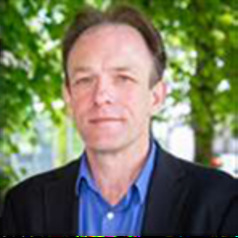
Martin Brown
Head of School of Policy and Practice, Co-Director: EQI The Centre for Evaluation Quality and Inspection, DCU Institute of Education, Ireland, Dublin City University
Martin Brown is Head of School of Policy and Practice at the Institute of Education, Dublin City University (DCU) and co-director at EQI – The Centre for Evaluation Quality and Inspection, also based at DCU. He is an Expert Evaluator to the European Commission, advisor to the Teaching Council of Ireland and an adjunct faculty member of the Centre for Culturally Responsive Evaluation and Assessment at the University of Illinois. He has planned and led evaluations in Ireland, Northern Ireland, Europe and the Middle East; working for, among others, the European Commission, Dept. of Education and Skills (Ireland), the State Education Development Agency (Latvia) and the United Arab Emirates government.
He has received two all Island SCOTENS Awards (2018/2020) for outstanding research in Teacher Education and has received the President of DCU Gold medals for Research Impact and Teaching and Learning (2020). In 2021 he also received the President of DCU Gold medal for Civic Engagement.
Less
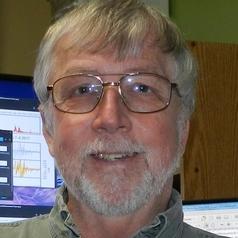
Martin Connors
Professor of Space Science and Physics, Athabasca University
Martin Connors is Professor of Space Science and Physics at Athabasca University, also affiliated with Western University (Ontario). He runs the Athabasca University Observatories, using the dark night skies of northern Alberta to study the aurora and other sky phenomena, and also geo-electromagnetic networks. The latter monitor space weather through magnetic and electric fields using novel instrumentation, some developed in-house. Connors has also developed innovative techniques in distance education. He received both his M.Sc. and Ph.D. from the University of Alberta, in theoretical and space physics. For fun he studies languages and reads about history. His book "Invisible Solar System" will be published in 2024.
Less
Martin Conway
My research and publications have been driven by a number of overlapping interests in European history from roughly the 1930s to the 1960s.
One central element of that interest has been the history of Belgium, which has been much overlooked in the historiography of the twentieth century, but which provides a fascinating example of the interplay of factors of class, of ideology and of linguistic identity. I have published two books on Belgium, most recently (in 2012) The Sorrows of Belgium, and am continuing with research on its post-1945 history, most notably the so-called question royale and the history of the working class.
My other interests are broader and more comparative. I have been the editor of a number of collaborative volumes, including ones on political exiles during the Second World War, on Catholic politics, on political legitimacy in mid-twentieth century Europe, on democracy, on Europeanisation, and on violence.
All of these, though diverse in subject manner, have been primarily concerned with the interface between the social and the political. In particular, I have been concerned to explore what made (and un-made) political stability in Europe across the upheavals of the 1930s and 1940s and into the post-war period, and I am currentlky writing a book about how democracy was understood and practised in Western Europe from the Second World War to the end of the 1960s. I am also involved in a number of collaborative research projects, involving historians across Europe, and am the editor of The English Historical Review.
I teach widely on the history of this period, and have supervised a number of doctorates: on religion in France, on inter-war socialism, on aspects of Belgian history, on Catholic politics and intellectual trends. I should be happy to hear from prospective graduate students interested in working in fields relevant to my interests.
Less
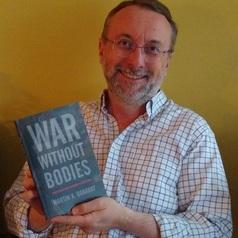
Martin Danahay
Professor, English Language and Literature, Brock University
I am a Professor of English at Brock University. My most recent book was "War Without Bodies: Framing Death from the Crimean to the Iraq War" (Rutgers University Press, 2022) I am particularly interested in images of war and how they implicitly make war both justified and acceptable for a general public. I have also published books and articles on Victorian history and culture and contemporary versions of the Victorian like steampunk. I work in Victorian and neo-Victorian studies.
Less
Martin De Bock
Associate Professor, Paediatrics, University of Otago
Assoc Prof Martin de Bock is a Paediatric Endocrinologist in Christchurch, New Zealand. He trained in paediatric endocrinology in Auckland, New Zealand, where he gained his PhD. He then spent several years in Perth, Western Australia, where he developed his primary research focus on using diabetes technology to improve the lives of people with diabetes, and in particular using automated insulin delivery. His international service roles include contributions to international consensus statements and diabetes management guidelines, and also serves on the diabetes committee of the Australia New Zealand Paediatric Endocrine Society. He has over 100 international peer reviewed publications, including in lead journals such as the New England Journal of Medicine.
Less
Martin Doherty
Associate Professor in Psychology, University of East Anglia
Dr Martin Doherty joined UEA as an Associate Professor in Psychology in 2013. He studied physics for a year at Bristol before deciding Psychology was the way forward. After an MSc in Cognitive Science at Warwick, he took his PhD in Developmental Psychology at the University of Sussex, supervised by Professor Josef Perner. After postdoctoral work in Japan and Stirling, he worked as a lecturer in Stirling. His research interests include theory of mind, visual illusions, and children’s understanding of eye gaze.
Less
Martin Elvis
Senior Astrophysicist, Smithsonian Institution
Dr. Martin Elvis is an astrophysicist at the Center for Astrophysics | Harvard and Smithsonian. He has published nearly 500 papers on supermassive black holes that have been cited over 38,000 times. He publishes widely on asteroid and lunar resources and the space economy. He is a fellow of the American Association for the Advancement of Science, a Member of the Aspen Center for Physics, and is past-Chair of the Hubble Space Telescope Users’ Committee and of the High Energy Division of the American Astronomical Society. Asteroid 9283 Martinelvis is named after him. His book "Asteroids: How love, fear, and greed will determine our future in space" was published by Yale University Press in 2021.
Less
Martin Hewison
Professor of Molecular Endocrinology, University of Birmingham
Professor Hewison’s work focuses on different facets of vitamin D physiology, including classical skeletal effects and non-classical extra-skeletal effects. He has a particular interest in the interaction between vitamin D and the immune system, where antigen-presenting cells such as dendritic cells and macrophages synthesize active vitamin D (calcitriol) and also express the nuclear receptor for calcitriol (VDR). Vitamin D can therefore act as an endogenous regulator of both innate and adaptive immunity by enhancing antibacterial activity, and modulating antigen presentation and T lymphocyte function. Crucially these responses are highly dependent on the bioavailability of vitamin D, and Professor Hewison has hypothesized that immune function is influenced by vitamin D status in humans. His group is using a variety of models to test this hypothesis including basic molecular and cell analyses, and vitamin D supplementation trials in human cohorts. A key objective of his work is to increase awareness of vitamin D-deficiency in the UK population.
Less
Martin Hurcombe
I am principally interested in the relationship between representations of conflict and politics in early twentieth-century France. I am the author of Novelists in Conflict: Ideology and the Absurd in the French Combat Novel of the Great War and France and the Spanish Civil War: Cultural Representations of the War next Door, 1936-1945. I am also interested in the relationship between political commitment and utopianism and the memory of the First World War in twentieth-century French culture. I am a member of the executive committee of the Group for War and Culture Studies (GWACS), based at the Universities of Bristol, Swansea and Westminster, and am one of the editors of the Journal of War and Culture Studies. In addition to this, I also have an interest in French crime fiction, particularly the novels of Sébastien Japrisot.
My teaching interests are French literature, culture, and history of the early twentieth century. I also teach general history and literature courses in Year 1 and final-year language. I am unit convenor for two final-year units: Representations of War, which studies the depiction of war in the twentieth-century French novel and cinema, and Challenging the Republic, which examines a variety of political movements that have contested the form of the French Republic since the 1920s. In the 2nd year I convene The Third Republic, which studies the social and political history of France from 1870 to 1940, and co-teach Modern French Narrative, a unit examining French fiction from the 1920s to the present. I also teach courses on war and culture at postgraduate level and am co-supervising two M.Litt/PhD theses: James McFarthing, ‘Utopian Theory and the Science Fiction of Jules Verne’ and Claire Thomas, ‘Ungaretti, giornalista’. I am also currently Deputy Head of School Teaching and Learning.
I would particularly welcome research students working on 20th-century cultural representations of conflict and/or political engagement and cultural politics in France.
My students can consult me in my office at the following time during term times:Thursday 10-11am and 3-4pm.
Biography
I studied French and Italian at the University of Exeter where I also later completed a PGCE (after a year working at the Université de Rennes II). I spent several years in secondary education pretending that I didn't miss academia until coming to Bristol as a PhD student. I completed my doctoral thesis, 'Forming the Modern Mind: A Reappraisal of the French Combat Novel of World War One', in 2000 under the supervision of Gino Raymond. That same year, I became a lecturer here in the Department of French.
I am one of the editors of the Journal of War and Culture Studies and an executive member of the Group for War and Culture Studies, currently based at the University of Westminster.
I am a keen runner and cyclist and an occasional triathlete.
Less
Martin Jacob
Professor of Accounting and Control, IESE Business School (Universidad de Navarra)
Less
Martin Jakobsson
Professor of Marine Geology and Geophysics, Stockholm University
After completing a PhD in 2000 at the Department of Geological Sciences, Stockholm University, Martin Jakobsson joined the Center for Coastal and Ocean Mapping at the University of New Hampshire, USA, for a research scientist position. The PhD thesis was titled "Mapping the Arctic Ocean: Bathymetry and Pleistocene Paleoceanography".
Martin returned to Stockholm University from USA in April 2004 for an Associate Professor position at the Department of Geological Sciences. From November 2004, the Royal Swedish Academy of Sciences awarded him five years to devote full time for research as an Academy Fellow through support from the Knut and Alice Wallenberg Foundation. He was promoted to full Professor of Marine Geology and Geophysics at Stockholm University in September 2009 and has served as Head of the Department of Geological Sciences since 2012.
His current research interests include the Arctic Ocean glacial history, the West Antarctic Ice Sheet, submarine glacial landforms and geophysical seafloor mapping using acoustic methods. Martin has spent more than one year of ship time onboard open ocean research vessels and he has been Co-Chief Scientist on eight international ocean expeditions. The Royal Swedish Academy of Sciences Class V for Geoscience elected Martin as a member in 2012, and he is acting as the 1st Vice President of the Academy since 2016.
Less


- Market Data




