

 Menu
Menu

 Search

- News

- Economy

- Central Banks
- Investing
- Research
- Roundups
- Digital Currency
- Insights
- Technical Analysis
- Technology
- Business
- Law
- Health
- Nature
- Fintech
- Science
- Topic
- Opinions
- ©Econometrics LLC . All Rights Reserved.

Maria Adams
Senior lecturer, University of Surrey
My research and teaching are centered on issues surrounding prisons, including food in prison and the effects of imprisonment on families of prisoners. I am a principal investigator for an ESRC funded project called Doing Porridge: Understanding women’s experiences of food in prison. This is a two year project from September 2021-September 2023. This project aims to analyse the experience of food in women’s prisons using an intersectional approach.

Less 
Maria Aristeidou
Lecturer in Technology Enhanced Learning, The Open University
Dr Maria Aristeidou is a Lecturer in Technology Enhanced Learning at The Open University and a fellow of the Higher Education Academy. Her work focuses on designing and evaluating learning technologies and improving diverse student bodies’ learning experiences and outcomes. Maria has been contributing to the MA in Online Teaching, the BA/MA in Childhood and Youth, and the development of resources for educators across sectors. She supports young people to engage in and appreciate science and scientific research.
Less
Maria Atienzar-Prieto
PhD Candidate, School of Health Sciences and Social Work, Griffith University
Less
Maria Byrne
Professor of Developmental & Marine Biology, University of Sydney
Maria Byrne is Professor of Marine and Developmental Biology at the University of Sydney. For 12 years she was the director of One Tree Island Research Station, the University’s facility on the Great Barrier Reef. Over the years this iconic, fully protected reef system has provided a major platform for Prof Byrne’s research on the biology and ecology of marine invertebrates that has largely involved echinoderms as model organisms. Her work on comparative evolutionary developmental biology and marine climate change has been funded by the Australian Research Council and other agencies for over 20 years. In recent years Prof Byrne’s work has involved the quantification of the impacts of climate change stressors, ocean warming and ocean acidification on fundamental biological processes including growth, physiology, development and calcification. This work investigates the responses of marine invertebrates across life stages to climate change and has involved species from the tropics to the poles. Most importantly the labile nature of development and possibility of an in-built redundancy and adaptive capacity of developmental processes in a climate change world will be crucial to the resilience of some marine species. Her current research investigates potential for climate adaptation merging here two main areas of research, evo-devo and global change.
Less
Maria Cunningham
Honorary Senior Lecturer, School of Physics, UNSW Sydney
My research interests are in radio, millimetre and sub-millimetre astronomy, molecular line astronomy, bioastronomy and computational astrophysics.
After taking formal retirement during COVID, I am continuing to work on my pet projects, including
Detecting new complex organic molecules in space, and hopefully finding some of the building blocks of life;
Using very complex organic molecules to put an evolutionary sequence on the formation of stars;
Determining how the structure of the Milky Galaxy affect the formation of stars, and
Investigating the relationship between turbulence in gas in the Milky Way Galaxy and star formation.
Using data intensive astronomy together with computational astrophysics to understand the relationship between star formation and the surrounding interstellar medium.
Less
Maria G. Corradini
I am an Associate Professor in Food Science and the Arrell Chair in Food Quality at the Arrell Food Institute (University of Guelph). During my career, I have focused on developing procedures and protocols to identify and assess changes in food quality and safety linked to processing and handling practices throughout the supply chain, from producer to consumer. I have also developed and validated mathematical models to evaluate and predict how food processing and handling practices can favor or act in detriment of food quality, safety, and nutritional content. Using a systems dynamics perspective, I have leveraged my expertise to participate as the PI and co-PI in research projects that take an integrative view of food safety and security conditions within communities in Argentina (City of Buenos Aires), China (City of Macau), and USA (Newark, NJ). I have authored or coauthored over 110 research articles in refereed journals, 17 book chapters, two contributions to encyclopaedias, and designed three educational kits on STEM topics for middle school students.
Less
Maria Garcia
Senior Lecturer in International Relations, University of Bath
Prior to joining Bath in 2014, I was a Marie Curie International Fellow at the NCRE, University of Canterbury (New Zealand) and the University of Nottingham. During this time I conducted research on the various free trade agreement strategies of global economic powers in the region, and the effects of strategic competition on their strategies.
Previously, I lectured at Birkbeck College, London and the University of Nottingham. I have been also been a visiting fellow at ANUCES, Australian National University, Monash University in Melbourne, the University of Salzburg and ULB in Brussels.
My current projects include a book on the divergent free trade agreement strategies of large (China, USA, EU) and small economies (Singapore, Chile, New Zealand) in Asia-Pacific and their effects on the development of future economic governance in the region.
Alongside Annick Masselot of the University of Canterbury, I am investigating Asian resistance to European norm promotion through free trade agreements.
Research interests:
International trade and economic governance
EU-USA trade negotiations (TTIP) and Transpacific Partnership negotiations (TPP)
EU-Asia, EU-China, EU-Australasia and EU-Latin America Relations
Regional integration and inter-regionalism
Societal impacts of trade agreements/ Values and trade
International Political Economy
Less
María García González
Profesora de Odontología, Universidad Europea
Vocal Junta Directiva de la SEDCYDO.
Doctora en Ciencias Odontológicas. Cum Laude. UCM
Especialista en Trastornos Temporomandibulares y Dolor Orofacial. UCM.
Experta en Medicina Dental del Sueño. FESMES.
Profesor universitario Departamento Odontología Clínica. Universidad Europea de Madrid.
Less
Maria Garcia-Puente
Associate Professor of Spanish, California State University, San Bernardino
Dr. María García Puente (California State University San Bernardino) scholarship focuses on small cinemas and emergent female filmmakers in Hispanic cinemas.
Less
Maria Jouste
Research Associate, United Nations University
Maria Jouste is a research associate at UNU-WIDER, where she works on topics related to taxation and tax-benefit microsimulation models in domestic revenue mobilisation programmes. She holds a PhD in economics from the University of Turku.
Her research interest is in development and public economics, focusing on taxation and social protection in developing countries. Her recent research has included the evaluation of tax and administrative reforms using administrative tax data from Uganda and simulating potential social protection reforms in Zambia. She has experience in curating and employing large administrative tax data in collaboration with African revenue authorities.
Less
Maria Kaparou
Lecturer in Education, University of Southampton
Dr Maria Kaparou is a Lecturer in Education at Southampton Education School. Maria is an Education professional with experience in Higher Education (HE) in England, Greece, Asia and the United Arab Emirates. Maria has got Education background and she has taught education programmes overseas at secondary level and FE colleges whilst she has management and leadership experience in the private education sector.
Maria is an active researcher and her main research interests include: educational leadership and management, particularly focused on instructional leadership (Leadership for Learning/ Managing Teaching and Learning); education policy; school improvement in schools in challenging contexts; research in Multi-academy Trusts (MATs); international and comparative education; diversity and leadership. Maria is developing a record of publications and successful applications (jointly with other colleagues) for research grants in England and internationally, such as, Ambition School Leadership (ASL) / Ambition Institute funded project (2018).
The Ambition Institute research report on "School improvement in challenging contexts: insights from ten new headteachers" is available at: https://www.ambition.org.uk/research-and-insight/school-improvement-challenging-contexts/ (Downey, C., Burg, D., Kaparou, M. and Kelly, A., 2019).
Also, Maria has been involved in other projects focused: on Instructional Leadership and school improvement (University of Southampton funded project, 2016); Leadership preparation for FE college principals (BELMAS Research Grant, 2014-2015); School leadership theories and the Malaysia Education Blueprint (Fundamental Research Grant FRGS by the Ministry of Higher Education in Malaysia (2015); a School impacting a nation: bringing creativity and innovation into primary education, a Research project conducted for Australia Malaysia Institute (Department of Foreign Affairs and Trade, 2015); Leading international students’ communities of learning (SEDA Research Grant 2014-2015).
Maria has taught University programmes which have a global outlook: the University of Southampton, University of Nottingham and the University of Warwick. She has significant experience within the discipline of education and has led/taught a range of research-informed and theory-driven modules at undergraduate and postgraduate programme level in Social Sciences programmes of Higher Education (HE), whilst she has got a successful record of PhD student submissions. Maria supervises PhD students in the field of leadership and management in education settings in the UK as well as within the international context (e.g., England, Kuwait, Oman, Malaysia). The calibre of Maria’s teaching has been independently verified. In 2013, Maria received a University of Warwick Award for Teaching Excellence in Higher Education for her innovative teaching methods in Higher Education, whilst in 2022 she has been nominated for an Academic Award as 'the most engaging lecturer' (SUSU, 2022).
Maria currently holds the role of Employability Lead of Southampton Education School, devising the employability strategy for the School aligned to the institutional strategy; supporting institution wide education strategy and change regarding Employability. In the past she was involved in the leadership teams of undergraduate and masters level programmes. Team leadership achievements include nominations for: i) a Vice-Chancellor’s Award as part of The Student Experience category (2022) given the excellent support to MSc students and significant growth of a Masters programme; as well as, ii) a Vice-Chancellors Awards nomination (2018) for good leadership/ quality of work in the BSc (Hons) programmes, recognising the commitment of the leadership and teaching teams in the Education programmes offered at Southampton Education School.
Less
Maria Khan
Assistant Professor of Behavioral Medicine & Psychiatry, West Virginia University
Maria Khan, PhD is a clinical psychologist, clinical assistant professor, and director of the Resilience After Complex Trauma (ReACT) Clinic through the Department of Behavioral Medicine and Psychiatry at the Rockefeller Neuroscience Institute, West Virginia University (WVU) Medicine. She is passionate about reaching under-served and vulnerable populations, such as children and families who have experienced adversity and exhibit heightened risk for a host of psychosocial and developmental difficulties. She provides evidence-based interventions for children and families experiencing depression, anxiety, behavioral problems, and attachment/relationship difficulties. She specializes in evidence-based therapies for children and families who have undergone traumatic experiences. Her research interests revolve around child trauma and adverse childhood experiences (ACEs), risk and protective factors, and parent-child attachment, in the context of child and family functioning.
Less
Maria Kippler
Associate Professor, Institute of Environmental Medicine, Karolinska Institutet
Less
Maria Kozlovskaya
Maria joined the Business School as a Lecturer in Microeconomics in September 2015. She is at the last stage of her PhD studies at the University of Leicester. Before joining Huddersfield, she taught at the Univesity of Birmingham, and before that worked as a senior economist in Russian Regional Development Bank. Her doctoral studies were sponsored by the ESRC.
Maria's research interests lie in the areas of Game Theory, Behavioural Economics and Information Economics. In her PhD thesis, she developed axiomatic models of social preferences and investigated information exchange between firms via industrial espionage. She also programmed and ran an economic experiment which studied preference for fairness in social dilemmas.
Maria is a lecturer for the following modules:
Intermediate Microeconomics and Quantitative Economics (2nd year BSc Economics)
Microeconomics (MSc Economics)
Less
Maria Kulp
Associate Professor of Philosophy, Gonzaga University
I am a philosophical ethicist who specializes in medical ethics. In the past year and a half, I have become increasingly involved in local and state-level public health as an ethicist. I am the ethicist at the Spokane Regional Health District, a co-chair of the Spokane Disaster Clinical Advisory Committee, and a co-chair of the Washington REDi Crisis Standards of Care Regional Triage Team.
Less

Maria Kutar
Director of UG Business, University of Salford
I studied Law at undergraduate level, followed by a Masters and PhD research in Computer Science. In 2004 I joined the University of Salford, firstly in the Information Systems Institute, and then in Salford Business School. I have undertaken a variety of academic leadership roles, and led the University Research Ethics Panel. I am currently Director of UG Business and Co-Lead for the Disruptive Technologies Research and Innovation Cluster. A key theme in my role is fostering enterprise and innovation through both curriculum design and teaching delivery.
I am a recipient of 3 Vice-Chancellor’s Distinguished Teaching Awards and a Student Union Teaching Award, and am dedicated to delivering excellent teaching and student experience. My teaching covers a broad range of information systems areas including systems analysis and design, legal and professional issues and emerging / disruptive technologies. My teaching is centred on a constructivist approach, and uses inquiry based pedagogies to foster deep learning. An important focus is to foster creativity in students through the use of varied learning and assessment activities.
I have worked with a range of businesses on Knowledge Transfer Partnerships, including a current Digital Transformation project with Greater Manchester Chamber of Commerce, and have contributed to the delivery of short courses in digital transformation to senior leaders.
I was Chair of the Psychology of Programming Interest Group 2004-2018, member of the British Computer Society Ethics Expert Panel 2004-2006, and am a current Board Member for the UK Academy for Information Systems (UKAIS). My research interests are focused on human aspects of technology, and Learning in HE.
Less
Maria Loades
Senior Lecturer, Clinical Psychology, University of Bath
Dr Maria Loades is a Senior Lecturer/Clinical Tutor for the Doctorate in Clinical Psychology programme at the University of Bath, UK. Maria qualified as a Clinical Psychologist from the University of East Anglia in 2008. On qualification, she worked a variety of mental health settings, including adult mental health, a children’s inpatient unit, and various community Child and Adolescent Mental Health Services (CAMHS). She completed a post-graduate diploma in cognitive behaviour therapy (CBT) for children, young people and families at the Anna Freud Centre/University College London in 2013, and a Postgraduate Certificate in the Supervision of Applied Psychology Practice at the University of Oxford in 2015.
Maria secured an NIHR doctoral research fellowship in 2016 to further her research into depression in paediatric Chronic Fatigue Syndrome (CFS), which she is undertaking in collaboration with colleagues at the University of Bristol, and the Paediatric CFS team at the Royal United Hospital in Bath. Maria’s research interests also include: Developing and delivering Cognitive and/or Behavioural treatments for children and young people with depression and/or fatigue, including those with chronic illnesses, and therapist competence in delivering CBT, particularly in the field of child and adolescent mental health.
Less
Maria Marchetti-Mercer
Professor of Psychology and Assistant Dean of Research: Faculty of Humanities, University of the Witwatersrand
Prof Maria Marchetti-Mercer is a professor of psychology at the University of the Witwatersrand (Wits) and currently serving as assistant dean of research for the Faculty of Humanities. She served as the head of the School of Human and Community Development at Wits from 2012 to 2016. Prior to that, she was the head of the Psychology Department at the University of Pretoria from 2001 to 2011.
She has been involved in the training of professional psychologists especially with regard to family therapy for nearly 30 years and her doctoral thesis was on the Milan School of family therapy. She has also received advanced post-graduate family therapy training in Italy.
Her current area of research focuses on the impact of migration on South African families and most recently the use of ICTs in African migrant families. Her new co-edited book, “Transnational Families in Africa: Migrants and the Role of Information Communication Technologies” has just been published. She also co-authored a book, “The Italian Diaspora in South Africa: Nostalgia, Identity, and Belonging in the Second and Third Generations" (Routledge) with A. Virga in 2023. She is a C1 NRF-rated researcher and has published widely both nationally and internationally in the field of migration and families, the training of professional psychologists, and family murder.
In 2008 she received an award from the Institute for School-Based Family Counseling and the University of San Francisco Center for Child and Family Development for outstanding international contributions to school-based family counselling presented at Brasenose College, Oxford University. She was awarded the Order of the Star of Italy in 2022 for her professional contributions from the president of Italy.
Less
Maria Nagel
Professor of Neurology and Ophthalmology, University of Colorado Anschutz Medical Campus
I am interested in clinical neurology, acute and chronic virus infections of the nervous system and virus latency in the nervous system
Less
Maria Papageorgiou
Leverhulme Early Career Researcher, School of Geography, Politics, and Sociology, Newcastle University
Less
Maria Pascual Torner
Investigadora Postdoctoral, Universidad de Oviedo
Licenciada en Ciencia Ambientales por la Universitat de Barcelona. Promoción 2005-2010
Doctorada en Ciencias del Mar por la Universitat Politècnica de Catalunya con la tesis titulada "“Spatio-temporal processes explaining salp aggregations and their role in the Catalan Sea, northwestern Mediterranean Sea”. Dirigida por Verónica Fuentes y José Luís Acuña, y realizada en el Institut de Ciències del Mar (ICM-CSIC) de Barcelona. Programa de doctorado de Ciencias del Mar de la Universitat Politècnica de Catalunya (UPC). Septiembre 2016
Postdoctorado en la Universidad de Oviedo, laboratorio de Carlos López Otín para envestigar las claves del envejecimiento en diversas especies marinas.
Less
Maria Plotnikova
Lecturer in Economics, Aberystwyth University
Dr. Maria Plotnikova received her PhD at the University of Illinois. She is a member of the Regional Science Association and has been successful in attracting a number of funding awards, including Horizon 2020 and ESRC funded awards on spatial justice and inequality in Europe and poverty and vulnerability in Wales. Maria's research interests are in Regional and Urban economics, economics of poverty and inequality, as well as economics of housing in transition economies.
Less
Maria Pournara
Lecturer in Criminology, Swansea University
Dr Maria Pournara is from Kavala, Greece and has lived in Cardiff since 2014. Prior to coming to Swansea University, she has been a doctoral researcher at Cardiff University and postgraduate tutor at Cardiff University (2014-2019). She holds an MSc in Crime Analysis from the University of Southampton (2013-2014). Before that, she worked as a lawyer practising mainly in the areas of Criminal Law and Human Rights in Thessaloniki, Greece (2008-2013).
Her main research interests are in the areas of policing and decision-making, organised crime, intelligence and social problems. Her doctoral research has explored police decision-making in tackling organised crime and more specifically the processes of constructing and prioritising crime problems in the UK.
Less
Maria Sapouna
Senior Lecturer in Criminology and Criminal Justice, University of the West of Scotland
Dr Maria Sapouna is Senior Lecturer in Criminology and Criminal Justice at the University of the West of Scotland. Her main research interest is school bullying, on which she has published widely. Most recently, she led a EU- funded project on prejudice-based bullying involving 4 European countries.
Less
Maria Serban
Lecturer in Philosophy, University of East Anglia
I am a philosopher in the Department of Philosophy in the School of Politics, Philosophy, Language and Communication Studies, at University of East Anglia. My research focuses on issues related to mechanistic explanation and modelling in biology and cognitive science, artificial intelligence and creativity.
Less
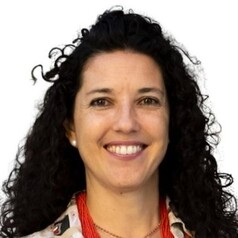
María Solano Altaba
Profesora de la Facultad de Humanidades y CC. Comunicación Universidad CEU San Pablo, Universidad CEU San Pablo
Profesora de distintas materias en el ámbito del periodismo y la comunicación, compatibiliza su trabajo en la Facultad de Humanidades y CC. Comunicación de la Universidad CEU San Pablo con el ejercicio profesional del periodismo y las conferencias sobre temas de educación y familia. Especializada en ética y teoría de la comunicación, trabaja en la necesidad de fomentar la alfabetización mediática para reducier el impacto de las nuevas tecnologías en los niños, adolescentes y jóvenes.
Less
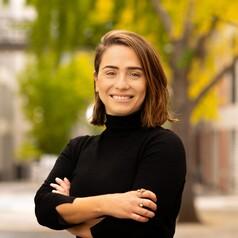
Maria Vieira
Lecturer, University of South Australia
Maria Vieira is a Lecturer in Education Futures and PhD Candidate in STEM at the University of South Australia. She coordinates gender equity programs in the Outreach team involving more than 500 schoolgirls in South Australia and Victoria. She is passionate about delivering innovative education experiences that cultivate creativity, critical thinking, and communication skills in STEM - Science, Technology, Engineering and Maths - to educate and inspire females in this field.
Less
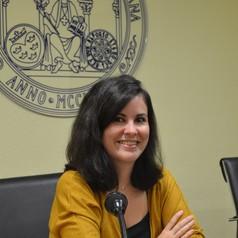
María Ángeles Bonmatí Carrión
Investigadora postdoctoral CIBERFES y profesora colaboradora UMU, Universidad de Murcia
Licenciada en Biología por la Universidad de Murcia (junio 2009), Máster en Investigación y Tecnología en Ciencias Biomédicas (junio 2010), Máster en Formación del Profesorado (junio 2015). Doctora en Fisiología por la Universidad de Murcia (octubre 2015, mención internacional, sobresaliente cum laude y Premio Extraordinario de Doctorado). Realicé mi tesis doctoral sobre la evaluación de la cronodisrupción y los efectos no visuales de la luz sobre el sistema circadiano. Tras ello, realicé mi periodo postdoctoral (julio 2016-mayo 2018) entre la Universidad de Surrey (Reino Unido) y la Clínica de Medicina Espacial de Toulouse (Francia), trabajando en un proyecto coordinado por la Agencia Espacial Europea cuyo objetivo fue el estudio de los efectos sobre distintos parámetros fisiológicos (concretamente sobre el sueño y ritmos circadianos) de un modelo humano de microgravedad. Posteriormente (junio 2018) me reincorporé al grupo de origen (Cronobiología, en la Universidad de Murcia) con un contrato postdoctoral Saavedra Fajardo (Fundación Séneca). Cuento con 16 publicaciones en revistas de impacto (+1 en revisión) relacionadas con el campo de la cronobiología, neurofisiología y sueño. Además, he participado con alrededor de 50 contribuciones a congresos nacionales e internacionales, de las que 20 fueron ponencias invitadas. He impartido docencia en los grados de Biología, Biotecnología, Medicina y Ciencias Ambientales. También he participado con conferencias magistrales en una Maestría de Arquitectura en la Universidad Nacional Autónoma de México. Asimismo, he intervenido en diversos eventos de divulgación y es autora del libro "Que nada te quite el sueño" (Editorial Crítica, 2023).
Less
María Ángeles Cadarso
Catedrática de Universidad, especialista en Economía y Medio Ambiente, Universidad de Castilla-La Mancha
Less
Maria Antonieta Nestor
Research Associate, Lucy Cavendish College & Centre Fellow, Cambridge Centre for Property Law, Department of Land Economy, University of Cambridge
Dr. Maria Antonieta "Nestor" is an academic lawyer with a background in Public Interest Law, Community Economic Development Law and Policy, and Climate Change Law. She holds a PhD from Trinity College Dublin specialising in public interest law, access to justice and community economic development, LLM from University of California Los Angeles (UCLA David J Epstein Programme in Public Interest Law & Policy), and Bachelor of Civil Law (BCL) from University College Dublin. She is also a trained legal interpreter and translator, with a diploma in journalism. Currently a Bye-Fellow at Murray Edwards College, Bye-Fellow, Research Associate and Director of Studies at Lucy Cavendish College, Centre Fellow at the Cambridge Centre for Property Law (CCPL), Associate Fellow at the Centre for International Sustainable Development Law (CISDL), Secretariat member at the Climate Law and Governance Initiative (CLGI) and member of IUCN-WCEL (World Commission on Environmental Law). Her main research interests are the intersection between public interest law, access to justice, community economic development, sustainability and the environment, and linking private law, planning, environmental/climate change and international law to combat urban poverty and to redress social exclusion.
Less


- Market Data




