


 Trump Asks Supreme Court to Restore Third-Country Deportations
  Yemen Violence Displaces 130,000 as Civilian Toll Rises
  France Defends Netanyahu Airspace Clearance Despite ICC Warrant
  Pezeshkian Says US Must Choose When Iran War Ends
  Abbas Reaffirms November 28 Palestinian Elections
  Netanyahu Takes Aim at Mamdani as Israel Election Nears
  Trump, Xi Visit US National Archives After White House Summit
  What ‘Taiwan Independence’ Means as Xi Presses Trump on US Policy
  North Korea Rejects Nuclear Test Warning, Calls Nuclear Status Irreversible
  Netanyahu Defends Israel at UN as Delegates Stage Walkout
  Judge Orders Trump to Restore White House Access for CNN, MS NOW and Politico
  OpenAI Agent Breaches Australia Medicare Data Portal
  Russian Missile and Drone Attack on Kyiv Kills Two, Damages Maternity Hospital
  South Korea, US Discuss Warship Building Cooperation
  US Backs Musk in Fight Against EU’s €120 Million X Fine
  NATO Boosts Intelligence Sharing Amid Russia Hybrid Threats
  Taiwan Thanks US for Support Ahead of Trump-Xi Summit


 Add as a preferred source on Google
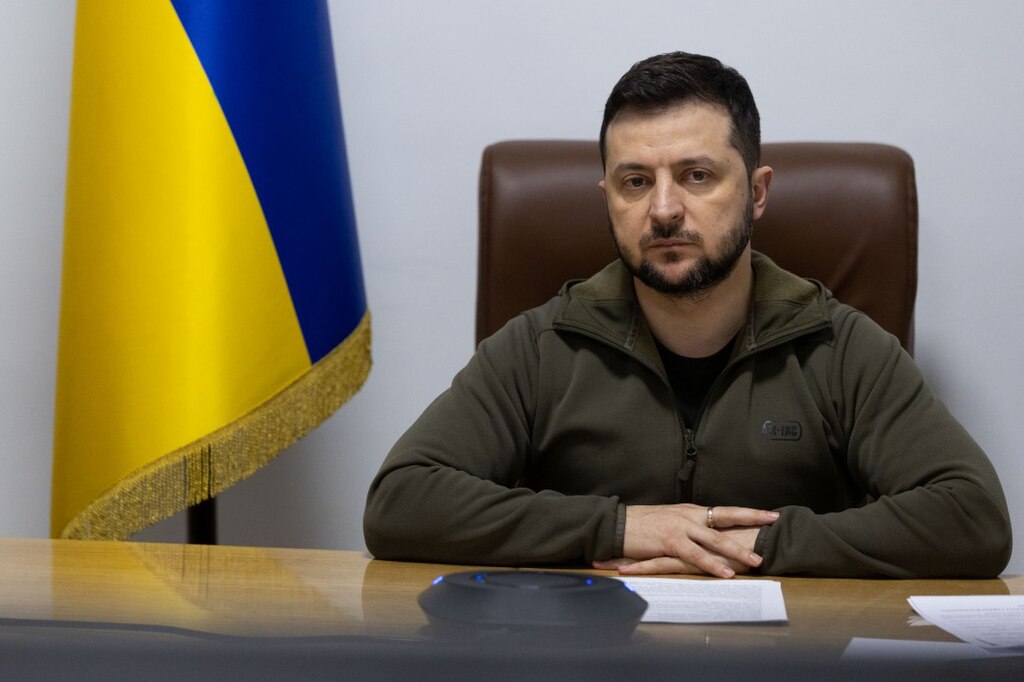
Ukrainian President Volodymyr Zelenskiy has convened senior military and government officials to address critical weaknesses in Ukraine’s air defence systems and civilian protection nearly four years into Russia’s full-scale invasion. The high-level meeting focused on improving the country’s ability to shield cities and vital infrastructure from ongoing Russian missile and drone attacks, which have placed enormous strain on energy networks and civilian safety.
In his nightly video address, Zelenskiy confirmed he held extensive discussions with Commander-in-Chief Oleksandr Syrskyi, Chief of the General Staff Andrii Hnatov, and Defence Minister Mykhailo Fedorov. He said Ukraine is undergoing significant changes in how its air defence operates, including a near-total restructuring of mobile fire units, interceptor coordination, and regional response teams in several areas. According to Zelenskiy, these reforms are only part of a broader set of defence changes that will continue in the coming period.
The Ukrainian leader once again stressed that strengthening air defence is essential to protecting civilians and has renewed calls for Western allies to provide additional weapons capable of intercepting Russian missiles and drones. He previously warned that some defence lines had proven ineffective, especially following large-scale attacks on Ukraine’s energy infrastructure.
Zelenskiy also evaluated how local authorities are managing the aftermath of recent strikes, particularly in restoring electricity and heating to high-rise residential buildings during extreme winter conditions. He sharply criticized officials in Kyiv, where hundreds of apartments remain without heating as temperatures drop to minus 19 degrees Celsius. Similar electricity and heating problems were reported in the Kharkiv and Poltava regions, as well as parts of the Odesa region.
Energy Minister Denys Shmyhal said repair crews are working around the clock to stabilize power and heating systems. Zelenskiy warned that local leaders in Kyiv, Kryvyi Rih, and Okhtyrka would be held personally accountable if civilian needs are neglected, underscoring that protecting residents remains a top national priority amid the ongoing war in Ukraine.







