


 Asian Currencies Mixed as Dollar Holds Near Two-Month High
  Russian Envoy Dmitriev Heads to US for Ukraine Talks
  Asian Stocks Fall as Bond Yields Surge Ahead of Trump-Xi Summit
  Japan Private-Sector Growth Slows as Domestic Demand Weakens
  US Dollar Hits Two-Month High as Fed Rate Hike Bets Rise
  Oil Prices Surge as U.S.-Iran Diplomacy Hopes Fade
  Gold Drops Over 1% as Dollar, Treasury Yields Surge on Fed Rate Hike Bets
  US Stock Futures Rise as Meta Muse Fuels AI Rally
  South Korea, US Discuss Warship Building Cooperation
  RBI Uses $10 Billion Currency Swaps to Drain Excess Rupee Liquidity
  Oil Prices Rise as U.S.-Iran Talks Fuel Diplomacy Hopes
  US, China Extend Trade Truce to Jan. 10 Ahead of Trump-Xi Summit
  U.S. 10-Year Treasury Yield Hits 2007 High as Fed Rate Hike Bets Rise
  Gold Prices Rise as Oil Slump Eases Fed Rate Hike Fears
  Vietnam, US Trade Deal Could Be Signed Soon, To Lam Says
  China’s ‘Lipstick King’ Says AI Won’t Replace Livestream Hosts
  Gold Prices Rise as Oil Slide Eases Fed Rate Hike Fears


 Add as a preferred source on Google
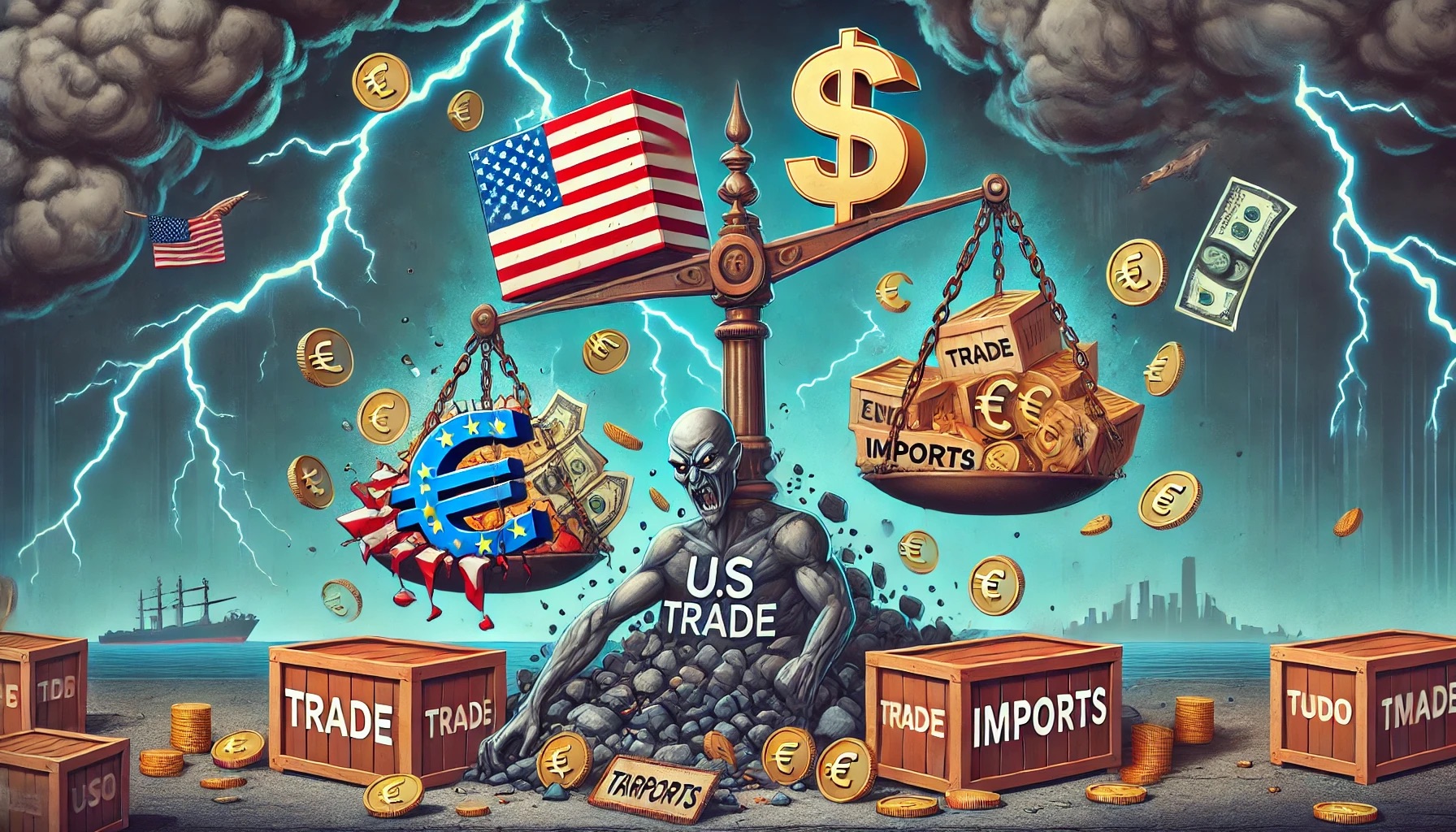
The US imposition of a 10% tariff on Eurozone imports could shrink growth by as much as 0.43%, UBS economists report. The decline depends on Europe’s response, with retaliation increasing inflationary pressures while non-retaliation may curb price hikes but weaken growth further.
Tariffs Pose Significant Risk to Eurozone Growth
Economists at UBS predict that a 10% tariff on all EU imports might have a major effect on GDP growth.
This analysis models the proposed tariffs as part of a larger framework on global trade tensions, drawing attention to the fact that the economic impact of these measures will be greatly affected by the reaction of Europe and other countries around the world, Investing.com reports.
While complete retaliation would reduce the direct GDP impact of a 10% US tax on the Eurozone by 0.28 percentage points (pp), the absence of retaliation would result in a decrease of 0.43 pp, according to UBS. A decline in exports has a greater effect on GDP than a decline in imports.
According to analysts, “The nominal value of a 10% tariff on the Eurozone is worth about EUR30bn, or 0.2% GDP.”
Economic Fallout of Export Declines
It is projected that tariffs imposed solely to Europe will have a negative effect on GDP ranging from 28 basis points in the case of complete retaliation to 43 basis points in the absence of retaliation. This loss would be driven solely by a bigger drop in exports relative to imports.
The impact of these levies on inflation will depend on what Europe does. UBS estimates that retaliatory tariffs might lead to a 13 bp increase in consumer price inflation and a 26 bp increase in the GDP deflator.
As a result of less currency depreciation and lower import price adjustments, the consequences of inflation are mitigated in the absence of retaliation.
Inflation and Retaliation: Key Considerations
"We estimate the inflation impact between -2bp and +26bp for the GDP deflator and between 1 to 13bp for CPI," the authors said.
"If Europe does not retaliate and thus its import prices do not go up, the inflation impact is largely a function of the currency depreciation and growth weakness; by contrast, retaliation lifts import prices and inflation," they stated.
Things alter when you add in the broader escalation of tariffs in the US, like a 60% duty on Chinese goods. The UBS report notes that the European inflationary effects could be mitigated if the RMB depreciates compared to the USD and the EUR.
Domestic Demand Expected to Withstand Tariff Pressures
"If RMB depreciates more than other currencies due to higher US tariffs, imports from China could cheapen, neutralizing the inflationary impact of Europe's own tariffs," the note says.
According to UBS, the effects on domestic demand will be small, with coefficients of retaliation ranging from -0.01 to -0.13 pp.







