


 Sudan Rejects US Legitimacy Remarks, Defends Sovereignty
  Netanyahu Takes Aim at Mamdani as Israel Election Nears
  Europe Warns Russia Is Escalating Hybrid Attacks Across NATO
  Trump Administration Plans Faster FDA Reviews for Smoke-Free Nicotine Products
  Abbas Reaffirms November 28 Palestinian Elections
  Kremlin Says No Decision Yet on Putin-Trump December Summit
  North Korea Rejects Nuclear Test Warning, Calls Nuclear Status Irreversible
  Russian Envoy Dmitriev Heads to US for Ukraine Talks
  EU Defence Build-Up Too Slow for 2030 Russia Readiness Goal
  France Defends Netanyahu Airspace Clearance Despite ICC Warrant
  Taiwan Thanks US for Support Ahead of Trump-Xi Summit
  Trump, Xi Focus on Trade and AI at White House Summit
  US Invites Putin to Miami G20, Opening Door to Trump Summit
  Netanyahu Defends Israel at UN as Delegates Stage Walkout
  NATO Boosts Intelligence Sharing Amid Russia Hybrid Threats
  US Backs Musk in Fight Against EU’s €120 Million X Fine
  US, China Extend Trade Truce to Jan. 10 Ahead of Trump-Xi Summit


 Add as a preferred source on Google
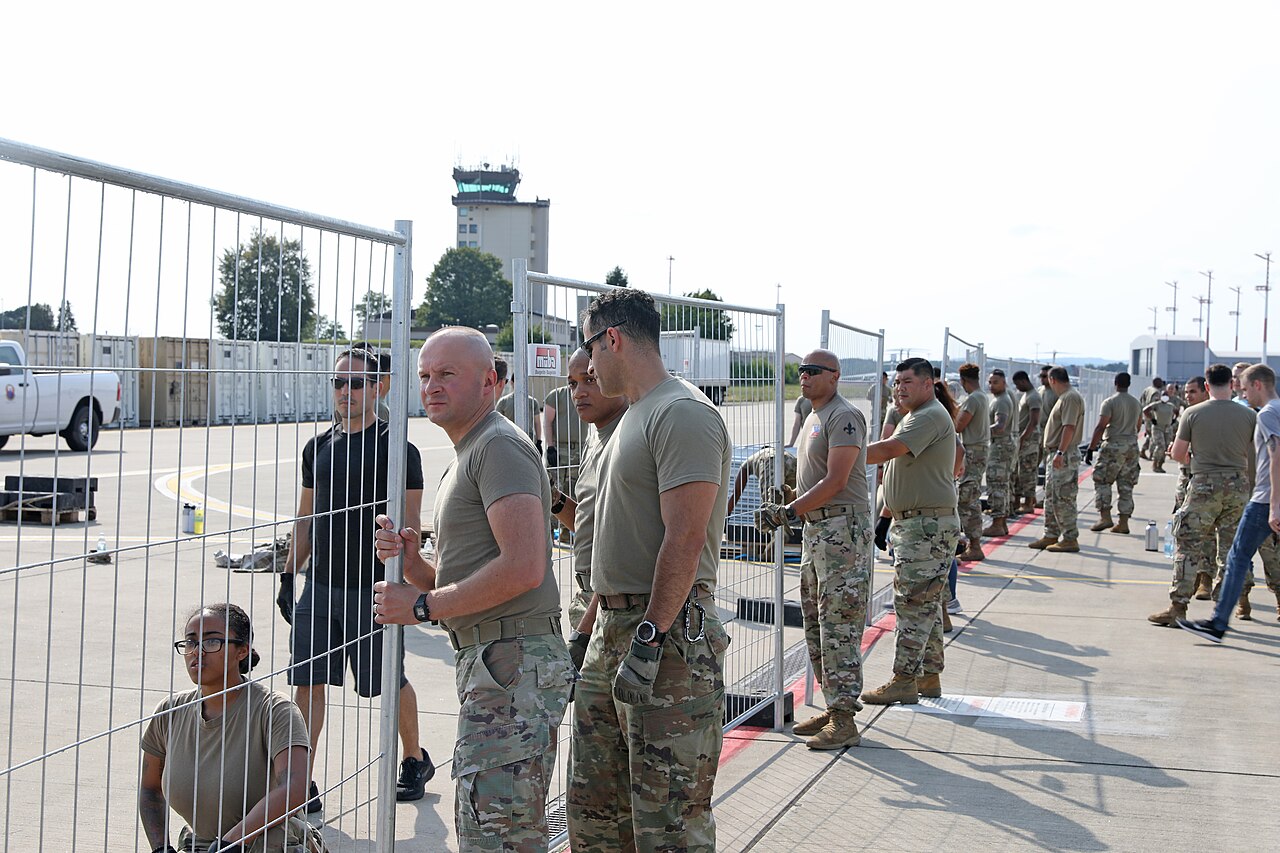
Senior U.S. Army officers emphasized the strategic importance of maintaining American troops in Germany during a recent media visit to the Hohenfels training area, even as U.S. President Donald Trump signaled a review of troop levels in Europe. Germany remains a critical hub for U.S. military operations, hosting approximately 35,000 active-duty personnel and serving as a central location for NATO training and coordination.
At the Hohenfels Combat Training Center in southern Germany—the only U.S. Army facility of its kind outside the United States—troops engage in large-scale exercises designed to simulate modern warfare scenarios. The expansive 163-square-kilometer site allows U.S. forces and allied nations to conduct joint combat training, improving interoperability and strengthening military partnerships across NATO.
Officers highlighted that the presence of U.S. forces in Europe plays a vital role in deterring potential adversaries while ensuring troops are combat-ready. Colonel Michael Ziegelhofer noted that joint exercises with allied forces enhance coordination not only in equipment usage but also in communication, systems, and operational procedures. These efforts ensure that in the event of a conflict, NATO forces can operate seamlessly together.
The ongoing Russia-Ukraine war has significantly influenced training priorities, particularly in the areas of drone warfare and electronic surveillance. U.S. troops are adapting by learning how to deploy drones effectively and counter enemy drone capabilities. Lieutenant Colonel Michael Cryer described the evolving battlefield as a constant “cat-and-mouse game,” where each technological advancement is quickly met with countermeasures.
One of the most pressing challenges for modern military forces is maintaining tactical mobility while under continuous drone surveillance. According to Cryer, hiding on the battlefield has become increasingly difficult, forcing the Army to rethink traditional combat strategies.
Overall, the U.S. military presence in Germany continues to reinforce NATO alliances, enhance combat readiness, and integrate lessons from real-world conflicts, ensuring forces remain prepared for future threats.







