


 Judge Orders Trump to Restore White House Access for CNN, MS NOW and Politico
  Netanyahu Takes Aim at Mamdani as Israel Election Nears
  Yemen Violence Displaces 130,000 as Civilian Toll Rises
  South Korea, US Discuss Warship Building Cooperation
  Ghana Says Western Support Growing for Slave Trade Reparations
  Kremlin Says No Decision Yet on Putin-Trump December Summit
  Russian Envoy Dmitriev Heads to US for Ukraine Talks
  Netanyahu Defends Israel at UN as Delegates Stage Walkout
  Trump, Xi Focus on Trade and AI at White House Summit
  Russian Missile and Drone Attack on Kyiv Kills Two, Damages Maternity Hospital
  Trump Administration Plans Faster FDA Reviews for Smoke-Free Nicotine Products
  Gaza Faces Evacuation Crisis as War-Damaged Buildings Risk Collapse
  France Defends Netanyahu Airspace Clearance Despite ICC Warrant
  US, China Extend Trade Truce to Jan. 10 Ahead of Trump-Xi Summit
  Europe Warns Russia Is Escalating Hybrid Attacks Across NATO
  Taiwan Thanks US for Support Ahead of Trump-Xi Summit
  EU Defence Build-Up Too Slow for 2030 Russia Readiness Goal


 Add as a preferred source on Google
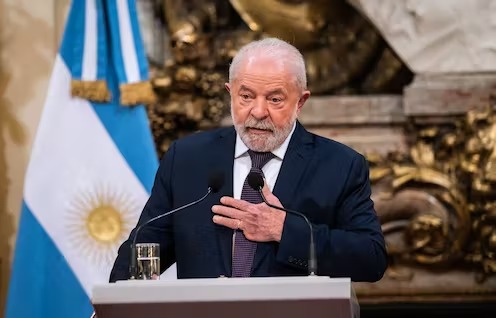
Brazilian President Luiz Inácio Lula da Silva is preparing to submit a new nominee for the Supreme Federal Court after the Senate rejected his initial choice, marking a historic political setback. According to sources familiar with the situation, Lula’s administration is moving quickly to fill the vacant seat, highlighting growing tensions in Brasília ahead of the October presidential election.
The rejection of Solicitor General Jorge Messias makes Lula the first Brazilian leader in over a century to see a Supreme Court nominee blocked by Congress. This development underscores the increasingly strained relationship between the executive branch and a conservative-leaning legislature. With Brazil’s political climate heating up, the Supreme Court nomination has become a key issue influencing the broader election narrative.
Opposition leaders, including Senator Rogério Marinho, argue that the decision should be postponed until after the election, suggesting the next president should have the authority to appoint a justice. This stance mirrors a similar strategy used in the United States in 2016, when Congress delayed consideration of a Supreme Court nominee during an election year. Critics warn that postponing the appointment could allow the incoming president to significantly reshape the court, potentially filling multiple vacancies.
Recent polls indicate a tight race between Lula and Senator Flávio Bolsonaro, son of former President Jair Bolsonaro, further intensifying the stakes. Currently, two of the court’s eleven justices were appointed by Bolsonaro, and any additional appointments could shift the ideological balance.
In response to political resistance, Lula is reportedly considering nominating a woman, aiming to increase public support and make it more difficult for senators to reject the candidate. Brazil’s Supreme Court currently has only one female justice, and increasing gender representation could become a strategic advantage.
Despite internal concerns about another possible rejection, Lula’s allies emphasize that the authority to nominate justices rests solely with the president. As the election approaches, the outcome of this nomination could play a crucial role in shaping Brazil’s judiciary and political future.







