


 US Invites Putin to Miami G20, Opening Door to Trump Summit
  Canada Unveils Bill to Fast-Track Major Resource Projects
  DOJ Will Investigate AI-Related Crimes, Attorney General Blanche Says
  Russian Missile and Drone Attack on Kyiv Kills Two, Damages Maternity Hospital
  Pentagon Restarts Testosterone Testing for US Troops
  Who should own the knowledge that underpins AI technology?
  Netanyahu Takes Aim at Mamdani as Israel Election Nears
  Ghana Says Western Support Growing for Slave Trade Reparations
  FCC Approves Foreign Investment in $110B Paramount-Warner Bros. Deal
  Abbas Reaffirms November 28 Palestinian Elections
  Netanyahu’s Brief US Trip Highlights Strains With Trump
  Appeals Court Rejects Trump Third-Country Deportation Policy
  Trump Asks Supreme Court to Restore Third-Country Deportations
  Judge Orders Trump to Restore White House Access for CNN, MS NOW and Politico
  Europe Warns Russia Is Escalating Hybrid Attacks Across NATO
  FAA Allows Boeing to Sell 35 More 777F Freighters Beyond 2028
  White House Bars CNN, MS NOW and Politico Reporters


 Add as a preferred source on Google
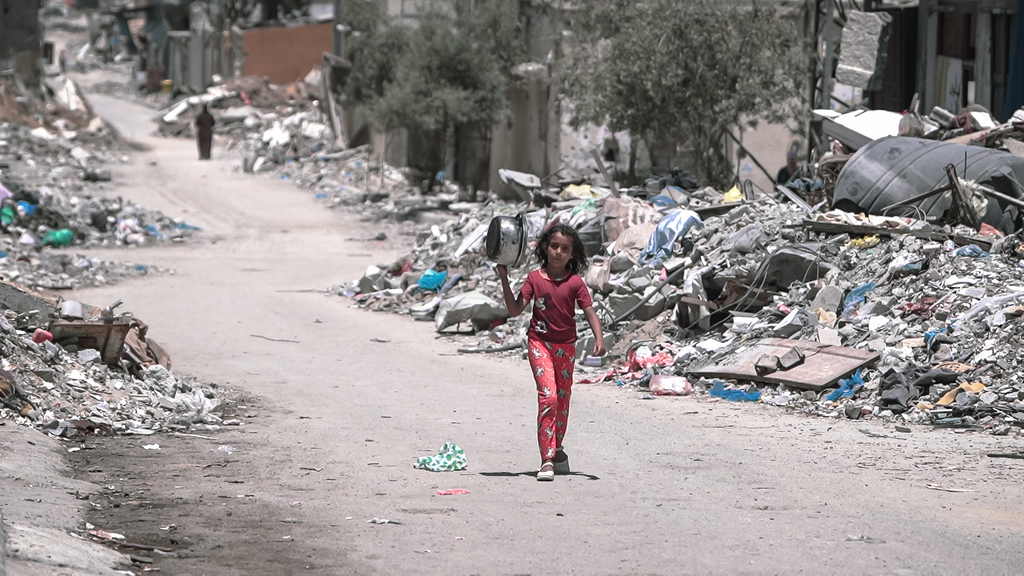
Israel’s newly updated Gaza maps have significantly expanded restricted military zones, placing thousands of displaced Palestinians at increased risk and limiting humanitarian access. The revised maps, quietly shared with aid organizations in mid-March, introduce an “orange line” that designates additional restricted areas beyond the previously established “Yellow Line,” which marked the boundary of Israeli troop positions following the October ceasefire.
According to reports, the expanded restricted zone now covers approximately 11% more territory, bringing nearly two-thirds of Gaza under some form of Israeli control. Israeli officials describe these areas as “buffer zones” designed to prevent further militant attacks after the October 7, 2023 Hamas assault that triggered the ongoing conflict. However, Palestinians living within these zones fear they could be mistakenly targeted, as boundaries are not clearly marked on the ground and appear to shift frequently.
Humanitarian groups operating in Gaza have expressed concern over the lack of clarity and coordination requirements imposed by Israel’s military agency, COGAT. Aid organizations must seek approval before entering these restricted areas, which has slowed or halted the delivery of essential supplies such as food, water, and medical aid. This has left many displaced families in dire conditions, particularly those living in camps or damaged buildings near Gaza City.
The situation has become more alarming following reports that several aid workers, including staff affiliated with UNICEF and the World Health Organization, were killed in areas between the designated lines. Israeli forces stated that they opened fire after identifying potential threats near the Yellow Line, though humanitarian agencies have yet to confirm whether proper coordination protocols were followed.
Local residents say the shifting boundaries create confusion and fear. Many are unsure where it is safe to stay, as the lines can move overnight without warning. Analysts estimate that Israel now controls at least 64% of Gaza, leaving nearly two million Palestinians confined to a shrinking coastal area with limited resources.
The expansion of these zones has also raised broader geopolitical concerns, including doubts about long-term intentions and the viability of Gaza as a sustainable territory. Critics argue that the continued restriction of land and movement may further destabilize the region and complicate future peace efforts.







